
18650 Rechargeable Battery
The 18650 rechargeable battery is one of the most widely used lithium-ion battery formats in the world. From laptops and flashlights to electric vehicles and DIY electronics, this cylindrical cell powers countless modern devices in the USA and globally.
But what exactly is an 18650 battery? Why is it so popular? And how do you choose the right one safely?
Let’s break it down in simple, practical terms.
What Is an 18650 Rechargeable Battery?
An 18650 rechargeable battery is a cylindrical lithium-ion cell measuring 18mm by 65mm that delivers 3.6–3.7 volts of power. It is commonly used in laptops, flashlights, power banks, and electric vehicles due to its high energy density and long recharge cycle life.
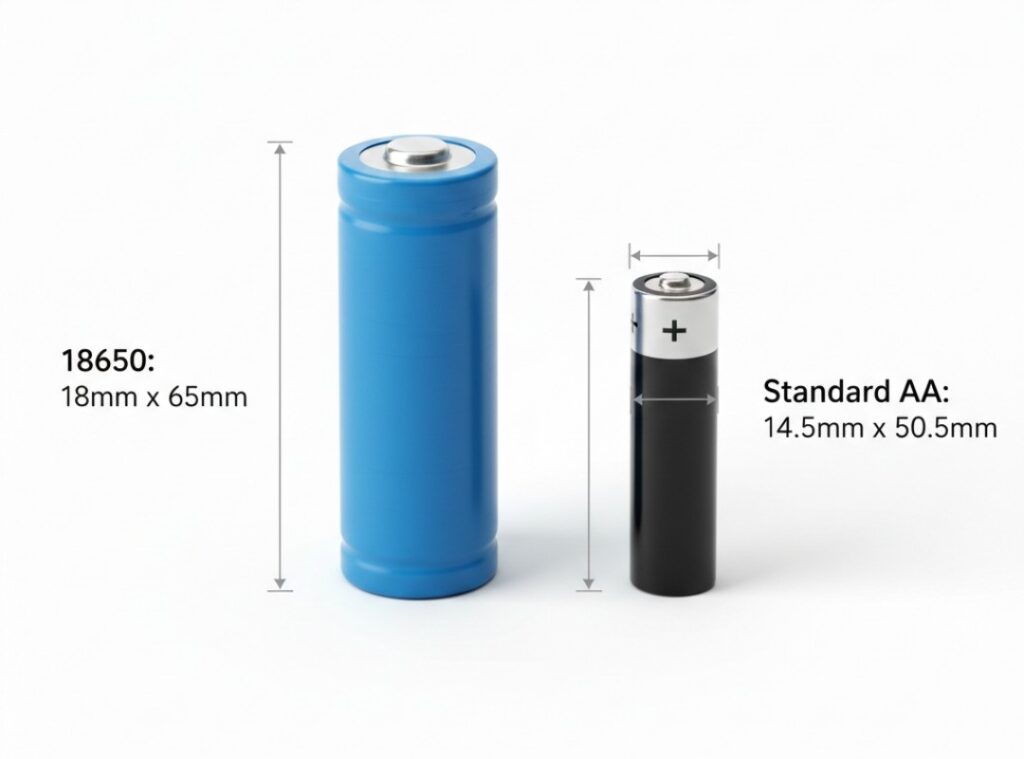
An 18650 rechargeable battery is a cylindrical lithium-ion cell that measures:
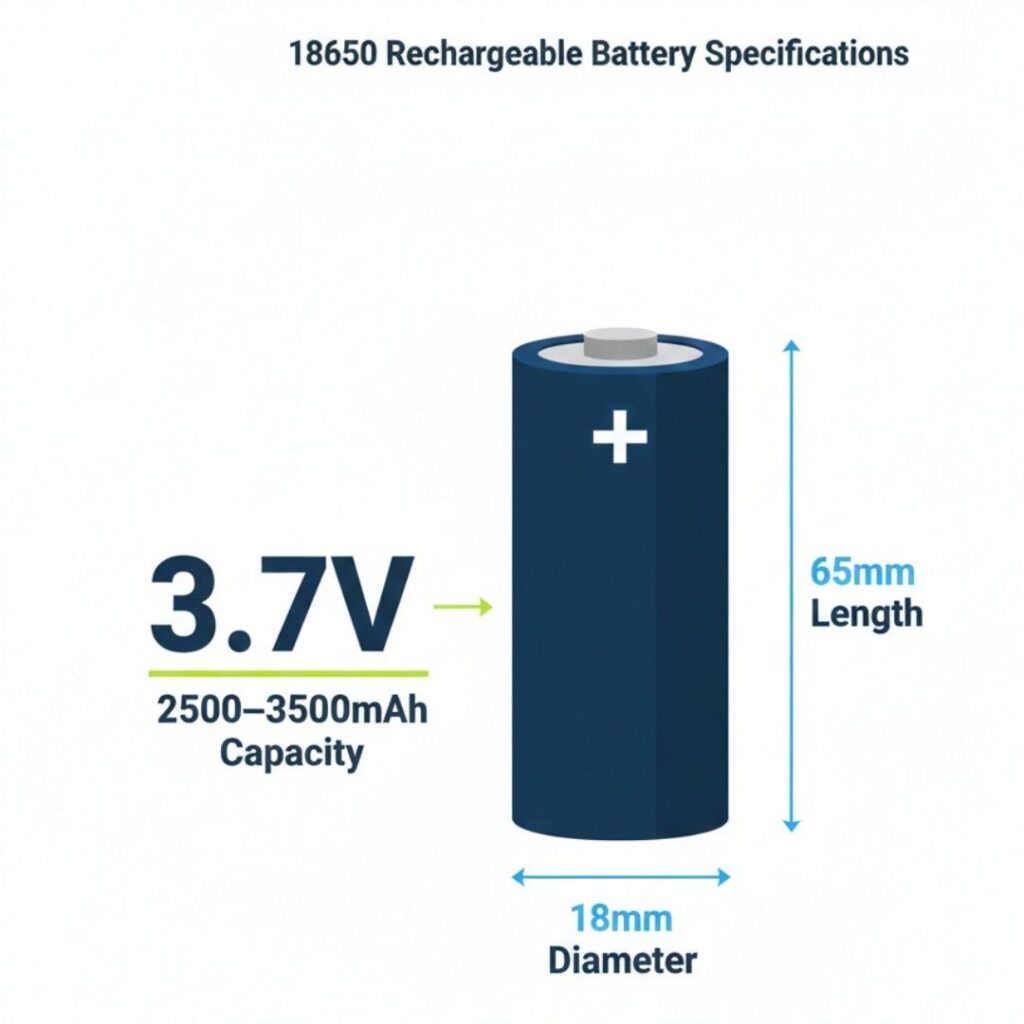
18mm diameter
65mm length
0 indicates cylindrical shape
It typically operates at:
Nominal voltage: 3.6V – 3.7V
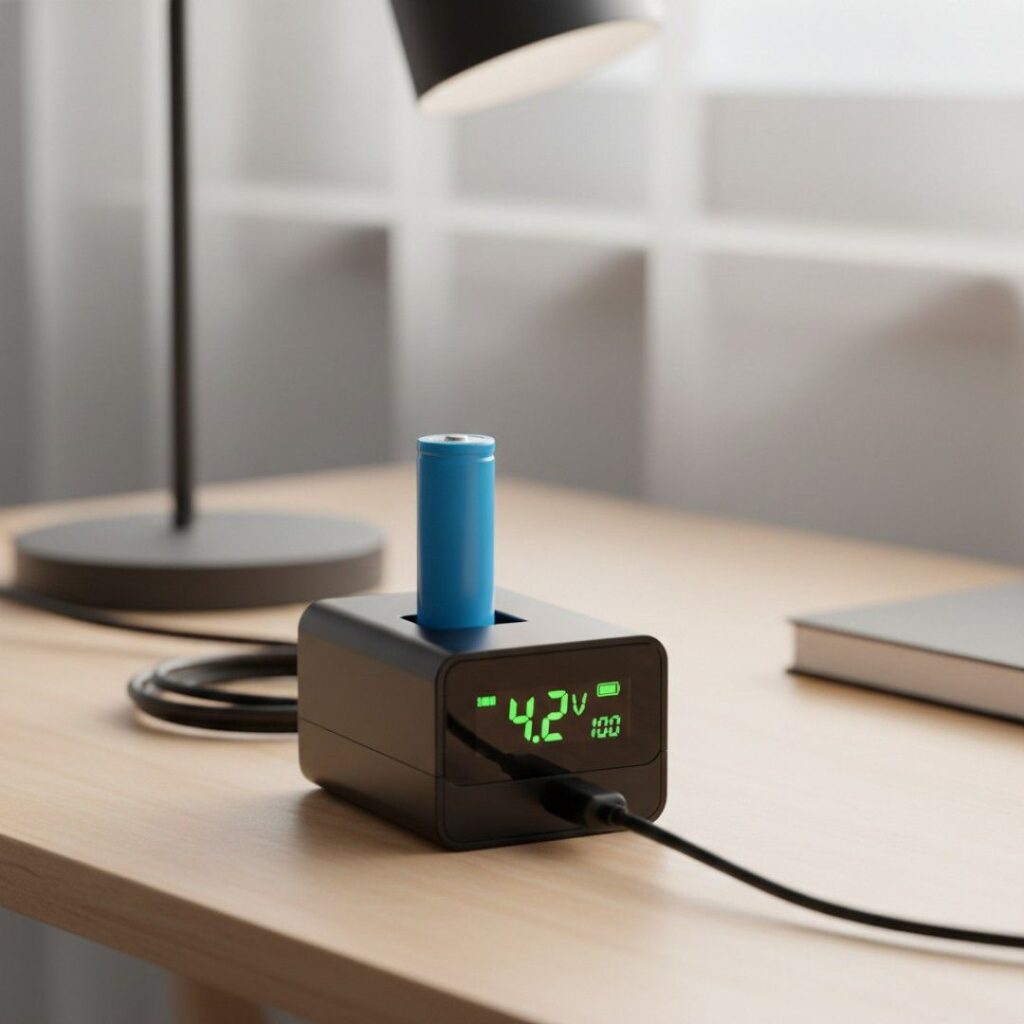
Full charge voltage: 4.2V
Capacity range: 1,800mAh to 3,600mAh
Recharge cycles: 300–1000+ cycles
Because of its high energy density and rechargeability, it became the standard power source for portable electronics.
18650 cells use lithium-ion chemistry similar to the battery systems used in electric vehicles and renewable energy storage. According to the U.S. Department of Energy, lithium-ion batteries are widely used due to their high energy density and rechargeability.
Why Is the 18650 Battery So Popular?
1️⃣ High Energy Density
Compared to older nickel-based batteries, lithium-ion chemistry stores more energy in a smaller space.
2️⃣ Rechargeable Efficiency
Unlike disposable batteries, 18650 cells can be recharged hundreds of times.
3️⃣ Standardized Size
The fixed dimensions make it easy for manufacturers to design products around it.
4️⃣ Scalable Power Systems
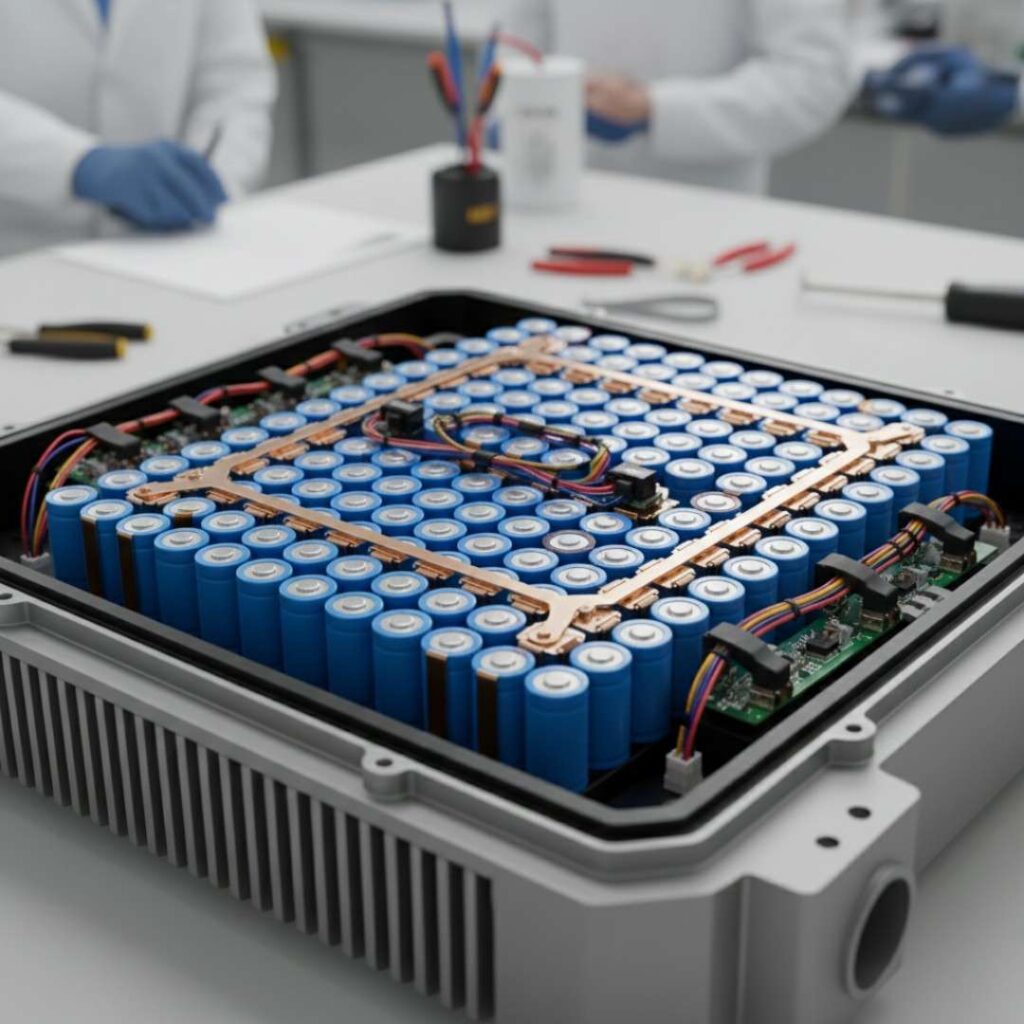
Multiple 18650 cells can be combined to create battery packs for:
Power banks
E-bikes
Solar storage systems
Electric vehicles
Where Are 18650 Batteries Used?
Here are common applications in the USA:
Flashlights
High-lumen tactical and outdoor flashlights.
Laptop Battery Packs
Many older laptops used packs built from 18650 lithium-ion cells.
Power Banks
Portable chargers often contain multiple 18650 cells inside.
E-Bikes
Electric bicycles use battery packs built from arrays of these cells.
Electric Vehicles (EVs)
Early EV battery packs were composed of thousands of cylindrical lithium-ion cells similar to the 18650 format.
Types of 18650 Rechargeable Batteries
Not all 18650 batteries are the same. They differ in chemistry, discharge rate, and internal protection mechanisms.
1. Protected vs. Unprotected Cells
Protected cells include a built-in protection circuit module (PCM). This circuit prevents:
Overcharging
Over-discharging
Short circuits
Overcurrent damage
These are safer for general consumers.
Unprotected cells do not have this circuit. They are typically used by experienced hobbyists, battery pack builders, or manufacturers who integrate their own battery management systems (BMS).
For informational content targeting U.S. consumers, it’s important to emphasize safety considerations when discussing unprotected cells.
2. Lithium-Ion Chemistry Variants
Different 18650 batteries use different lithium chemistries:
ICR (Lithium Cobalt Oxide)
Higher capacity but lower discharge rate. More common in laptops.
IMR (Lithium Manganese Oxide)
Better thermal stability and higher discharge rates. Often used in high-drain devices.
INR (Nickel Manganese Cobalt)
Balanced performance between capacity and discharge rate. Widely used in modern applications.
Understanding chemistry helps users choose the right battery based on device requirements.
While 18650 batteries use lithium-ion technology, alternative battery chemistries such as zinc-ion are emerging in the energy storage industry. If you’re curious about how these technologies compare in terms of safety, lifespan, and sustainability, read our detailed comparison of Lithium Ion Battery vs Zinc Ion Battery.
How to Choose the Right 18650 Rechargeable Battery
When selecting an 18650 battery for informational buyers in the U.S. market, consider these factors:
Capacity (mAh)
Higher mAh means longer runtime. However, higher capacity often means lower maximum discharge rate.
Typical range:
2500mAh – 3500mAh
Continuous Discharge Rating (CDR)
This indicates how much current the battery can safely deliver continuously.
High-drain devices require higher CDR ratings.
Brand Reputation
Choose reputable manufacturers. Counterfeit batteries are common in the market and may exaggerate capacity ratings.
Device Compatibility
Always verify:
Required voltage
Required discharge current
Physical fit (button-top vs flat-top)
Are 18650 Rechargeable Batteries Safe?
Yes, when used properly.
However, lithium-ion batteries can become hazardous if:
Overcharged
Punctured
Short-circuited
Used with incompatible chargers
Best practices include:
Use a quality charger designed for lithium-ion cells
Do not mix old and new batteries in packs
Store in a cool, dry environment
Avoid full discharge repeatedly
Proper handling dramatically reduces risk.
How Long Do 18650 Batteries Last?
Lifespan depends on:
Charge cycles (typically 300–1000 cycles)
Depth of discharge
Operating temperature
Charging habits
Most high-quality 18650 rechargeable batteries last between 2–5 years under normal consumer use.
Capacity gradually decreases over time rather than failing suddenly.
Battery lifespan depends on charge cycles, temperature, and discharge depth. As explained by Battery University, proper charging habits can significantly extend lithium-ion battery life.
Frequently Asked Questions
No. An 18650 battery is larger and operates at 3.6–3.7 volts, while AA batteries typically operate at 1.5 volts (alkaline) or 1.2 volts (NiMH).
They are not interchangeable.
No. Only use chargers specifically designed for lithium-ion batteries with proper voltage regulation (4.2V maximum per cell).
Yes. The 18650 format refers to a cylindrical lithium-ion battery cell size.
Yes. They are often used in DIY solar power storage systems, but proper battery management systems are required.
Final Thoughts
The 18650 rechargeable battery remains one of the most important energy storage components in modern electronics. Its standardized size, strong energy density, and rechargeability make it a cornerstone of portable power systems.
For informational users in the U.S., understanding battery type, capacity, discharge rate, and safety considerations is essential before choosing the right cell.
When selected and handled properly, the 18650 battery is reliable, efficient, and cost-effective for a wide range of applications.