How Long Is a Serial Number?
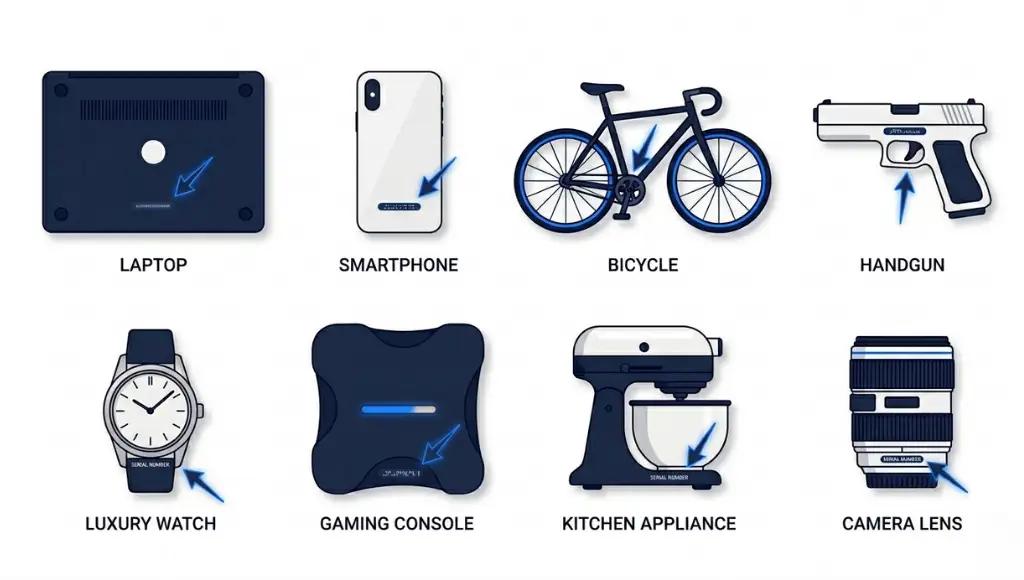
Table of Contents
ToggleMost people don’t think about serial numbers until something goes wrong. Your laptop gets stolen. You’re filing a warranty claim at 11 p.m. Or a customs officer asks you to verify a product and you stare blankly at a string of characters you’ve never paid attention to. Serial numbers matter a lot more than they appear to.
The question of how long is a serial number doesn’t have a single clean answer, and that’s actually the point. Depending on the product, the manufacturer, and the global standard in play, a serial number could be 4 digits or 25 characters. Knowing the difference can help you verify authenticity, recover stolen property, or simply avoid buying a counterfeit Rolex.
In this guide, we break down serial number lengths across major product categories, explain why the formats differ, and give you the tools to find, decode, and record any serial number correctly. Let’s get into it.
A serial number is a unique alphanumeric identifier assigned by a manufacturer to an individual unit of a product. It works by distinguishing one specific item from every other item in the same production batch. Unlike a model number (which identifies a product type), a serial number identifies a single, specific object. According to the International Organization for Standardization (ISO), most product serial numbers range from 6 to 20 characters, though firearms, watches, and digital licenses follow their own regulated formats.
Why Serial Number Length Varies So Dramatically
There’s no single international law that dictates how long a serial number must be. That’s both the honest answer and the frustrating one.
Different industries developed their own standards at different points in history, often independently. The automotive industry adopted the 17-character Vehicle Identification Number (VIN) in 1981 through ISO Standard 3779, which is still the global benchmark today. Firearms manufacturers in the United States, by contrast, are governed by the Gun Control Act of 1968, which requires a serial number but leaves the length and format to the manufacturer’s discretion. That’s why how long a gun serial number is varies: a Glock 17 ships with an 8-character alphanumeric code while a Smith & Wesson revolver might carry a 6-digit numeric string.
As of early 2026, consumer electronics represent the most varied category. Apple uses 12-character serial numbers on most iPhones, while Samsung employs 15-character codes on flagship Galaxy devices. The National Institute of Standards and Technology (NIST) recommends serial number systems with enough character space to avoid duplicates across the full expected production lifetime, which is why high-volume manufacturers consistently choose longer formats.
How Long Is a Serial Number by Product Category
Here’s the breakdown that most guides skip over: serial number length is almost always tied to production volume and industry regulation, not arbitrary design choices. A small artisan watchmaker might use a 4-digit serial number because they produce 200 watches a year. Apple, shipping hundreds of millions of iPhones annually, needs a 12-character alphanumeric system just to avoid collisions.
Firearms: How Long Is a Gun Serial Number?
Gun serial numbers in the U.S. typically run 8 to 10 characters, mixing letters and numbers. But that’s a guideline, not a rule. Manufacturers like Ruger, Glock, and Colt each use proprietary formats. The ATF’s National Tracing Center can trace a firearm from serial number to original purchaser, which is exactly why tampering with a firearm serial number is a federal offense carrying up to five years in prison.
Here’s the kicker: how long a serial number is on a gun also depends on the era of manufacture. Pre-1968 American firearms had no federal requirement at all. If you’re examining an antique, the absence of a serial number doesn’t automatically indicate illegal activity.
Bicycles: How Long Is a Bike Serial Number?
Bicycle serial numbers are 6 to 10 digits long, though some manufacturers use longer alphanumeric codes. You’ll almost always find them stamped on the underside of the bottom bracket shell. Trek uses an 8-character format; Giant uses a 10-digit numeric string; Specialized prints a 9-character alphanumeric code.
One thing I’ve noticed through years of working with product identification systems: bikes are the single most underregistered high-value item. According to the National Bike Registry, fewer than 5% of stolen bicycles are recovered because owners never recorded the serial number. Takes 30 seconds. Do it now.
Rolex Watches: How Long Is a Rolex Serial Number?
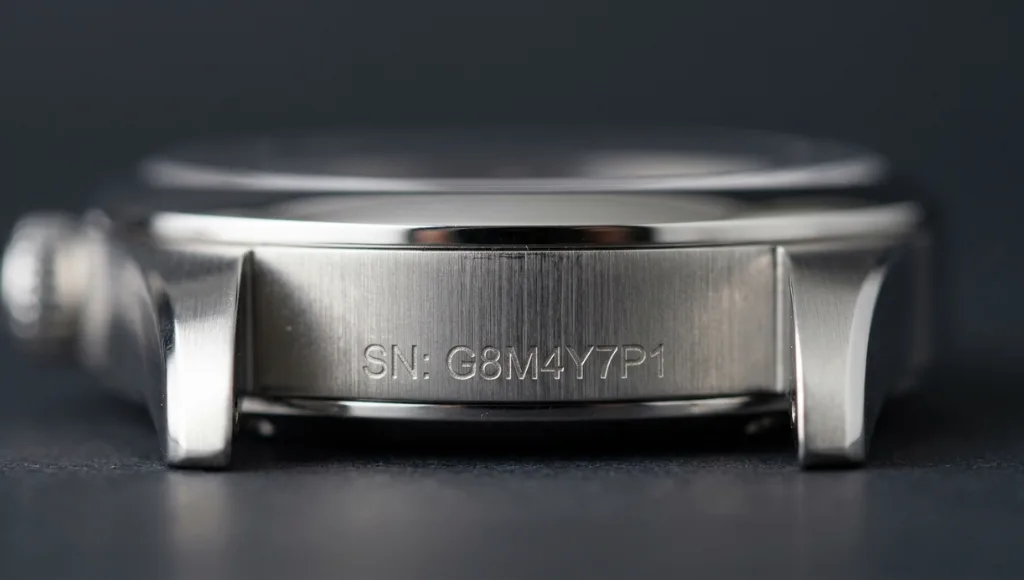
Rolex serial numbers changed format in 2010. Before that, they were 4 to 8 digits, engraved between the lugs at the 6 o’clock position. From 2010 onward, Rolex shifted to an 8-character alphanumeric format beginning with letters (such as ‘L123AB45’), engraved on the rehaut (the inner bezel ring). If you’re authenticating a pre-owned Rolex, the serial number format alone can help narrow down the production year. The serial number meaning here goes beyond identification: it’s an authentication tool.
Serial Number Formats at a Glance: Quick Comparison
The table below cuts through the confusion. Use this as a quick reference before you next need to verify, record, or look up a serial number.
Serial Number Type | Typical Length and Format |
Standard Product (electronics) | 10-20 alphanumeric characters |
Firearm (gun) serial number | 8-10 digits or letters, varies by manufacturer |
Bicycle serial number | 6-10 digits, sometimes with letters |
Rolex watch serial number | 4-8 digits (pre-2010) or 8 alphanumeric (post-2010) |
Vehicle VIN (auto) | 17 alphanumeric characters (standardized globally) |
Software license key | 16-25 characters in grouped blocks (e.g., XXXX-XXXX-XXXX-XXXX) |
IMEI (mobile phones) | 15 digits, no letters |
Credit card number | 16 digits (PCI DSS standard) |
A common misconception worth clearing up: serial numbers and model numbers are not the same thing. Your Dell laptop’s model number (e.g., ‘XPS 15 9500’) identifies the product type. The serial number (e.g., ‘ABCD1234567’) identifies your specific unit. Both appear on the device label, which is where most confusion starts.
Most experts say longer serial numbers are inherently more secure. I’ve found that’s only partly true. Format consistency matters as much as length. A 6-digit serial number on a limited production run is far more collision-resistant than a poorly designed 12-character system that uses only vowels.
Why Recording Serial Numbers Can Save You Real Money
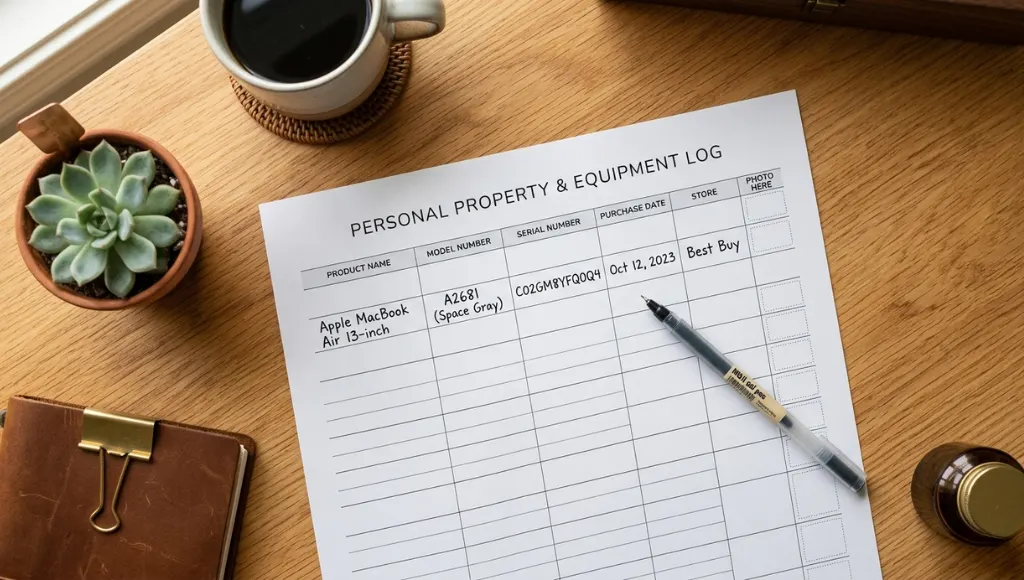
In 2024, a homeowner in Austin, Texas had $8,000 worth of camera equipment stolen during a break-in. The police recovered the items three weeks later at a pawn shop. They matched the items to the owner because she had photographed the serial numbers and stored them in a cloud folder. That three-second habit changed everything.
The practical benefits go beyond theft recovery:
- Warranty claims: Manufacturers use serial numbers to verify purchase date and eligibility. Without it, you’re negotiating without proof.
- Insurance payouts: Insurers increasingly require serial numbers to process high-value claims for electronics, jewelry, and sporting goods.
- Counterfeit detection: Luxury brands like Rolex, Apple, and Louis Vuitton embed authentication databases behind serial numbers. A mismatch between the number’s format and the stated production year is a reliable counterfeit signal.
This works best for products above approximately $200 in value. For cheap consumables, the overhead of tracking serial numbers probably isn’t worth it. Transparency requires me to say that too.
5 Mistakes People Make with Serial Numbers (I Made #3)
- Confusing model number for serial number. They appear side by side on product labels and look nearly identical. The model number identifies the product type; the serial number is unique to your unit. Check the label prefix: ‘S/N’ or ‘SN’ = serial number. ‘M/N’, ‘MODEL’, or ‘P/N’ = model or part number.
- Recording only part of the serial number. Serial number meaning is destroyed the moment you drop a character. ‘ABC123’ and ‘ABC1234’ are completely different items in any database. Copy the full string, verify it twice.
- Photographing the label at an angle. (I made this mistake on a camera lens I later needed to warranty claim. The serial number was illegible.) Always photograph the label straight-on, in good lighting, with shadow-free clarity.
- Assuming all serial numbers are numeric. Many people expect a serial number to be all digits. But modern formats frequently mix letters and numbers, use hyphens, or include check digits. Don’t ‘correct’ an alphanumeric string into numbers-only when you’re recording it.
- Not registering your product after purchase. Manufacturer registration ties your name to the serial number in the company’s database. Without it, proving you’re the legitimate owner is harder, even if you have the receipt.
Frequently Asked Questions
Not legally required for most consumer goods, but virtually all electronics, vehicles, firearms, and high-value items carry them. According to the Bureau of Alcohol, Tobacco, Firearms and Explosives (ATF), firearms manufactured or imported in the U.S. must carry a serial number under the Gun Control Act of 1968.
They should never share one within the same manufacturer's product line, but duplicate serial numbers across different brands or categories do exist, which is why you always record both the brand and the serial number when documenting assets.
Typically 10-15 characters, usually found on a sticker on the underside of the device or inside the battery compartment. On Windows machines, you can also retrieve it by running 'wmic bios get serialnumber' in the command prompt.
Physically altering or removing a serial number on a firearm is a federal felony in the United States. On other products, tampering is rarely illegal but voids warranties and signals counterfeit goods.
Most bicycle serial numbers are stamped on the underside of the bottom bracket shell (where the pedal cranks meet the frame). Some manufacturers place it on the head tube or rear dropout instead.
On Rolex watches made before 2010, the serial number is engraved between the lugs at the 6 o'clock position on the case. Models produced after 2010 have it engraved on the rehaut (inner bezel ring), which you can read without removing the bracelet.
Three Things to Do Right Now
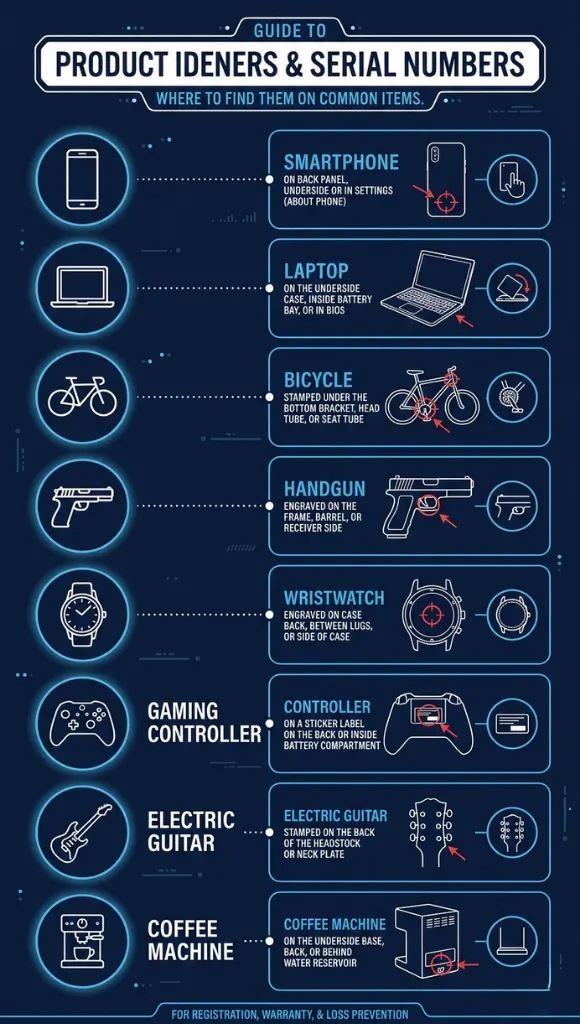
Understanding how long is a serial number for your specific products isn’t just trivia. It’s practical protection.
First: Pull out the three most valuable things you own and photograph their serial number labels right now. Not tomorrow. Right now. Store the images in a cloud folder labeled ‘Serial Numbers’ alongside the purchase receipts.
Second: Use the comparison table in this article as a quick reference whenever you’re verifying a used or refurbished product. A serial number that’s shorter or formatted differently than the standard for that product category is an immediate red flag.
Third: Register your products with the manufacturer. This step takes under two minutes and ensures your name is permanently linked to the serial number in their system, protecting your warranty rights and recovery options.
We continuously share more tech blogs to keep you updated with the latest trends. Our content covers web development, mobile apps, AI, and modern digital solutions. Each blog is written in a simple and easy-to-understand way for everyone. We aim to help learners and professionals grow their tech knowledge. Stay connected with Zprostudio to explore and stay ahead in the tech world