DMO Full Form: Complete Guide to DMO Meanings in Technology and Digital World
Have you ever stumbled upon the abbreviation “DMO” while reading tech documentation, browsing digital marketing guides, or exploring software development forums? You’re definitely not alone. Thousands of tech professionals, students, and digital enthusiasts in India search for “DMO full form” every month, trying to decode what this three-letter acronym actually means.
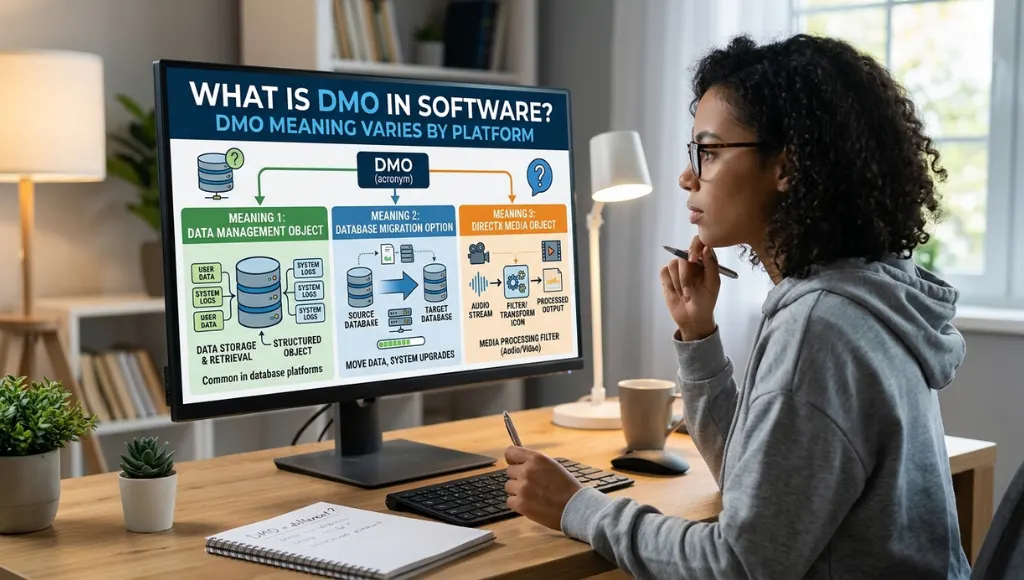
Maybe you’re a developer working on a project and encountered “DMO” in technical specs. Perhaps you’re a digital marketer trying to understand campaign metrics, or a student preparing for IT exams. The confusion is completely understandable—this seemingly simple acronym has multiple meanings across different technology domains, and using the wrong interpretation can lead to miscommunication, project delays, or even technical errors.
I’ve spent over a decade in the technology sector, working across software development, digital marketing, and IT infrastructure, and I can tell you from experience that understanding technical acronyms like DMO is more crucial than many people realize. The meaning of DMO changes dramatically depending on the tech context—what applies in database management won’t make sense in digital marketing, and vice versa.
This comprehensive guide will walk you through all the major technology-related meanings of DMO, explain which interpretation applies in which situation, provide real-world examples from the Indian tech industry, and help you use this knowledge practically in your work or studies.
What Does DMO Stand For in Technology? The Key Full Forms
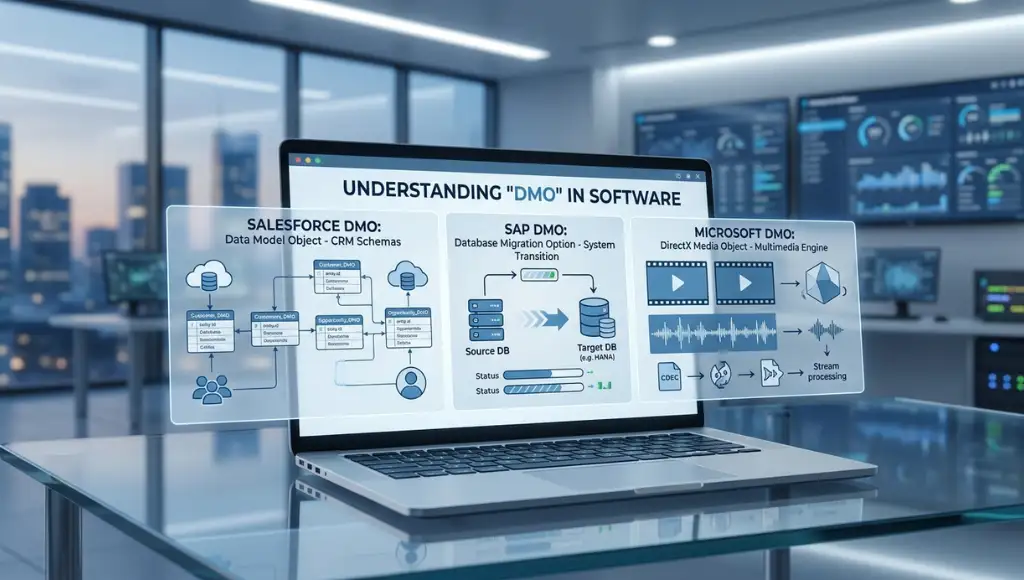
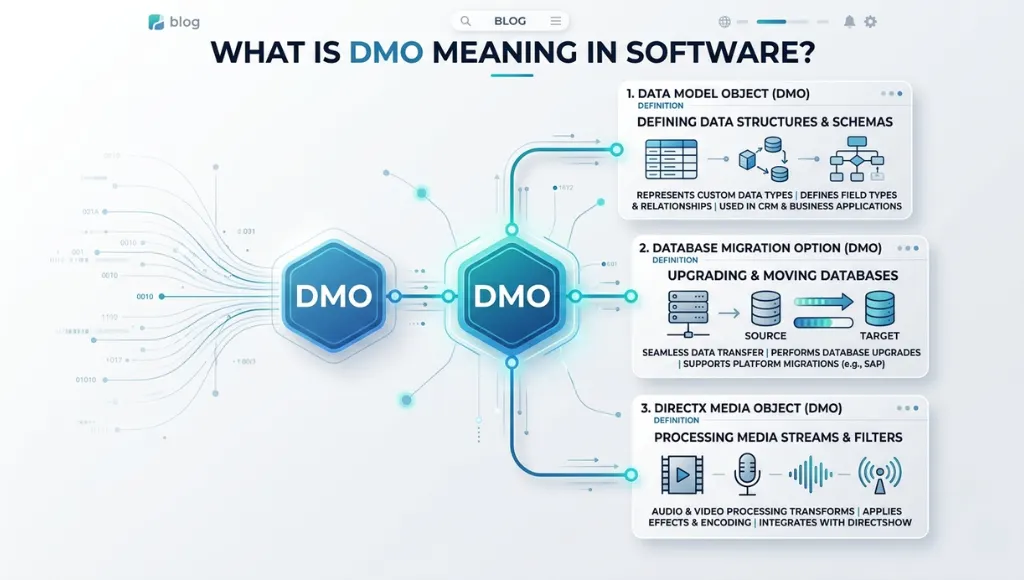
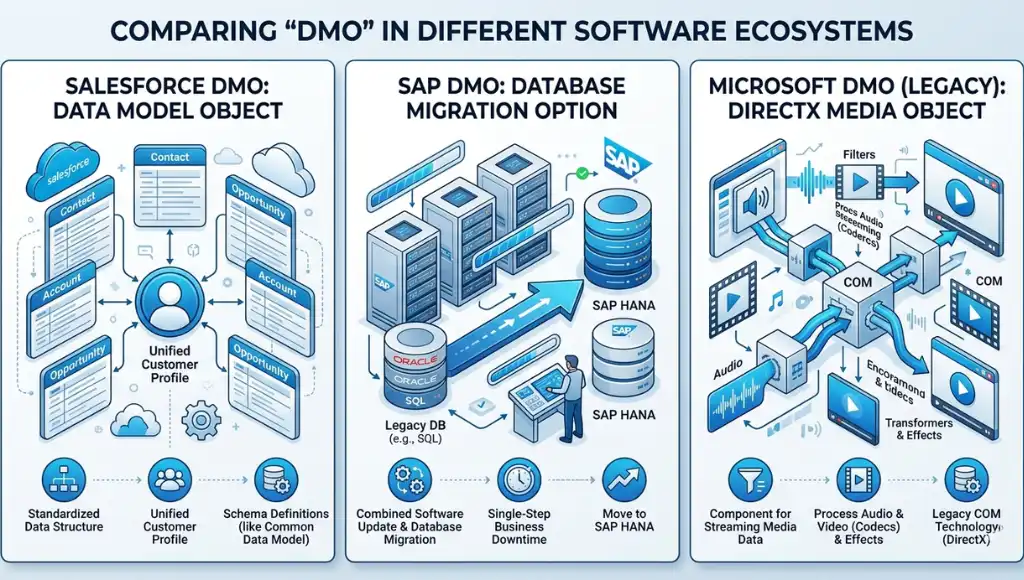
DMO is one of those versatile tech acronyms that serves different purposes across various domains—from software development to digital marketing. Let me break down the most important technology-related meanings you’re likely to encounter:
1. Data Management Object (DMO) – Software Development & Databases
This is the most common DMO full form in software development and database management contexts.
DMO Full Form: Data Management Object
A Data Management Object is a software component or object-oriented programming construct used to handle data operations in applications. Think of it as a specialized code module that manages how data is stored, retrieved, updated, and deleted within a software system.
Data Management Objects follow standardized patterns and protocols to ensure interoperability across systems. Organizations like the World Wide Web Consortium (W3C) establish guidelines for data structures and web technologies that inform DMO implementations in modern applications.
How DMOs Work in Real-World Applications:
In modern software development, DMOs serve as intermediaries between your application’s business logic and the database layer. They encapsulate all the complex database operations, making code more organized and maintainable.
For example, if you’re building an e-commerce app in India—let’s say for selling electronics or fashion items—your DMO would handle:
- Product catalog management – storing product details, prices, inventory levels
- User data operations – managing customer profiles, addresses, order history
- Transaction processing – recording purchases, updating stock counts
- Query optimization – efficiently fetching data when users search or browse products
Real-World Example from Indian Tech Industry:
Companies like Flipkart, Paytm, and Zomato extensively use Data Management Objects in their backend systems. When you search for a smartphone on an e-commerce platform, the search query triggers DMOs that fetch relevant products from massive databases containing millions of items, filter by your preferences (price range, brand, ratings), and display results in milliseconds.
According to industry data, well-designed DMOs can improve database query performance by 40-60%, reducing server load and improving user experience—crucial factors in India’s competitive digital marketplace where users expect instant responses even on slower 3G/4G connections.
Key Benefits of Using DMOs:
- Code reusability – Write once, use everywhere in your application
- Easier maintenance – Changes to database structure require updates in one place only
- Better security – Centralized data access reduces SQL injection vulnerabilities
- Improved performance – Optimized queries and connection pooling
- Team collaboration – Clear separation allows frontend and backend developers to work independently
Popular Programming Languages Using DMOs:
- Java – Data Access Objects (DAO) pattern, which is essentially DMO implementation
- C#/.NET – Entity Framework uses DMO concepts extensively
- Python – ORMs like Django ORM and SQLAlchemy implement DMO patterns
- PHP – Laravel Eloquent ORM follows DMO principles
- Node.js – Mongoose for MongoDB implements similar patterns
If you’re a developer or computer science student in India preparing for placements at IT companies like TCS, Infosys, Wipro, or startups, understanding DMO concepts and Object-Relational Mapping (ORM) is essential. These topics frequently appear in technical interviews.
2. Digital Marketing Optimization (DMO) – Online Marketing & SEO
This DMO full form is increasingly popular in India’s booming digital marketing industry.
DMO Full Form: Digital Marketing Optimization
Digital Marketing Optimization refers to the systematic process of improving digital marketing campaigns, websites, and online presence to achieve better results—higher traffic, more conversions, improved ROI, and enhanced user engagement.
Many popular Data Management Object implementations are available as open-source libraries. Developers can explore frameworks like Hibernate, Django ORM, and Sequelize on GitHub open-source repositories to understand real-world DMO patterns and best practices used in production applications.
What DMO Includes in Digital Marketing:
Think of DMO as the continuous improvement cycle for all your online marketing efforts. It’s not a one-time task but an ongoing process of testing, measuring, and refining.
Key Components of Digital Marketing Optimization:
1. Search Engine Optimization (SEO):
- Keyword research and targeting for Indian search patterns
- On-page optimization (title tags, meta descriptions, headers in Hindi and English)
- Technical SEO (site speed crucial for Indian mobile users on slower networks)
- Link building and domain authority improvement
- Local SEO for businesses targeting specific Indian cities
2. Conversion Rate Optimization (CRO):
- A/B testing landing pages to see what works for Indian audiences
- Optimizing call-to-action buttons (text in regional languages often performs better)
- Improving form designs (reducing fields increases completion rates by 30-40% in India)
- Mobile optimization (70%+ of Indian internet users are mobile-first)
- Payment gateway optimization (UPI, Paytm, Google Pay integration crucial for Indian e-commerce)
3. Content Optimization:
- Creating content that resonates with Indian audiences
- Using relatable examples and cultural references
- Optimizing for regional languages (Hindi, Tamil, Telugu, Bengali, Marathi content)
- Video content optimization for YouTube (second-largest market globally)
- Voice search optimization (growing rapidly with Hindi voice searches)
4. Social Media Optimization:
- Platform-specific strategies (Instagram, Facebook dominate in India)
- Timing posts for maximum Indian user engagement
- Regional content strategies
- Influencer collaboration optimization
- WhatsApp marketing optimization (highly effective in India)
5. Paid Advertising Optimization:
- Google Ads campaign refinement
- Facebook/Instagram ads targeting Indian demographics
- Budget allocation based on performance data
- Ad copy testing in multiple languages
- Remarketing campaign optimization
Real-World DMO Example from Indian Digital Marketing:
Consider a Bangalore-based online education startup offering coding courses. Their initial digital marketing campaign was generating traffic but poor conversions. Through DMO, they:
- Optimized landing pages for mobile users (reduced load time from 8 seconds to 2 seconds)
- A/B tested pricing display in rupees vs. dollars (rupees performed 45% better)
- Added testimonials from Indian students at recognizable companies (increased trust)
- Localized content with examples relevant to Indian job market (FAANG, Indian unicorns)
- Optimized payment flow by adding UPI and EMI options (conversion rate jumped 67%)
The result? Their cost per acquisition dropped by 52%, and monthly enrollments increased by 180% within three months—all through systematic Digital Marketing Optimization.
Tools Used for DMO in India:
- Google Analytics – tracking website performance and user behavior
- Google Search Console – monitoring search visibility and technical issues
- SEMrush/Ahrefs – keyword research and competitor analysis
- Hotjar/Microsoft Clarity – heatmaps and user session recordings
- Google Optimize – A/B testing and personalization
- PageSpeed Insights – performance optimization
- Canva – creating optimized visual content
- Mailchimp/SendGrid – email marketing optimization
According to a recent IAMAI (Internet and Mobile Association of India) report, companies implementing systematic DMO practices see average ROI improvements of 35-50% compared to those running static campaigns without optimization.
3. Device Management Object (DMO) – Mobile Technology & IoT
DMO Full Form: Device Management Object
In mobile technology and Internet of Things (IoT) contexts, a Device Management Object refers to a standardized data structure used in device management protocols, particularly in OMA-DM (Open Mobile Alliance Device Management).
Understanding DMOs in Mobile Device Management:
Think of DMOs as the building blocks that allow remote management of smartphones, tablets, and IoT devices. They define how device settings, configurations, and firmware are structured and accessed.
Practical Applications in India:
1. Enterprise Mobile Device Management:
Indian companies managing employee smartphones use DMO-based systems to:
- Configure email and VPN settings remotely
- Enforce security policies (password requirements, encryption)
- Install or update business applications
- Wipe corporate data when employees leave (without affecting personal data)
- Monitor compliance with company IT policies
2. IoT Device Management:
As India rapidly adopts smart home devices, industrial IoT, and connected vehicles, DMOs enable:
- Remote firmware updates for smart meters in homes
- Configuration of industrial sensors in manufacturing plants
- Managing connected agriculture devices helping Indian farmers
- Smart city infrastructure management (traffic systems, street lights)
3. Telecom Operator Device Configuration:
Indian telecom operators like Jio, Airtel, and Vi use DMO-based protocols to:
- Remotely configure APN settings on subscriber devices
- Push carrier settings updates
- Manage VoLTE and 5G configurations
- Update network-related parameters without user intervention
Real Example: When Reliance Jio launched in 2016, they used DMO-based device management to remotely configure millions of smartphones for their network, enabling features like VoLTE without requiring users to manually change settings—a crucial factor in their rapid adoption across India.
Technical Specification:
DMOs follow the OMA-DM standard, organizing device information in a tree structure. Each node in this tree represents a manageable aspect of the device:
./DevInfo (Device Information)
./DevDetail (Detailed Device Info)
./DMAcc (DM Account settings)
./Con (Connectivity settings)For developers working on mobile apps or IoT solutions in India, understanding DMO structures is valuable when implementing features that interact with device-level configurations.
4. Distributed Memory Object (DMO) – High-Performance Computing
DMO Full Form: Distributed Memory Object
In high-performance computing and distributed systems, a Distributed Memory Object is a programming abstraction that allows objects to be shared across multiple computers or processors, each with their own separate memory.
Why This Matters in Modern Computing:
As applications grow more complex and data-intensive, single computers can’t handle everything. DMOs enable applications to scale across multiple machines while maintaining the illusion of working with local objects.
Applications Relevant to Indian Tech Sector:
1. Cloud Computing Platforms:
Indian cloud service providers and companies using AWS, Azure, or Google Cloud rely on DMO concepts for:
- Building scalable SaaS applications serving millions of users
- Processing large datasets across distributed clusters
- Running machine learning models on distributed systems
- Managing microservices architectures
2. Financial Technology (FinTech):
India’s booming FinTech sector (Paytm, PhonePe, CRED, Razorpay) uses distributed memory architectures to:
- Process millions of UPI transactions simultaneously
- Handle real-time fraud detection across distributed systems
- Manage distributed ledger technology (blockchain applications)
- Scale payment processing during festival seasons (Diwali sales, etc.)
3. Big Data Analytics:
Indian e-commerce, social media, and analytics companies use DMO principles in technologies like:
- Apache Spark for distributed data processing
- Hadoop clusters for big data storage and analysis
- Real-time analytics dashboards
- Recommendation engines processing user behavior data
Technical Example:
Imagine you’re building a video streaming app for India (like Hotstar or Amazon Prime Video). When millions of users watch IPL matches simultaneously, DMOs help distribute the load:
- User session data stored across multiple servers
- Video chunks served from geographically distributed cache servers
- Analytics collected and aggregated across distributed systems
- All working together seamlessly while appearing as single objects to your application code
For computer science students preparing for higher studies or tech careers, understanding distributed systems and DMO concepts is increasingly important, especially with India’s growing role in global cloud computing and software development.
5. Digital Media Optimization (DMO) – Content & Media Technology
DMO Full Form: Digital Media Optimization
Digital Media Optimization refers to the technical process of optimizing digital media files (images, videos, audio) for better performance, faster loading, reduced bandwidth consumption, and improved user experience.
Digital Media Optimization involves techniques like lazy loading, responsive images, and efficient codecs. For detailed implementation guides on web performance and media optimization techniques, the Mozilla Developer Network (MDN) provides comprehensive documentation used by developers worldwide.
Why DMO is Critical for Indian Websites and Apps:
India has unique internet infrastructure challenges:
- Many users still on 3G or slower 4G connections
- Data costs, though decreasing, remain a consideration for many users
- Mix of high-end smartphones and budget devices with limited processing power
- Regional connectivity variations (metros vs. tier-2/3 cities vs. rural areas)
Proper Digital Media Optimization can make the difference between a user staying on your website or leaving due to slow loading.
Key Aspects of Digital Media Optimization:
1. Image Optimization:
- Format selection – Using WebP format (30% smaller than JPEG) for modern browsers
- Compression – Reducing file size without visible quality loss
- Responsive images – Serving different image sizes based on device (mobile gets smaller files)
- Lazy loading – Loading images only when user scrolls to them
- CDN usage – Serving images from servers geographically closer to Indian users
Practical Example: A Mumbai-based e-commerce startup reduced their product page load time from 7 seconds to 1.8 seconds by optimizing images, resulting in 43% higher mobile conversions.
2. Video Optimization:
- Adaptive bitrate streaming – Automatically adjusting video quality based on user’s internet speed
- Codec selection – Using H.265/HEVC for better compression
- Resolution optimization – Offering 360p/480p options for users on slower connections
- Thumbnail optimization – Fast-loading preview images
- Progressive loading – Videos start playing while still downloading
Real-World Impact: Indian EdTech platforms like BYJU’s, Unacademy, and Khan Academy heavily optimize videos to ensure students in tier-3 cities with limited bandwidth can still access educational content smoothly.
3. Audio Optimization:
- Format selection – MP3 vs. AAC vs. OGG
- Bitrate optimization – Balancing quality and file size
- Compression techniques – Reducing file sizes for podcasts and music streaming
4. Technical Implementation:
Tools and techniques Indian developers use:
- Image optimization tools: TinyPNG, ImageOptim, Squoosh, Cloudinary
- Video optimization: FFmpeg, HandBrake, AWS Elastic Transcoder
- CDN services: Cloudflare, AWS CloudFront, Google Cloud CDN
- Performance monitoring: Google PageSpeed Insights, GTmetrix, WebPageTest
Benefits for Indian Businesses:
According to Google research specific to India:
- 53% of mobile users abandon sites taking over 3 seconds to load
- 1-second delay in page load can reduce conversions by 7%
- Optimized images can reduce page weight by 40-60%
- Proper media optimization can cut bandwidth costs by 30-50%
For developers and website owners targeting Indian audiences, Digital Media Optimization isn’t optional—it’s essential for success.
How to Identify Which DMO Full Form Applies to Your Context
Still confused about which DMO meaning is relevant to your situation? Here’s a quick decision framework:
Ask yourself these questions:
1. What field are you working in?
- Software development, databases → Data Management Object
- Digital marketing, SEO, online business → Digital Marketing Optimization
- Mobile apps, IoT, telecom → Device Management Object
- Cloud computing, distributed systems → Distributed Memory Object
- Website development, media production → Digital Media Optimization
2. What are you trying to accomplish?
- Writing code for data operations → Data Management Object
- Improving online campaign performance → Digital Marketing Optimization
- Managing devices remotely → Device Management Object
- Building scalable distributed apps → Distributed Memory Object
- Making websites load faster → Digital Media Optimization
3. What keywords appear around “DMO” in your document?
- Database, CRUD, ORM, SQL → Data Management Object
- SEO, conversion, traffic, ROI → Digital Marketing Optimization
- OMA-DM, configuration, remote management → Device Management Object
- Distributed, cluster, scalability → Distributed Memory Object
- Images, videos, compression, loading speed → Digital Media Optimization
Common Questions Indian Tech Professionals Ask About DMO
Yes, particularly Data Management Object concepts. Companies like TCS, Infosys, Wipro, HCL, and Tech Mahindra frequently ask about database design patterns, ORM, and data handling in technical interviews. Understanding DMO principles gives you an advantage.
Currently, Digital Marketing Optimization skills are in very high demand with good pay—digital marketing managers with proven optimization skills earn ₹6-15 lakhs annually in metros. Data Management Object expertise is valuable for software developers (₹5-20 lakhs depending on experience). Distributed Memory Object knowledge is premium for cloud architects and senior developers (₹15-40 lakhs+).
Absolutely! For Data Management Objects, explore:
- GeeksforGeeks (Indian platform with excellent database tutorials)
- Coding Ninjas YouTube channel
- NPTEL courses from IITs
- Udemy courses (often discounted for Indian users)
For Digital Marketing Optimization:
- Google Digital Unlocked (free certification)
- HubSpot Academy (free courses)
- Neil Patel's blog and YouTube
- Indian digital marketing blogs like YourStory, Inc42
Not necessarily. Many excellent free tools work great:
- TinyPNG for image compression
- Squoosh (Google's tool) for advanced image optimization
- HandBrake for video compression
- Cloudflare's free tier for CDN
- PageSpeed Insights for performance analysis
Indian developers and small businesses can achieve 80-90% of optimization benefits using free tools before investing in premium solutions.
Very much so! Digital Marketing Optimization skills are highly valuable for freelancers on platforms like Upwork, Fiverr, and Freelancer. Indian DMO specialists earn ₹500-₹3,000 per hour on these platforms. Similarly, Data Management Object expertise helps developers command higher rates for database-heavy projects.
Practical Tips for Applying DMO Knowledge in Your Tech Career
Whether you’re a student, developer, marketer, or entrepreneur in India, here’s how to leverage DMO knowledge effectively:
For Software Developers:
- Master one ORM framework thoroughly – Django ORM for Python, Hibernate for Java, Entity Framework for .NET
- Study design patterns – DAO (Data Access Object), Repository, Unit of Work patterns
- Practice on real projects – Build a full-stack app with proper DMO implementation
- Contribute to open source – Many Indian developers learn best by contributing to projects using these patterns
- Prepare for interviews – Practice explaining DMO concepts clearly; interviewers love candidates who understand “why” not just “how”
For Digital Marketers:
- Get certified – Google Analytics, Google Ads, HubSpot certifications (all free or low-cost)
- Run test campaigns – Start with small budgets (₹500-1,000) and practice optimization
- Learn analytics deeply – Understanding data is 80% of successful optimization
- Stay updated – Google algorithm changes, new tools, industry trends
- Build a portfolio – Document your optimization wins with before/after metrics
For Students:
- Choose your focus area based on interest and career goals
- Start with free resources – Don’t wait for paid courses to begin learning
- Build projects – Practical implementation beats theoretical knowledge
- Network with professionals – Join LinkedIn groups, attend tech meetups, participate in hackathons
- Stay current – Technology evolves rapidly; continuous learning is essential
For Business Owners:
- Invest in optimization – It’s not expense, it’s investment with measurable ROI
- Hire specialists – DMO requires expertise; generalists often can’t deliver results
- Monitor metrics – What gets measured gets improved
- Be patient – Optimization is iterative; results compound over time
- Localize for India – Global best practices need Indian adaptation
Future of DMO Technologies in India's Digital Economy
India’s technology sector is growing at unprecedented rates. Understanding DMO concepts positions you well for this growth:
Emerging Trends:
1. AI-Powered Optimization:
- Machine learning automating Digital Marketing Optimization
- AI optimizing database queries and Data Management Objects
- Intelligent media optimization reducing manual work
2. 5G Impact:
- Faster networks enabling richer media experiences
- New optimization challenges and opportunities
- Enhanced mobile device management capabilities
3. Regional Language Digital Growth:
- Optimization for Hindi, Tamil, Telugu, Bengali, Marathi content
- Voice search optimization for regional languages
- Local SEO becoming more sophisticated
4. Privacy-First Optimization:
- Data protection regulations affecting DMO strategies
- Privacy-preserving analytics and optimization
- Consent-based marketing optimization
5. Edge Computing:
- Distributed computing moving closer to users
- New DMO patterns for edge devices
- Reduced latency improving user experiences
Indian tech professionals who master DMO concepts now will be well-positioned for these emerging opportunities.
Conclusion: Master DMO Concepts for Your Tech Success
Understanding “DMO full form” goes far beyond memorizing an acronym—it’s about grasping fundamental concepts that power modern technology systems, from the databases behind your favorite apps to the marketing campaigns you see online.
Whether you’re a software developer building scalable applications, a digital marketer optimizing campaigns for Indian audiences, a mobile developer managing IoT devices, a system architect designing distributed systems, or a web developer optimizing media for faster load times—DMO knowledge directly impacts your effectiveness and career prospects.
The good news? India’s tech ecosystem offers abundant learning resources, growing job opportunities, and an entrepreneurial environment where DMO skills translate to real business value.
Your Next Steps:
- Identify which DMO area aligns with your career goals – Review the different meanings and choose your focus
- Start learning systematically – Use the free resources mentioned throughout this article
- Practice on real projects – Theory becomes valuable only through application
- Join communities – Connect with other Indian tech professionals learning similar skills
- Stay consistent – Small daily progress compounds into expertise over months
Looking for more technology guides, tutorials, and insights tailored for Indian tech enthusiasts? Explore the extensive resource library at ZProStudio, where we publish in-depth articles covering everything from software development and digital marketing to mobile technology and emerging tech trends.
What’s your experience with DMO concepts? Which area are you most interested in exploring? Share your thoughts and questions in the comments—let’s learn and grow together in India’s exciting digital future.