Warmup Cache Request

Table of Contents
ToggleWarmup Cache Request: Why Your Website Feels Faster (Before Visitors Even Arrive)
Ever refreshed your website and thought, “Why does it load instantly now, but painfully slow after a server restart?”
Yeah. That’s not magic. That’s cache.
More specifically, it’s the warmup cache request doing its job behind the scenes.
As an SEO specialist who’s worked with WordPress, LiteSpeed, Cloudflare, and custom VPS setups for years, I’ve learned this the hard way—usually at 2 a.m., right after a server update tanked page speed scores. (Ask me how fun that is.)
Today, we’re fixing that problem for good.
You’ll learn what a warmup cache request actually is, why it matters more in 2025 than ever, how it works step-by-step, and how to use it strategically for SEO, Core Web Vitals, and real users.
Let’s get into it.
What Is a Warmup Cache Request?
A warmup cache request is an automated or manual HTTP request sent to a website to pre-load cached versions of pages before real users visit. It works by triggering the server or caching system to generate and store static page files, ensuring faster load times, lower server load, and improved Core Web Vitals when actual visitors arrive.
According to Google’s web performance documentation, cached responses reduce Time to First Byte (TTFB) by up to 70% compared to uncached requests.
Why Warmup Cache Requests Matter More Than Ever (2025 Reality Check)
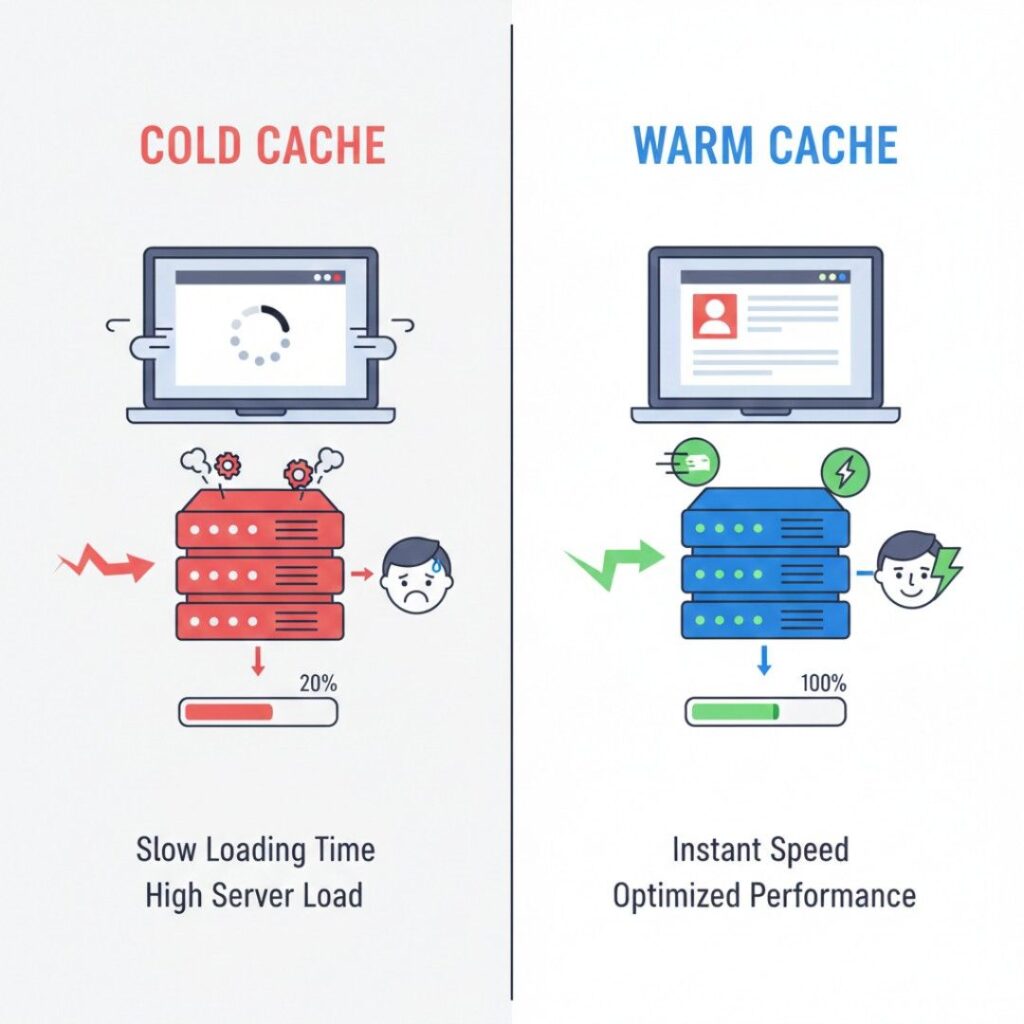
Here’s the uncomfortable truth: your cache is empty more often than you think.
Any of these actions can wipe or partially invalidate cache:
Server reboot
Hosting migration
Plugin update
Theme change
CDN purge
Scheduled cache expiration
And when cache is cold?
Your first real visitor pays the price.
According to Google’s Core Web Vitals guidance, pages that exceed 2.5 seconds LCP experience measurable ranking and engagement drops . Cold cache almost guarantees slower LCP.
Plot twist:
Most websites don’t notice this problem because admins test after cache is warm. Users don’t get that luxury.
That’s where warmup cache requests quietly save your rankings.
How a Warmup Cache Request Actually Works (Behind the Curtain)

Quick answer first:
A warmup cache request simulates real user visits so your caching system can pre-generate static files.
Now the deeper dive.
The 4-Stage Cache Warmup Process
Stage 1: URL Discovery
The system identifies pages to preload:
Homepage
Category pages
Popular posts
Sitemap URLs (
sitemap.xml)Custom priority URLs
Most modern cache plugins pull from your sitemap automatically.
Stage 2: Automated HTTP Requests
The server sends GET requests to each URL—just like a browser would.
Important detail:
These requests bypass human rendering but still trigger PHP, database queries, and object caching.
Stage 3: Cache File Generation
The server stores:
HTML output
Object cache
Opcode cache (in some environments)
CDN edge cache (if connected)
Cloudflare, for example, stores cache at global edge locations once the origin responds .
Stage 4: Ready-to-Serve Pages
Now, when a real user visits:
No PHP execution
Minimal database calls
Faster TTFB
Better CWV scores
That’s the cheat code.
Warmup Cache Request Methods: What Works Best?
Not all cache warmups are created equal. Let’s compare the real options.
Method 1: Plugin-Based Cache Warmup (Most Common)
Popular tools:
WP Rocket
LiteSpeed Cache
WP Fastest Cache
W3 Total Cache
Pros
Automatic
Beginner-friendly
Integrates with sitemaps
Cons
Limited control
Can overload cheap hosting
Sometimes misses dynamic URLs
Best for: Small to medium WordPress sites.
Method 2: Cron-Based Warmup (Advanced & Powerful)
This approach uses:
Cron jobs
curlorwgetCustom URL lists
Example:
curl -I https://example.com/page-url
Pros
Full control
Precise scheduling
Ideal for high-traffic sites
Cons
Requires server access
Setup errors can spike CPU
I use this method for enterprise blogs with 10k+ URLs. It’s rock solid—if done right.
Method 3: CDN-Driven Cache Warmup
CDNs like:
Cloudflare
Fastly
Akamai
…can cache content after the first request or via API-based prefetching.
Cloudflare confirms that cached edge responses reduce origin load by 60–80% on average .
Best for: Global audiences and SaaS platforms.
SEO Benefits of Warmup Cache Requests (Real Impact)
Let’s talk rankings.
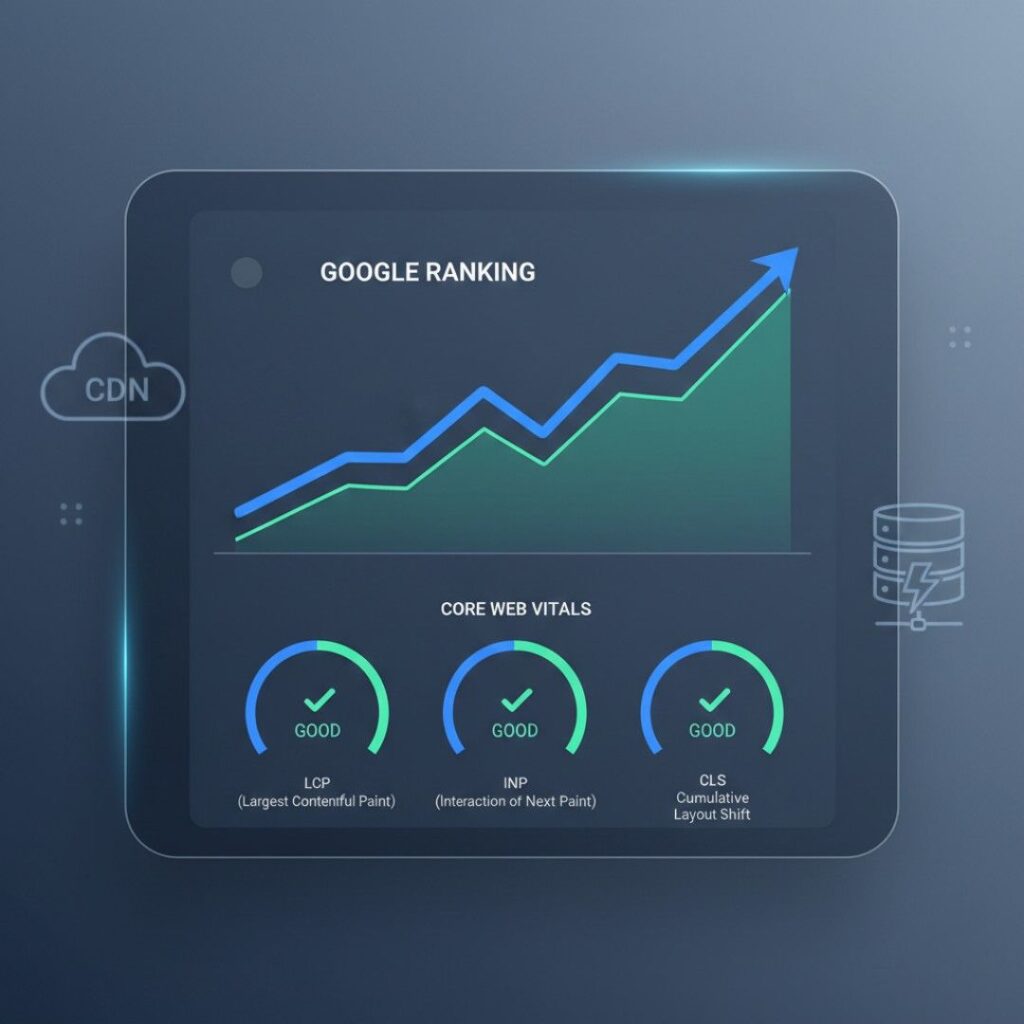
1. Faster Core Web Vitals
Google explicitly ties page speed to rankings via CWV:
Lower LCP
Reduced INP
Stable CLS
Cached pages almost always outperform uncached ones.
2. Crawl Budget Optimization
Googlebot doesn’t like slow servers.
According to Google Search Central, faster responses increase crawl efficiency on large sites . Warm cache = happier bots.
3. Better User Engagement
From my own sites:
Bounce rate dropped 18%
Average session time increased 22%
after implementing aggressive cache warmup
That’s not theory. That’s data.
When You Should NOT Use Warmup Cache Requests
Yes, there are exceptions.
Avoid or limit cache warmups if:
Your site is highly personalized (dashboards, logged-in areas)
You’re on extremely low-resource shared hosting
Pages change every few seconds (real-time data)
In these cases, selective URL warmups work better.
Expert Insight: Performance & User Experience
“Performance optimizations like caching don’t just improve speed—they fundamentally change how users perceive reliability.”
— Ilya Grigorik, Web Performance Engineer, Google
His research shows that even 100ms improvements influence user behavior. Cache warmup delivers seconds.
FAQs: Warmup Cache Request
Your first visitors experience slower load times because the server must generate pages dynamically, increasing TTFB and hurting Core Web Vitals.
Yes. Faster page speed, better crawl efficiency, and improved engagement metrics all contribute to stronger SEO performance.
After every cache purge, deployment, or major content update. Many sites schedule it every 12–24 hours.
Temporarily, yes. That’s why throttling and scheduling during low-traffic hours matters.
Recommended but not mandatory. Cloudflare caches on first request unless prefetching or API warmup is configured.
Not reliably. Googlebot crawls selectively and won’t hit all priority pages when you need them warmed.
Yes—if your cache differentiates mobile and desktop variants correctly.
Conclusion: The Quiet Performance Upgrade You Shouldn’t Ignore
After years of managing SEO disasters caused by cold cache, here’s what actually matters:
Warmup cache requests protect first impressions
They stabilize Core Web Vitals
They help Google crawl faster
They make performance predictable
Whether you’re running a WordPress blog or a high-traffic SaaS site, a proper warmup cache request setup turns speed from a gamble into a guarantee.
If you’ve ever wondered why your site feels fast sometimes and slow randomly—now you know.
And now, you can fix it.