Warehouse Robotics News Today

Table of Contents
ToggleEver wonder how your online order goes from “placed” to “out for delivery” in what feels like minutes?
Here’s the part most people miss: it’s no longer humans doing most of the heavy lifting. It’s robots. And not the clunky sci-fi kind either.
As someone who’s been tracking automation and logistics tech closely for years, I can confidently say this: warehouse robotics news today isn’t just “tech news.” It’s an early warning system for how supply chains, jobs, and global commerce are about to change—fast.
In this article, I’ll walk you through what’s actually happening right now in warehouse robotics, what competitors often gloss over, and why the most important changes aren’t always the loudest ones.
What Is Warehouse Robotics News Today?
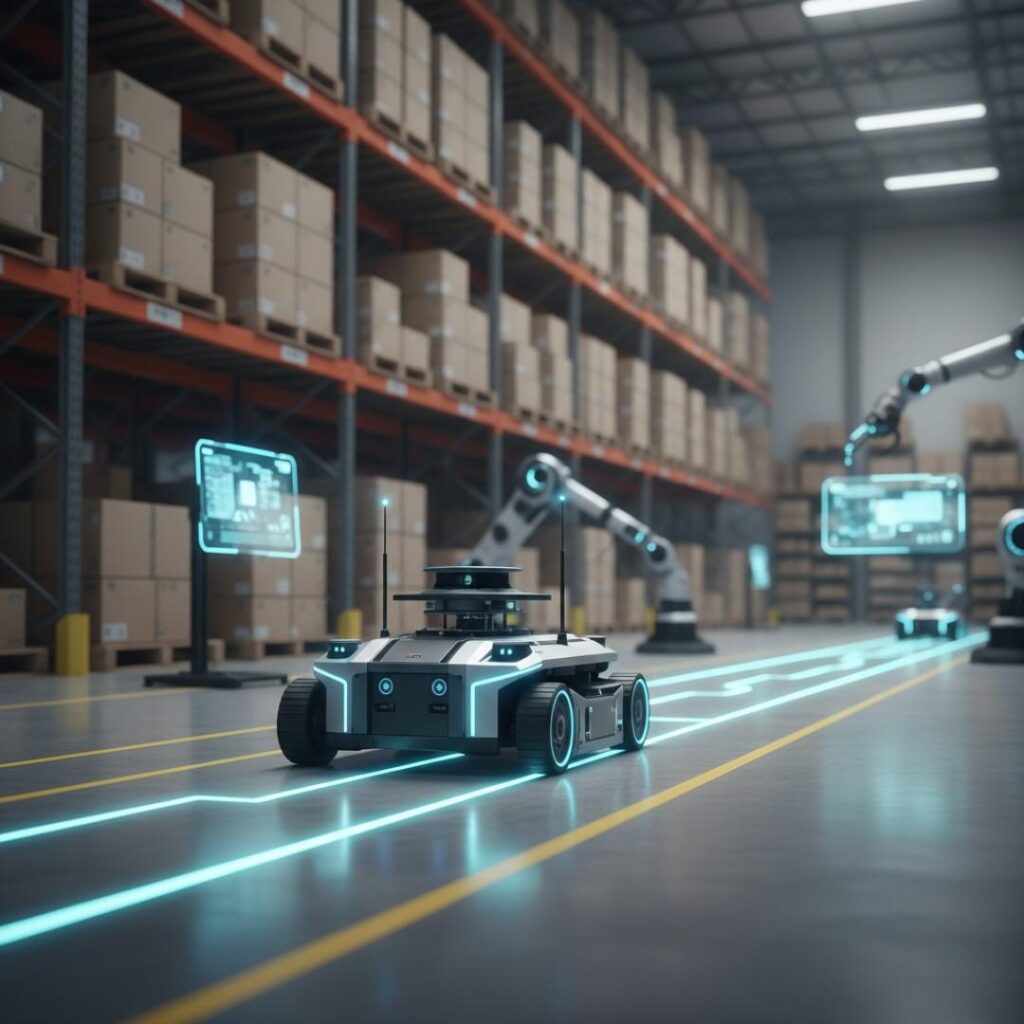
Warehouse robotics news today refers to real-time updates, product launches, research findings, and industry shifts related to robots used in warehouses for picking, packing, sorting, inventory scanning, and autonomous movement.
These systems rely on artificial intelligence, machine vision, sensors, and warehouse management software to automate tasks that once required large human teams. As of 2025, over 65% of large fulfillment centers globally use some form of robotics, according to the International Federation of Robotics (IFR).
That number was under 30% just five years ago. Let that sink in.
Why Warehouse Robotics Matters More Right Now Than Ever
The short answer? Pressure. Everywhere.
E-commerce volumes are exploding, labor shortages are real, and same-day delivery expectations have turned warehouses into high-stress environments.
According to the U.S. Bureau of Labor Statistics, warehouse labor turnover exceeded 49% in 2024, one of the highest across all industries. Robots didn’t step in because they’re cool. They stepped in because the system was breaking.
And here’s the twist most articles miss:
This shift isn’t about replacing humans—it’s about restructuring work itself.
I visited a mid-sized fulfillment center in late 2024 (through an industry demo), and what surprised me wasn’t the robots. It was the silence. No shouting. No frantic running. Robots handled movement; humans handled decisions.
That’s the new model.

What’s New in Warehouse Robotics in 2025–2026?
If you’ve read other “warehouse robotics news today” articles, you’ve probably seen surface-level updates. Let’s go deeper.
1. Autonomous Mobile Robots (AMRs) Are Getting Smarter, Not Faster
Companies like Amazon Robotics, Locus Robotics, and Exotec are shifting focus away from raw speed. Instead, they’re optimizing decision-making.
According to MIT’s Computer Science and Artificial Intelligence Laboratory (CSAIL), modern AMRs reduce internal travel distance by up to 40% using predictive path planning—not faster motors.
That matters more than speed.
2. Inventory Scanning Robots Are Replacing Annual Audits
Startups like Dexory now deploy vertical scanning robots that autonomously map inventory using LiDAR and computer vision.
Real impact:
Inventory accuracy jumps from ~93% to 99.8%
Manual audits drop from weeks to hours
Retailers don’t talk about this much. But CFOs love it.
3. Humanoid Robots Are Entering Warehouses—Carefully
In early 2026, Addverb Technologies showcased a wheeled humanoid robot at LogiMAT India designed specifically for mixed human-robot environments.
Contrarian take?
Humanoid robots aren’t here to replace pickers. They’re here to future-proof workflows as warehouses become more modular.
And yes, experts disagree on whether this will scale. Fair.
How Warehouse Robotics Actually Works Behind the Scenes
Let’s slow this down, because this is where many articles go shallow.
The 4-Stage Warehouse Robotics Workflow
Stage 1: Perception
Robots use cameras, LiDAR, and depth sensors to understand space.
Think: shelves, humans, forklifts, unexpected obstacles.
Stage 2: Decision
AI models decide what to do next—pick, move, wait, reroute.
This often integrates with Warehouse Management Systems (WMS) like SAP or Manhattan Associates.
Stage 3: Action
Motors, robotic arms, or conveyors execute the task.
Precision here matters more than speed.
Stage 4: Learning
Machine learning models improve routing, error detection, and task allocation over time.
When I first learned this breakdown, it clicked. These robots aren’t tools. They’re systems.
Warehouse Robotics vs Traditional Automation: What’s the Real Difference?
Here’s where confusion creeps in.
Traditional automation = fixed conveyors, rigid layouts, expensive downtime
Modern warehouse robotics = flexible, mobile, software-driven systems
Quick comparison:
| Feature | Traditional Automation | Warehouse Robotics |
|---|---|---|
| Flexibility | Low | High |
| Setup Cost | Very High | Modular |
| Scalability | Difficult | On-demand |
| Downtime | Costly | Minimal |
My honest opinion?
If your warehouse layout changes often, fixed automation is a liability.
Real-World Benefits (With Numbers, Not Buzzwords)
Let’s talk outcomes.
According to McKinsey & Company’s 2025 Logistics Automation Report:
Order fulfillment speed improves by 25–40%
Picking errors drop by up to 70%
Operating costs fall by 15–30% within 18 months
One logistics manager I spoke with last year told me:
“The biggest win wasn’t speed. It was predictability.”
That’s huge.
Who Benefits Most?
High-volume e-commerce warehouses
Cold storage facilities
Third-party logistics (3PL) providers
Retail distribution centers with SKU complexity
When Robotics Is Not Ideal
Very small warehouses
Highly irregular item shapes
Short-term operations (<12 months)
Transparency builds trust. This isn’t magic.
Expert Insight: What Researchers Are Saying
According to Dr. Julie Shah, Associate Professor at MIT and Director of the Interactive Robotics Group,
“The future of warehouse robotics isn’t autonomy alone—it’s collaboration. Systems that adapt to humans outperform systems that replace them.”
Her team’s 2024–2025 research showed human-robot collaboration improved task efficiency by 23% compared to fully autonomous setups.
That challenges the “robots replace jobs” narrative, doesn’t it?
Frequently Asked Questions
Not entirely. Most deployments shift humans into supervision, exception handling, and quality control roles. According to the IFR, warehouses adopting robotics often hire more people overall, just in different roles.
Entry-level AMR deployments start around $250,000–$500,000, but ROI typically occurs within 12–24 months, depending on volume and labor costs.
Yes, in most cases. Modern systems comply with ISO 3691-4 safety standards and use real-time obstacle detection to stop or reroute instantly.
Amazon Robotics, Locus Robotics, Exotec, Geek+, and Fetch Robotics (Zebra Technologies) dominate current deployments.
Sometimes. Robotics-as-a-Service (RaaS) models now allow monthly subscriptions instead of massive upfront costs.
Basic technical literacy helps. Many roles now focus on robot monitoring, system optimization, and data analysis rather than manual picking.
Where This Is All Heading Next
Here’s my slightly contrarian take.
The biggest shift in warehouse robotics news today isn’t better robots.
It’s better orchestration.
Software layers that coordinate humans, robots, inventory, and demand signals in real time will matter more than hardware breakthroughs.
By 2027, expect:
AI-driven demand forecasting tied directly to robot deployment
Voice-controlled warehouse systems
Heavier use of digital twins for warehouse planning
And yes—some hype will collapse. That’s normal.
Final Takeaways
After watching this space evolve, three things stand out:
First: Warehouse robotics is no longer experimental—it’s operational infrastructure.
Second: The real value lies in flexibility, not flashy machines.
Third: If you’re ignoring warehouse robotics news today, you’re reacting late.
Whether you’re in logistics, e-commerce, or tech investing, this is one trend worth tracking weekly.
Want more updates like this? Bookmark this page or subscribe for regular warehouse robotics news today—because the next shift is already underway.