Future Healthcare Technology
— And Why Your Doctor Might Be a Robot by 2027
By Dr. Maya Chen, RN, MSN, Digital Health Strategist with 12 years in clinical informatics and telehealth implementation
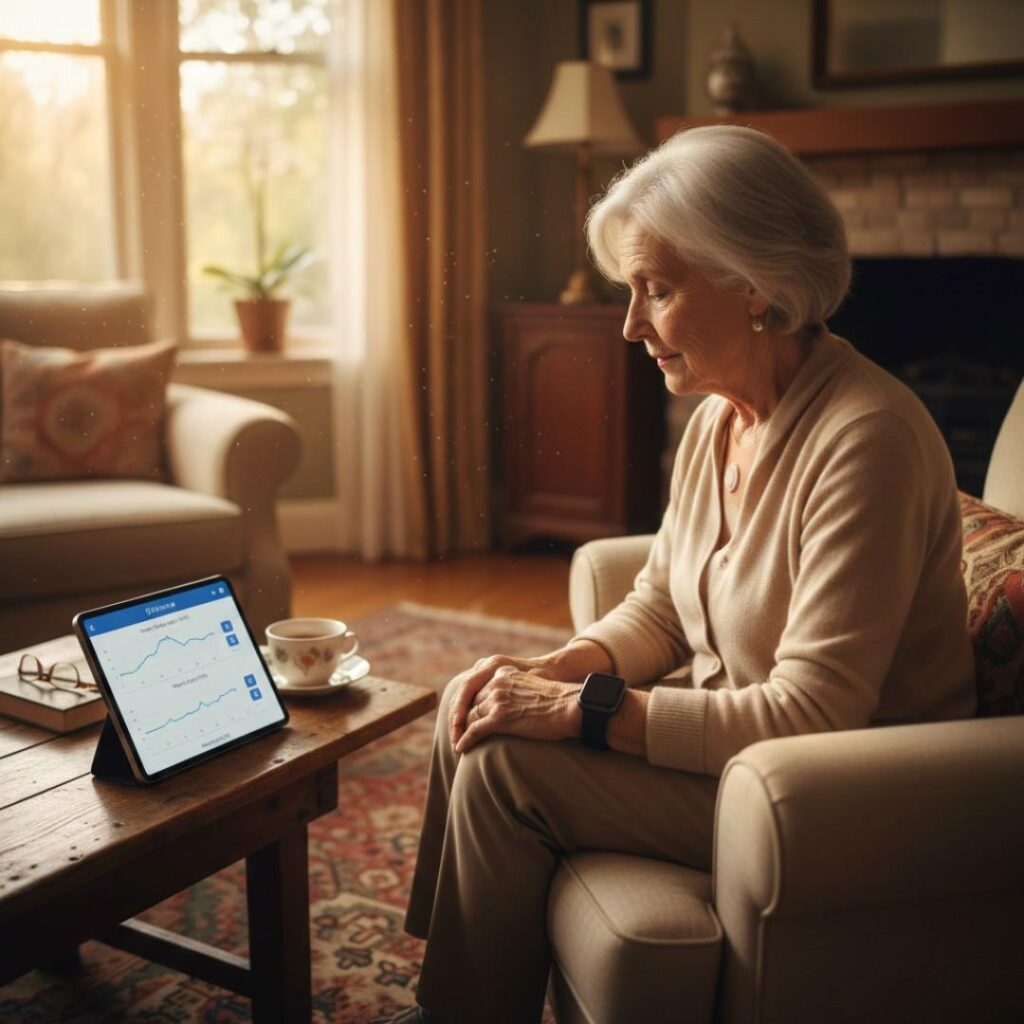
Table of Contents
ToggleHere’s a number that stopped me cold: by 2030, the global remote patient monitoring market is projected to hit $175.2 billion, up from roughly $53 billion today. That’s not a trend. That’s a seismic shift — the kind that rewrites what “going to the doctor” even means.
You’ve probably noticed it already. Maybe you’ve seen a neighbor wear a continuous glucose monitor that texts her phone. Maybe your dad’s cardiologist called him after spotting an irregular heartbeat through an app. Or maybe you’re the one who Googled “why does my smartwatch say my oxygen is low at 2am.”
We’re living through the most consequential transformation in healthcare delivery since the invention of the hospital. And most people have no idea how deep this goes. I’m going to show you exactly what’s changing, what’s working, and — honestly — what still scares me a little.
The Problem With the Old Model (And Why It Was Quietly Failing)
Here’s the uncomfortable truth about traditional healthcare: it was built around the building, not the patient.
You get sick, you travel to a facility, you wait, you get 12 minutes with a physician, you travel home. The system was never designed for chronic conditions, aging populations, or real-time monitoring. It was designed for acute episodes.
And the data backs this up. According to the CDC, 6 in 10 American adults have a chronic disease — conditions like diabetes, heart failure, and COPD that don’t need a hospital visit. They need continuous management. The traditional model creates what researchers call “care gaps”: the dangerous stretches between appointments where things quietly go wrong.
A 2023 study in the New England Journal of Medicine found that 40% of hospital readmissions within 30 days were preventable with better post-discharge monitoring. That’s not a clinical failure — it’s a systems failure. The building-centric model literally couldn’t see patients once they walked out the door.
That’s where future healthcare technology steps in. Remote patient monitoring (RPM), AI-assisted diagnostics, wearable biosensors, and telehealth platforms aren’t just convenient upgrades — they’re architectural replacements for a model that was cracking under pressure.
How At-Home Healthcare Technology Actually Works: The Four-Stage Framework
Understanding how future healthcare technology elevates at-home care isn’t just about knowing what gadgets exist. It’s about understanding the pipeline — how raw data becomes better outcomes. Here’s how the modern at-home care ecosystem actually functions:
Stage 1: Continuous Data Collection
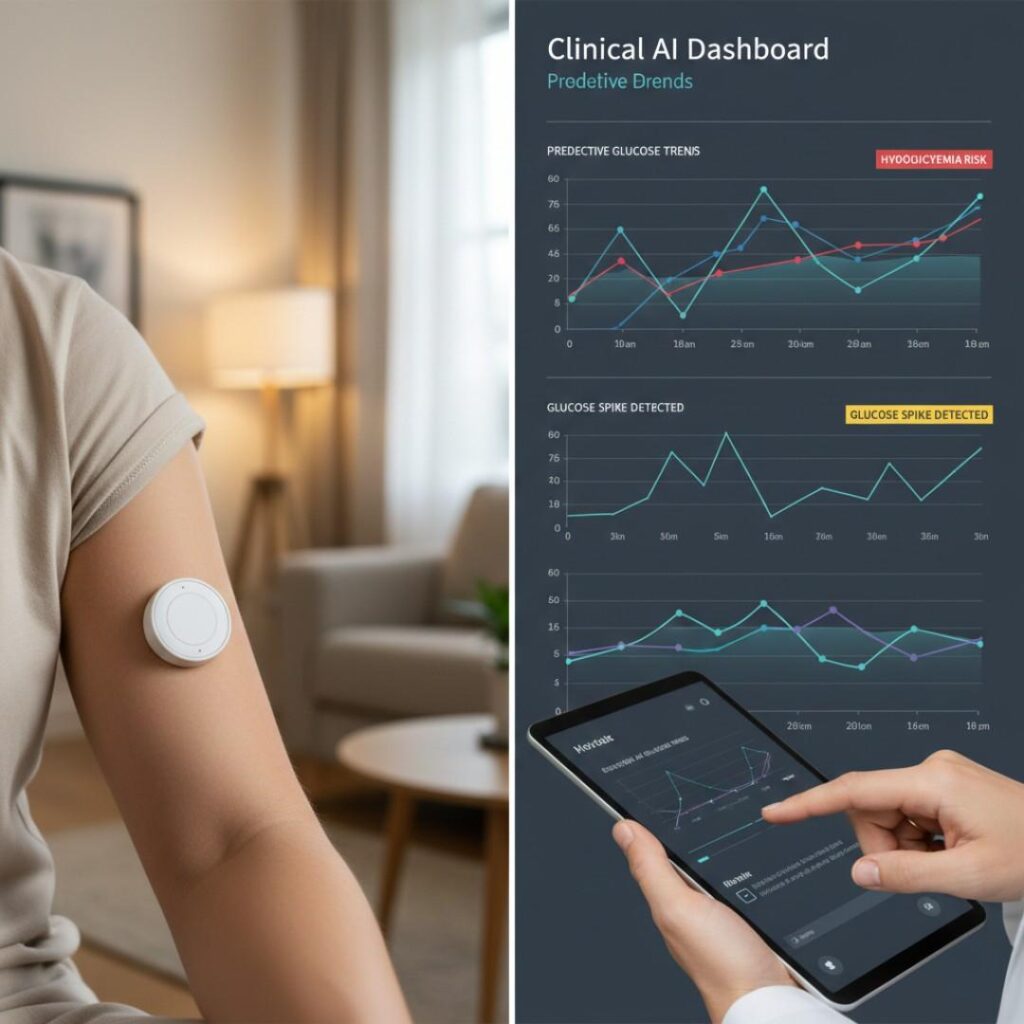
This is the layer most people see. Devices like the iRhythm Zio patch, FDA-cleared CGMs (continuous glucose monitors), and smartwatches with ECG capability don’t just take snapshots — they record streams of physiological data 24/7.
The difference between a blood pressure reading taken at a clinic versus 200 readings taken at home across two weeks isn’t just quantity. It’s accuracy. “White coat hypertension” — blood pressure artificially elevated by the anxiety of being in a clinical setting — affects up to 30% of patients, according to research from Harvard Medical School. Home monitoring eliminates that variable entirely.
Stage 2: AI-Powered Pattern Recognition
Raw data is useless without interpretation. This is where the real magic (and the real risk) lives.
Companies like Current Health (acquired by Best Buy Health), Biofourmis, and Philips HealthSuite use machine learning algorithms trained on millions of patient records to detect anomalies that human eyes would miss — or miss too late. A subtle shift in respiratory rate combined with declining oxygen saturation at 3am might look like nothing. To an algorithm that’s seen that pattern 40,000 times before a COPD exacerbation? That’s a five-alarm fire.
Wait — let me be real here. AI doesn’t replace clinical judgment. It amplifies it. The best-performing systems use AI to triage, flagging the 3% of patients who need immediate intervention so nurses can spend time where it matters.
Stage 3: Care Coordination and Alerts
Here’s where the system needs to be tight, because this is where it often isn’t. The alert reaches a care coordinator. The coordinator assesses severity. A nurse or physician follows up — sometimes within minutes, sometimes within hours.
Current Health’s internal data shows their platform reduced hospital readmissions by 68% in congestive heart failure patients. That’s staggering. But it only works if the alert pipeline is staffed and responsive. (More on that infrastructure challenge in a moment.)
Stage 4: Adaptive Treatment Adjustment
This is the frontier. Traditionally, your medication dose changed when your doctor noticed something at a scheduled visit. In the emerging model, AI-assisted systems can flag when a patient’s data pattern suggests a dosage adjustment is needed — and in some cases, initiate automated pharmacy orders or telehealth consultations within the same workflow.
The FDA cleared its first “closed-loop” insulin delivery system in 2023, the Omnipod 5, which literally adjusts insulin doses automatically based on CGM readings. No patient input required. That’s not the future — that’s Tuesday.

At-Home Tech vs. Traditional Clinical Care: What the Data Actually Shows
People often ask me: is at-home monitoring really as good as in-person care? Honestly? For certain use cases, it’s better. For others, it’s not close. Here’s how it breaks down:
Where at-home technology wins:
- Chronic disease management (diabetes, heart failure, hypertension) — continuous monitoring beats quarterly snapshots
- Post-surgical recovery monitoring — early detection of infection or complication signs
- Medication adherence tracking — smart pill dispensers reduce non-adherence by up to 57%, per a JAMA meta-analysis
- Mental health support — app-based CBT platforms like Woebot show comparable outcomes to in-person therapy for mild-to-moderate depression in multiple RCTs
Where traditional care still holds:
- Emergency and trauma — no algorithm replaces a trauma surgeon
- Complex diagnostic workups requiring imaging, biopsies, or labs that can’t travel home yet
- Pediatric care, where nuanced developmental assessment resists digitization
- Patients without reliable internet access, creating what researchers at Stanford call the “digital health equity gap”
That last point matters more than most coverage acknowledges. About 21 million Americans still lack broadband access, according to the FCC’s 2024 Broadband Data Collection. Future healthcare technology elevating at-home care only works if the home has the infrastructure to support it. Full stop.
Real Outcomes: What's Actually Happening in American Living Rooms Right Now
Let me give you something concrete. Not a hypothetical, a real case.
In 2023, Geisinger Health System in rural Pennsylvania deployed remote monitoring for 600 heart failure patients across a 45-county service area. Many patients lived 90+ minutes from the nearest cardiologist. Within 12 months, the program reduced 30-day readmissions by 44% and cut emergency department visits by 38%. Patients reported feeling “less alone” in managing their conditions — a qualitative outcome that doesn’t show up in most ROI calculations but matters enormously.
For caregivers, the shift is equally profound. Adult children managing aging parents from across the country can now receive real-time alerts about falls (via passive radar-based fall detection), medication non-adherence, and changes in daily activity patterns that often precede cognitive decline. Companies like CarePredict use AI to analyze subtle changes in daily routine — slower gait, fewer kitchen visits — as early warning signals.
Hang tight, because the next section is where this gets philosophically complicated.
The question isn’t just can future healthcare technology elevate at-home care. It’s whether we’re building a system that’s equitable, trustworthy, and human-centered enough to earn the trust it’s asking for.
What Experts Are Getting Wrong (And One Thing They're Getting Right)
Dr. Eric Topol, cardiologist and founder of the Scripps Research Translational Institute, has argued that AI will eventually surpass physicians in diagnostic accuracy for specific tasks. His book Deep Medicine cites deep learning models that outperform radiologists in detecting breast cancer from mammograms and dermatologists in identifying skin cancers from photos.
But here’s the contrarian view most coverage glosses over: accuracy isn’t adoption. A 2024 survey by the American Medical Association found that 62% of physicians remain uncomfortable with AI-driven clinical recommendations, citing liability concerns and algorithmic opacity. If the technology is brilliant but the clinical workforce won’t use it, outcomes don’t change.
The gap isn’t in the algorithms. It’s in the trust infrastructure — and that takes years to build.
What experts are getting right is the integration of behavioral health into remote monitoring. Depression and anxiety affect disease outcomes for virtually every chronic condition. Platforms like Noom, Livongo (now part of Teladoc), and Headspace Health are embedding mental health support directly into chronic disease management workflows. That’s the kind of integrated, whole-person approach the old building-centric model structurally couldn’t deliver.
Frequently Asked Questions About Healthcare Technology and At-Home Care
Not entirely, but it can dramatically reduce their frequency for chronic conditions. For stable patients with diabetes, heart failure, or hypertension, RPM allows clinical teams to monitor continuously and intervene before crises develop — reducing routine visits while improving outcomes. Emergency care, complex diagnostics, and new patient evaluations still require in-person interaction.
It varies significantly. FDA-cleared medical devices must meet specific cybersecurity standards, and data governed by HIPAA has legal protections. Consumer wellness devices (most smartwatches, many fitness trackers) don't fall under HIPAA and have weaker protections. Always ask whether a device is FDA-cleared and whether data is HIPAA-compliant before enrolling in monitoring programs.
Costs range widely. Basic pulse oximeters run under $30. A FDA-cleared CGM like the Dexterity G7 costs roughly $400/month without insurance. Many RPM programs are now covered by Medicare (CPT codes 99453, 99454, 99457) and increasingly by commercial insurers, especially post-pandemic. The economic ROI for payers is strong when monitoring prevents hospitalizations.
AI diagnostic tools are most trustworthy as triage support, not standalone diagnosis. Algorithms trained on large datasets perform well for specific, well-defined tasks (detecting diabetic retinopathy from retinal scans, for example) but struggle with rare presentations and complex multi-system cases. Think of AI as a second set of eyes, not a replacement set.
Patients with chronic conditions (especially diabetes, heart failure, COPD, and hypertension), elderly individuals aging in place, post-surgical patients in recovery, rural patients with limited geographic access to specialists, and individuals with mobility limitations that make clinic visits difficult.
The research is mixed here, but broadband access and digital literacy consistently emerge as top barriers, particularly for elderly and rural populations. Cost remains significant for uninsured patients. And — this one surprises people — caregiver burden: RPM generates data, but someone has to act on it. Devices without proper care coordination infrastructure can create anxiety without improving outcomes.
Increasingly, yes. Medicare's RPM reimbursement codes cover device setup, data transmission, and clinical staff review time. As of 2024, over 200 commercial insurers have at least partial RPM coverage policies. The trend is strongly toward expanded coverage as payer ROI data accumulates, but coverage varies dramatically by plan and condition.
This is one of the most compelling use cases. Passive monitoring technology — ambient sensors, smart doorbells, radar-based fall detection — can support aging in place without invasive wearables or constant active engagement. Systems like Amazon Care (now defunct) and Best Buy Health's Lively platform are building toward comprehensive home health ecosystems specifically designed for elderly independence.
The Bottom Line: Three Things to Take Away Right Now
After more than a decade working at the intersection of clinical care and health technology, here’s what I keep coming back to:
First: The technology works — measurably, demonstrably, for the right patients in the right conditions. The Geisinger results aren’t an anomaly. They’re a proof of concept for what’s possible when monitoring meets coordination.
Second: The infrastructure matters more than the device. An FDA-cleared cardiac monitor connected to an understaffed, under-resourced care team produces worse outcomes than a simple blood pressure cuff with a dedicated nurse calling every week. The human layer doesn’t go away — it shifts.
Third: Equity has to be built in, not bolted on. Future healthcare technology elevating at-home care means nothing if it systematically reaches only patients with good broadband, digital literacy, and the financial cushion to afford devices. The technology’s greatest opportunity — reaching rural, underserved, and chronically ill populations — is also its greatest unmet challenge.
The living room is becoming a clinical space. Your home is quietly becoming the most important healthcare setting you’ll ever use. The question isn’t whether this transformation is coming. It’s whether we’ll build it right.
Start here: If you or a loved one manages a chronic condition, ask your physician whether remote patient monitoring is covered by your insurance. For most people with diabetes, heart failure, or hypertension, it is. The device sitting on your wrist right now might already be the most powerful diagnostic tool your care team has never accessed.