
ASF Full Form: Complete Guide to All ASF Meanings in Technology
Have you ever encountered “ASF” in a tech document, software settings, or online conversation and wondered what it actually means? You’re not alone. Thousands of tech enthusiasts, developers, and digital media professionals in India search for “ASF full form” every day, trying to decode this seemingly simple three-letter acronym.
Maybe you’re a video editor trying to understand file formats. Perhaps you’re a software developer reading technical documentation. Or you might be working with servers and encountered ASF in system logs. The confusion is completely understandable—this versatile acronym has multiple meanings across different technology domains, from video streaming to cybersecurity.
I’ve spent over 15 years working across various technology sectors—from multimedia development to software architecture and cybersecurity—and I can tell you from hands-on experience that understanding acronyms like ASF is more important than most people realize. The meaning of ASF changes dramatically depending on the technical context—what applies in video streaming won’t make sense in software development, and vice versa.
This comprehensive guide will walk you through all the major technology-related meanings of ASF, explain which interpretation applies in which situation, provide real-world examples from the Indian tech industry, and help you use this knowledge practically in your work, studies, or projects.
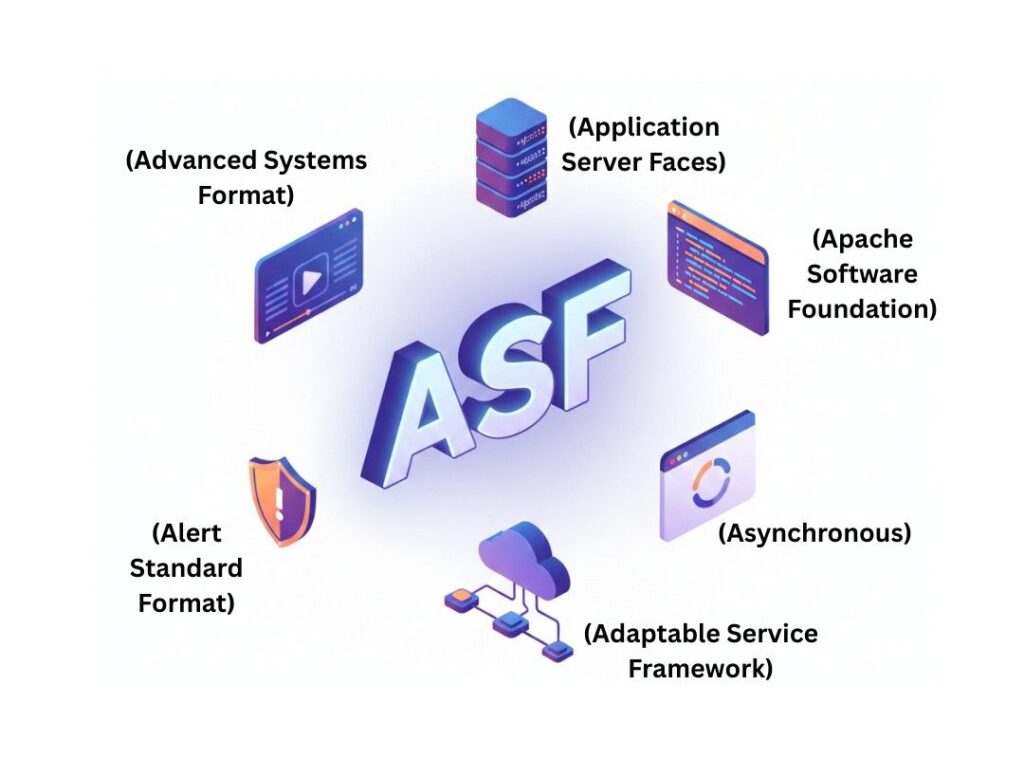
What Does ASF Stand For in Technology? The Key Full Forms
ASF is one of those multifaceted tech acronyms that serves different purposes across various domains—from multimedia to software development. Let me break down the most important technology-related meanings you’re likely to encounter in India:
1. Advanced Systems Format (ASF) – Video & Multimedia
This is the most commonly searched ASF full form, especially among video editors, content creators, and multimedia professionals.
ASF Full Form: Advanced Systems Format
Advanced Systems Format is a digital multimedia container format developed by Microsoft, primarily designed for streaming audio and video content over networks. For detailed technical specifications, refer to Microsoft’s official Windows Media Format documentation.
Understanding ASF Files in Simple Terms:
When you download or stream videos on Windows Media Player or work with Windows-based video systems, you’re often dealing with ASF files, though they typically have extensions like .wmv (Windows Media Video) or .wma (Windows Media Audio).
ASF files are container formats—they don’t define how the video or audio is compressed (that’s the codec’s job), but rather how that compressed data is packaged and organized for efficient delivery over the internet.
Key Features of ASF Format:
- Streaming-optimized – Designed for delivering content over the internet, even on slower connections
- Multiple bitrate support – Can contain multiple versions of the same content at different quality levels
- Metadata support – Stores information like title, artist, album, copyright, ratings
- Error correction – Built-in mechanisms to handle packet loss during streaming
- DRM support – Digital Rights Management for content protection
- Flexible codec support – Can use various audio and video codecs
Real-World Usage in India:
ASF format remains relevant in several Indian contexts:
1. Educational Content Delivery: Many Indian educational institutions and e-learning platforms still use ASF-based formats for delivering video lectures, especially those built on older Windows-based systems. Universities using Windows Media Services for distance education rely on ASF streaming.
2. Corporate Training Videos: Indian IT companies, BPOs, and corporate training departments often maintain legacy video libraries in ASF format. Companies like TCS, Infosys, and Wipro have extensive training content archives that include ASF files.
3. Broadcasting and Media: Some regional Indian broadcasters and production houses working with Windows-based editing systems still encounter ASF files in their workflows.
4. Surveillance Systems: Older CCTV and security camera systems in India, particularly in government offices, banks, and educational institutions, often store footage in ASF format.
Technical Specifications:
- File Extensions: .asf, .wmv (video), .wma (audio)
- MIME Type: video/x-ms-asf, application/vnd.ms-asf
- Developer: Microsoft Corporation
- Initial Release: 1996
- Common Codecs Used: Windows Media Video (WMV), Windows Media Audio (WMA), VC-1
How to Work with ASF Files:
Playing ASF Files:
- Windows Media Player (pre-installed on Windows)
- VLC Media Player (free, cross-platform, highly recommended)
- KMPlayer (popular in India for versatility)
- MX Player (Android – supports many formats including ASF)
Converting ASF Files:
Many Indian users need to convert ASF to more modern formats like MP4 for better compatibility with smartphones and modern devices. Popular free tools include:
- HandBrake – Free, open-source video transcoder
- VLC Media Player – Can convert while playing
- FFmpeg – Command-line tool (for developers)
- Format Factory – Popular GUI tool in India
- Freemake Video Converter – User-friendly option
Conversion Example using VLC (Simple Method):
- Open VLC Media Player
- Go to Media > Convert/Save
- Add your ASF file
- Choose MP4 format (H.264 + AAC recommended)
- Click Convert and wait for processing
Advantages of ASF Format:
- Excellent for streaming – Originally designed for this purpose
- Efficient bandwidth usage – Good compression with acceptable quality
- Metadata rich – Stores detailed information about content
- Windows integration – Seamless on Windows systems
- DRM support – For content creators needing protection
Disadvantages of ASF Format:
- Limited compatibility – Not natively supported on many modern devices
- Proprietary format – Microsoft-controlled, less open than alternatives
- Declining popularity – Being replaced by MP4, MKV, and WebM
- Patent concerns – Licensing issues for commercial use
- Quality limitations – Older codecs can’t match modern compression
Modern Alternatives to Consider:
For new projects, Indian content creators and developers should consider:
- MP4 (H.264/H.265) – Universal compatibility, excellent quality
- WebM – Open format, optimized for web streaming
- MKV – Flexible container supporting multiple tracks
- HLS/DASH – Modern adaptive streaming protocols
When You Might Still Use ASF:
Despite declining popularity, ASF remains useful for:
- Maintaining compatibility with legacy Windows systems
- Working with existing ASF content archives
- Specific Windows Media Services deployments
- Organizations with established ASF-based workflows
2. Apache Software Foundation (ASF) – Open Source Software
ASF Full Form: Apache Software Foundation
The Apache Software Foundation is a non-profit organization that supports numerous open-source software projects used by millions of developers and billions of users worldwide, including many in India’s thriving tech ecosystem.
What is Apache Software Foundation?
Founded in 1999, the ASF provides organizational, legal, and financial support for over 350 open-source software projects. You can explore the complete list of projects and their documentation on the Apache Software Foundation’s official website.
Major Apache Projects Used in India:
1. Apache HTTP Server (Apache Web Server):
- Powers approximately 30% of all websites globally
- Widely used by Indian hosting providers, enterprises, and developers
- Free, reliable, and highly configurable
- Default choice for many LAMP (Linux, Apache, MySQL, PHP) stack deployments in India
Real Indian Example: Most Indian startups, small businesses, and educational institutions running websites on shared hosting use Apache as their web server. Companies like HostGator India, Bluehost India, and local providers predominantly offer Apache-based hosting.
2. Apache Tomcat:
- Java servlet container used for running Java web applications
- Extensively used in Indian IT industry for enterprise applications
- Common in banking, insurance, and government portals
- Popular choice for JSP and servlet-based applications
Usage in India: Major Indian banks (SBI, HDFS, ICICI) and government portals (IRCTC, Income Tax e-filing) run on Java-based architectures often using Apache Tomcat.
3. Apache Hadoop:
- Big data processing framework
- Enables distributed storage and processing of massive datasets
- Critical for data analytics in e-commerce, fintech, and telecom sectors
- Used by Flipkart, Paytm, and major Indian enterprises
4. Apache Spark:
- Unified analytics engine for big data processing
- Faster than Hadoop for many use cases
- Used for machine learning, real-time analytics, and data pipelines
- Popular in Indian data science and AI companies
5. Apache Kafka:
- Distributed event streaming platform
- Powers real-time data pipelines and streaming applications
- Used by Indian fintech companies for transaction processing
- Critical for handling millions of UPI transactions daily
Real Indian Example: PhonePe and Paytm use Apache Kafka to handle millions of real-time payment transactions, ensuring data consistency and reliability even during peak festival shopping periods.
6. Apache Cassandra:
- Distributed NoSQL database
- Handles massive amounts of data across multiple servers
- Used by Indian companies needing high availability
- Powers applications requiring zero downtime
7. Apache Maven:
- Build automation and project management tool for Java
- Standard tool in Indian IT companies for Java development
- Used by developers at TCS, Infosys, Wipro, and startups
8. Apache Airflow:
- Workflow automation and scheduling platform
- Used for orchestrating complex data pipelines
- Popular in Indian data engineering teams
9. Apache Lucene/Solr:
- Search engine library and platform
- Powers search functionality in many Indian e-commerce sites
- Used for implementing advanced search features
Why Apache Software Foundation Matters for Indian Developers:
1. Career Opportunities: Knowledge of Apache technologies is highly valued in the Indian job market:
- Apache Hadoop/Spark developers earn ₹6-20 lakhs annually
- Apache Kafka specialists earn ₹8-25 lakhs
- Full-stack developers with Apache server experience earn ₹4-15 lakhs
- DevOps engineers working with Apache tools earn ₹6-18 lakhs
2. Open Source Contribution: Many Indian developers contribute to Apache projects:
- Builds reputation and portfolio
- Networking with global developer community
- Learning from world-class codebases
- Recognition through Apache committer/PMC member status
3. Free Enterprise-Grade Tools: Apache provides enterprise-quality software at zero cost:
- Reduces technology costs for Indian startups
- Enables learning without licensing barriers
- Supports innovation in resource-constrained environments
- Powers India’s digital economy growth
4. Community Support: Strong Indian Apache user communities:
- Bangalore Apache Meetup groups
- Delhi-NCR Hadoop user groups
- Mumbai Big Data communities
- Online forums and Slack channels
Getting Started with Apache Technologies in India:
Learning Resources:
- Apache Project Documentation – Comprehensive and free
- Udemy – Affordable courses (often ₹500-800 during sales)
- Coursera/edX – University courses on Apache Spark, Hadoop
- YouTube – Indian tech YouTubers covering Apache technologies
- Edureka, Simplilearn – Indian online learning platforms
Certifications:
- Cloudera Certified Professional (CCP) – Big Data
- Databricks Certified Associate Developer – Apache Spark
- Confluent Certified Developer – Apache Kafka
- These certifications boost employability in Indian tech market
Practical Projects:
- Set up Apache web server on local machine or cloud (AWS, DigitalOcean)
- Build simple web application using Apache Tomcat
- Create data pipeline using Apache Airflow
- Process datasets using Apache Spark
- Implement search functionality using Apache Solr
Contributing to Apache Projects: Indian developers can contribute to Apache:
- Start with documentation improvements
- Fix bugs tagged as “beginner-friendly”
- Participate in mailing lists and discussions
- Attend Apache meetups and conferences
- Eventually become committer or PMC member
Apache Success Stories from India:
Several Indian companies and developers have made significant contributions to Apache projects, demonstrating India’s growing role in global open-source development. Indian committers and PMC members contribute to projects like Hadoop, Spark, Kafka, and many others.
3. Application Server Faces (ASF) – Java Technology
ASF Full Form: Application Server Faces
In Java enterprise development, Application Server Faces refers to components and frameworks that provide the user interface layer for Java EE (Enterprise Edition) applications.
Note: More commonly, you’ll encounter JSF (JavaServer Faces) which is the actual specification, but ASF is sometimes used colloquially in enterprise Java contexts.
Understanding ASF/JSF in Enterprise Java:
JavaServer Faces is a component-based MVC (Model-View-Controller) framework for building user interfaces for Java web applications. It simplifies the development of user interfaces for Java EE applications.
Relevance to Indian IT Industry:
India’s IT sector heavily relies on Java enterprise technologies:
- Major Indian IT service companies (TCS, Infosys, Wipro, HCL) use Java EE extensively
- Banking and financial applications predominantly built on Java EE
- Government portals and enterprise applications use these technologies
- Millions of Indian developers work with Java EE daily
Key Features:
- Component-based UI development – Reusable UI components
- Event-driven programming model – Simplifies user interaction handling
- Server-side validation – Built-in validation framework
- Ajax support – For rich, interactive interfaces
- Integration with Java EE – Seamless connection with backend services
Common Use Cases in India:
- Banking applications – Account management, transaction systems
- Insurance portals – Policy management, claim processing
- Government e-services – Tax filing, license applications
- Enterprise resource planning (ERP) – Internal business applications
- Healthcare management systems – Hospital and clinic portals
Technologies Indian Developers Should Know:
- JSF 2.x/3.x – The core specification
- PrimeFaces – Popular JSF component library (widely used in India)
- RichFaces – Another component library
- Spring Framework – Often used alongside JSF
- Java Persistence API (JPA) – Database integration
Career Perspective:
Java EE developers in India with JSF/ASF knowledge earn ₹4-15 lakhs annually depending on experience. While newer frameworks like React and Angular are gaining popularity, legacy JSF applications require maintenance and developers with this skill remain in demand.
4. Alert Standard Format (ASF) – Cybersecurity
ASF Full Form: Alert Standard Format
In cybersecurity and systems management, Alert Standard Format is a specification for representing and exchanging security alert information between different security tools and systems.
Why ASF Matters in Cybersecurity:
Modern organizations use multiple security tools—firewalls, intrusion detection systems, antivirus software, SIEM (Security Information and Event Management) systems. ASF provides a standardized way for these tools to communicate security alerts.
Relevance to India’s Cybersecurity Landscape:
India is rapidly expanding its cybersecurity infrastructure:
- Government mandates for cybersecurity compliance
- Growing number of Indian cybersecurity professionals
- Increase in cyber threats targeting Indian organizations
- Digital India initiative requiring robust security
Key Aspects:
- Standardized alert format – Common structure for security alerts
- Interoperability – Different security tools can understand each other
- Automated response – Enables automated incident response
- Alert correlation – Connects related security events
- Compliance reporting – Simplifies regulatory compliance
Real-World Application in India:
Indian banks, e-commerce companies, and government agencies use SIEM systems that implement ASF-like standards to monitor security events, detect breaches, and generate compliance reports for RBI and CERT-In (Indian Computer Emergency Response Team).
- Monitor security events across multiple systems
- Detect potential security breaches
- Respond to incidents quickly
- Generate compliance reports for RBI, CERT-In
Related Technologies:
- SIEM Systems – Splunk, IBM QRadar, ArcSight (used in Indian enterprises)
- IDS/IPS – Snort, Suricata (open-source options popular in India)
- Log Management – ELK Stack (Elasticsearch, Logstash, Kibana)
- Threat Intelligence Platforms – Integrate with ASF-compliant systems
Career Opportunities:
Cybersecurity is one of India’s fastest-growing tech sectors:
- Security analysts earn ₹4-12 lakhs
- SIEM specialists earn ₹6-18 lakhs
- Security architects earn ₹12-35 lakhs
- Demand exceeds supply of qualified professionals
Indian professionals with cybersecurity certifications (CEH, CISSP, CompTIA Security+) and understanding of security alert formats have excellent career prospects.
5. Adaptable Service Framework (ASF) – Software Architecture
ASF Full Form: Adaptable Service Framework
In software architecture and service-oriented computing, Adaptable Service Framework refers to architectural patterns that enable services to adapt to changing requirements, environments, or conditions.
Understanding Adaptable Service Frameworks:
Modern applications need to be flexible—they must handle varying loads, adapt to different user contexts, integrate with changing APIs, and evolve with business requirements. ASF concepts enable this adaptability.
Key Principles:
- Dynamic service discovery – Services find each other at runtime
- Runtime adaptation – Behavior changes based on conditions
- Context awareness – Services respond to environmental context
- Self-healing – Automatic recovery from failures
- Scalability – Adapts to varying workloads
Relevance to Indian Tech Startups and Enterprises:
Indian companies building cloud-native applications benefit from adaptable service frameworks:
1. E-commerce Platforms:
- Handle massive traffic spikes during sales (Diwali, Big Billion Days)
- Adapt to regional preferences and languages
- Scale payment processing during peak hours
Example: Flipkart’s architecture automatically scales during major sale events, handling 10x normal traffic without manual intervention.
2. Food Delivery Apps:
- Adjust delivery algorithms based on traffic, weather, demand
- Scale during meal times (lunch, dinner rushes)
- Adapt pricing based on supply-demand dynamics
Example: Swiggy and Zomato use adaptable service architectures to handle lunch rush (12-2 PM) when orders spike 5-8x.
3. Fintech Applications:
- Handle payment surges during festivals
- Adapt to regulatory changes
- Scale during salary payment cycles
Example: PhonePe, Paytm, and Google Pay process millions of UPI transactions using adaptable, microservices-based architectures.
Technologies Enabling Adaptable Service Frameworks:
Container Orchestration:
- Kubernetes – Automatically scales services based on load
- Docker Swarm – Container orchestration and management
- OpenShift – Enterprise Kubernetes platform
Service Mesh:
- Istio – Manages microservice communication
- Linkerd – Lightweight service mesh
- Consul – Service discovery and configuration
Cloud Platforms:
- AWS – Auto Scaling, Lambda (serverless)
- Google Cloud – Auto-scaling, Cloud Functions
- Azure – Auto-scale, Azure Functions
- Indian Providers – Tata Communications, CtrlS (growing cloud offerings)
API Gateways:
- Kong – Popular open-source option
- AWS API Gateway – Cloud-native solution
- Apigee – Enterprise API management
Career Skills for Indian Developers:
Understanding adaptable service frameworks is valuable for:
- Cloud architects – ₹12-30 lakhs
- DevOps engineers – ₹6-20 lakhs
- Backend developers – ₹5-18 lakhs
- Site reliability engineers – ₹8-25 lakhs
Indian developers building skills in Kubernetes, microservices, and cloud-native development are highly sought after.
6. Asynchronous Server Faces (ASF) – Web Development
ASF Full Form: Asynchronous Server Faces
In modern web development, Asynchronous Server Faces refers to techniques and patterns for building responsive web applications that don’t block the user interface while waiting for server responses.
Why Asynchronous Processing Matters:
Traditional synchronous web applications freeze while waiting for server responses—bad user experience, especially on slower Indian internet connections. Asynchronous approaches keep interfaces responsive.
Key Concepts:
- Non-blocking operations – UI remains responsive during server calls
- Ajax (Asynchronous JavaScript and XML) – Update parts of page without full reload
- Promises/Async-Await – Modern JavaScript patterns for handling asynchronous operations
- WebSockets – Real-time bidirectional communication
- Server-Sent Events – Server pushes updates to client
Practical Applications in Indian Web Development:
1. Real-Time Dashboards:
- Stock trading platforms (Zerodha, Upstox) showing live prices
- Admin dashboards updating without page refresh
- Monitoring systems with live metrics
2. Chat Applications:
- WhatsApp Web, Telegram Web
- Customer support chat widgets
- Collaborative tools (Google Docs-style editing)
3. Social Media Features:
- Live comment updates on Instagram, Facebook
- Real-time notifications
- Infinite scrolling feeds
4. E-commerce Features:
- Live inventory updates
- Real-time pricing changes
- Cart updates without page reload
Modern Technologies:
- React/Angular/Vue.js – Frontend frameworks with built-in async support
- Node.js – Asynchronous by default on server-side
- Socket.io – Real-time communication library
- GraphQL – Efficient data fetching
- Progressive Web Apps – Offline-first with async data sync
Performance Benefits for Indian Users:
Given India’s diverse internet connectivity:
- Better experience on slower 3G/4G connections
- Reduced data usage (only updating necessary parts)
- Faster perceived performance
- Works better in intermittent connectivity scenarios
Learning Path for Indian Developers:
- Master JavaScript fundamentals (callbacks, promises, async-await)
- Learn a modern frontend framework (React most popular in Indian job market)
- Understand REST APIs and async data fetching
- Explore WebSockets for real-time features
- Practice building responsive, async applications
Job Market:
- Frontend developers with async expertise earn ₹4-18 lakhs
- Full-stack developers earn ₹6-20 lakhs
- High demand in Indian startups and product companies
How to Identify Which ASF Full Form Applies
Still confused about which ASF meaning is relevant to your context? Here’s a quick decision framework:
Context Clues:
1. File Extensions and Media Context:
- If you see .asf, .wmv, .wma file extensions → Advanced Systems Format (multimedia)
- Discussion about video streaming, Windows Media → Advanced Systems Format
2. Open Source and Apache Projects:
- References to open-source projects, Apache HTTP, Hadoop → Apache Software Foundation
- Discussions about open-source governance → Apache Software Foundation
3. Java Enterprise Development:
- Java EE, JSF, enterprise applications → Application Server Faces
- Banking/financial application development → Application Server Faces
4. Cybersecurity and Alerts:
- Security monitoring, SIEM, intrusion detection → Alert Standard Format
- Incident response, security alerts → Alert Standard Format
5. Cloud and Microservices:
- Kubernetes, microservices, scalability → Adaptable Service Framework
- Cloud-native architecture discussions → Adaptable Service Framework
6. Web Development and Ajax:
- Responsive web apps, async JavaScript → Asynchronous Server Faces
- Real-time web features → Asynchronous Server Faces
Common Questions Indian Tech Professionals Ask About ASF
Currently, Apache Software Foundation technologies (Hadoop, Spark, Kafka) are in very high demand with excellent pay—big data engineers earn ₹8-25 lakhs annually. Asynchronous web development skills are also highly valued for frontend/full-stack roles (₹6-20 lakhs). Knowledge of Advanced Systems Format is less critical unless working in media/broadcasting.
Both have value. Apache technologies power much of the existing Indian enterprise infrastructure—banks, large corporations, government systems. However, also learn modern alternatives (Docker, Kubernetes, cloud-native tools) as the industry evolves. Many Indian companies use both legacy Apache systems and modern cloud technologies.
Download VLC for Android (free on Play Store). Open VLC, find your ASF file, tap the three-dot menu, select "Convert," choose MP4 format, and convert. Alternatively, use online converters like CloudConvert or Zamzar if you have good internet connectivity.
Yes! Many free options:
- Apache project documentation (comprehensive and free)
- YouTube channels (Simplilearn, Edureka, Intellipaat)
- Udemy courses during sales (often ₹400-800)
- NPTEL courses from IITs (free)
- Apache community meetups in major Indian cities
Absolutely! India faces a severe shortage of cybersecurity professionals. The government, banks, and enterprises are investing heavily in security. Cybersecurity careers offer excellent growth, job security, and salaries (₹6-30 lakhs depending on experience and specialization).
Depends on which ASF:
- Apache technologies: Java (mandatory), Python (for Spark), Scala (for advanced Spark)
- Web development (async): JavaScript (essential), TypeScript (recommended)
- Multimedia (ASF format): Python (for scripting), C++ (for advanced development)
- Cybersecurity: Python (most popular), Java, Go
Practical Tips for Indian Tech Professionals
For Students:
- Choose based on career goals – Research which ASF area aligns with your interests
- Start with fundamentals – Master programming basics before diving into frameworks
- Build projects – Practical experience matters more than theoretical knowledge
- Contribute to open source – Build your profile through Apache project contributions
- Network actively – Join tech meetups in Bangalore, Hyderabad, Pune, Delhi-NCR
For Developers:
- Keep skills current – Technology evolves rapidly; continuous learning is essential
- Specialize strategically – Deep expertise in one area beats superficial knowledge of many
- Build portfolio – Showcase projects on GitHub, especially Apache technology usage
- Get certified – Certifications boost credibility (Cloudera, Databricks, CompTIA)
- Mentor others – Teaching reinforces your own understanding
For Business Owners:
- Leverage open source – Apache technologies offer enterprise quality at zero licensing cost
- Invest in training – Upskill your team in relevant ASF technologies
- Plan for scale – Use adaptable architectures from day one
- Prioritize security – Implement proper alert and monitoring systems
- Optimize media – Use appropriate formats for your Indian audience’s connectivity
The Future of ASF Technologies in India
India’s technology landscape is evolving rapidly. Understanding where ASF technologies are headed helps you make informed career and business decisions:
Emerging Trends:
1. Cloud-Native Everything:
- Apache technologies moving to cloud (AWS EMR for Hadoop, Azure HDInsight)
- Kubernetes replacing traditional application servers
- Serverless architectures complementing traditional frameworks
2. Real-Time Processing:
- Apache Kafka and Spark Streaming becoming standard
- Real-time analytics crucial for Indian e-commerce, fintech
- Edge computing bringing processing closer to users
3. AI/ML Integration:
- Apache Spark MLlib for machine learning at scale
- Integration with TensorFlow, PyTorch
- AI-powered adaptive service frameworks
4. 5G Impact:
- Enables richer multimedia streaming (beyond traditional ASF)
- Real-time applications becoming more viable
- New opportunities for asynchronous architectures
5. Indian Language Support:
- Localization of Apache projects for Indian languages
- Content delivery optimized for regional audiences
- Voice and video in Hindi, Tamil, Telugu, Bengali gaining prominence
6. Cybersecurity Evolution:
- AI-powered threat detection replacing static alert formats
- Zero-trust architectures becoming standard
- Privacy regulations (like India’s proposed data protection law) driving security investments
Conclusion: Master ASF Concepts for Tech Success in India
Understanding “ASF full form” goes far beyond memorizing acronyms—it’s about grasping fundamental concepts that power modern technology systems, from the multimedia content you stream to the big data platforms processing billions of transactions.
Whether you’re a software developer building scalable applications, a video editor working with multimedia formats, a data engineer processing massive datasets with Apache tools, a cybersecurity professional monitoring security alerts, or a web developer creating responsive interfaces—ASF knowledge directly impacts your effectiveness and career trajectory.
The good news? India’s tech ecosystem offers abundant learning opportunities, growing job markets, and entrepreneurial environments where ASF skills translate to real career growth and business value.
Your Next Steps:
- Identify your focus area – Which ASF meaning aligns with your career goals?
- Start learning systematically – Use free resources mentioned throughout this guide
- Build practical projects – Theory becomes valuable through hands-on application
- Join tech communities – Connect with other Indian professionals learning similar skills
- Stay consistent – Daily progress compounds into expertise over months
Ready to dive deeper into technology concepts, tutorials, and career guidance? Explore more comprehensive guides at ZProStudio, where we publish in-depth articles covering software development, digital tools, emerging technologies, and career advice tailored for Indian tech enthusiasts.
What’s your experience with ASF technologies? Which area are you most interested in exploring? Share your thoughts and questions—let’s learn and grow together in India’s exciting digital future!