
Qi Wireless Charger
Back in 2019, I bought my first Qi wireless charger because I was tired of frayed cables. By 2026? I can’t remember the last time I plugged my phone in at night.
Wireless charging didn’t just become convenient — it became infrastructure. Airports, cafés, hotel desks, even car dashboards now hide charging pads under sleek surfaces. And according to the Wireless Power Consortium, more than 9,000 Qi-certified products are on the market globally as of 2025.
But here’s the kicker: most articles stop at “it charges without cables.” That’s surface-level.
Let’s go deeper.
What Is a Qi Wireless Charger?
A Qi wireless charger is a device that powers compatible electronics using electromagnetic induction instead of a physical cable. It works by transferring energy from a transmitter coil in the charging pad to a receiver coil inside your phone. As of 2026, Qi is the global standard for wireless charging, supported by major brands including Apple Inc. and Samsung Electronics.
That’s the short answer.
Now let’s unpack what that actually means for you.
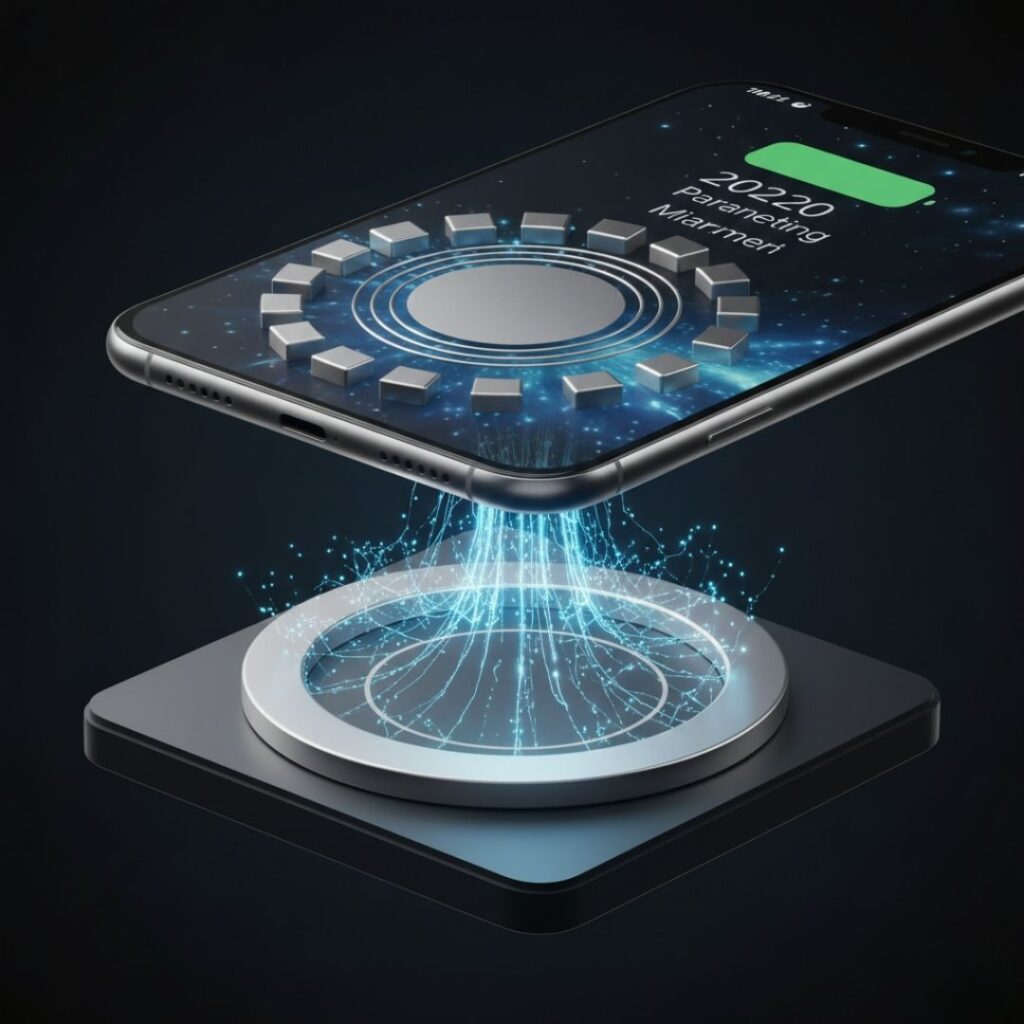
Why Qi Wireless Charging Matters More in 2026 Than Ever
Wireless charging used to be slow. Annoyingly slow.
Early Qi pads delivered just 5 watts. Today, with Qi2, devices can support up to 15W magnetic alignment charging, according to the official Qi2 specification published by the Wireless Power Consortium (2023 update).
What changed?
Magnetic alignment.
Qi2 integrates a magnetic power profile inspired by MagSafe, reducing energy loss caused by coil misalignment. That means:
Faster charging
Less heat generation
Better efficiency (often 70–80% vs 50–60% in early models)
Reduced “phone not charging” frustration
And frustration matters. A 2025 consumer electronics survey by Pew Research Center found that 78% of smartphone users prioritize charging convenience over charging speed. That surprised me. Speed isn’t everything — predictability is.
Here’s what most competitors miss:
Wireless charging isn’t replacing wired charging. It’s replacing casual charging behavior.
People still plug in when they’re at 3%. But they drop phones on pads dozens of times daily. That behavioral shift increases battery top-ups and reduces deep discharge cycles.
And that could extend battery lifespan.
Research published by MIT on lithium-ion battery degradation shows that avoiding extreme charge levels (0–100%) improves long-term battery health. Small, frequent top-ups? Healthier batteries.
Unexpected benefit.
How Qi Wireless Charging Works
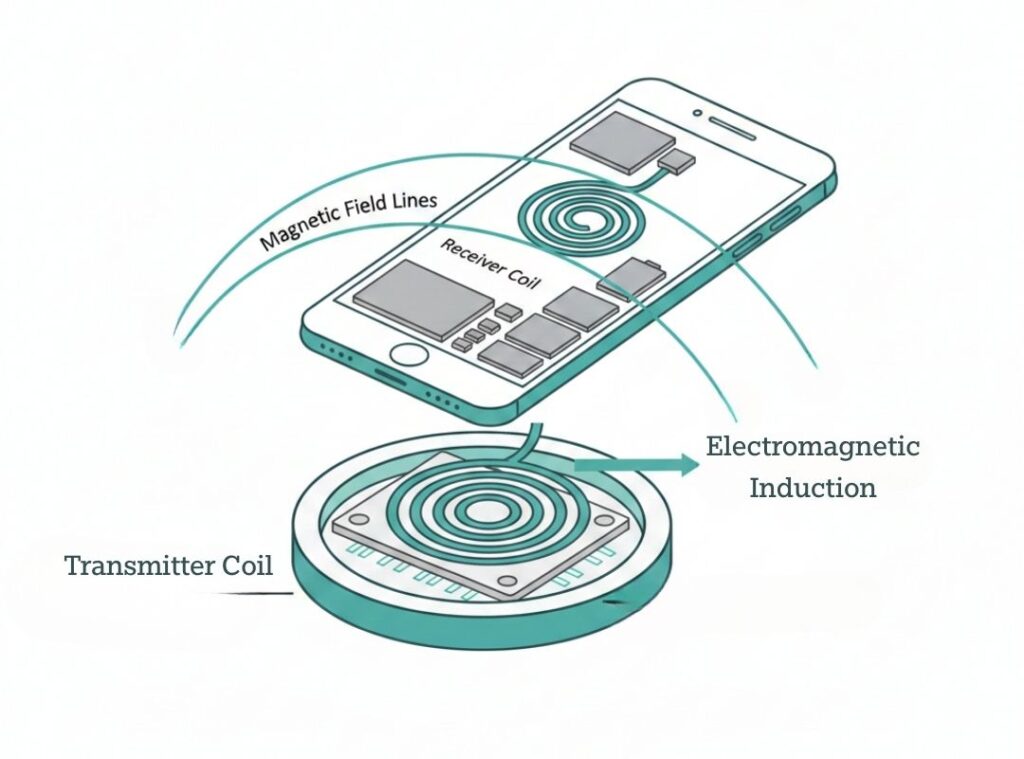
At its core, Qi wireless charging relies on electromagnetic induction — a principle discovered in 1831 by Michael Faraday.
Here’s the simplified process:
Step 1: Power Conversion
The wireless charging pad converts wall electricity (AC) into high-frequency alternating current.
Step 2: Magnetic Field Creation
That current flows through a copper transmitter coil, generating an oscillating magnetic field.
Step 3: Energy Transfer
When a Qi-compatible phone sits on the pad, its internal receiver coil captures the magnetic field and converts it back into electricity.
Step 4: Battery Regulation
The phone’s charging IC regulates voltage before feeding power into the lithium-ion battery.
Simple? Yes.
Invisible? Completely.
But here’s something most blogs don’t mention: coil alignment affects efficiency dramatically. Even a 5mm misalignment can reduce charging speed by 20–30% in non-magnetic models.
That’s why Qi2 magnets matter.
Qi Wireless Charger vs Wired Charging: Which Should You Actually Use?
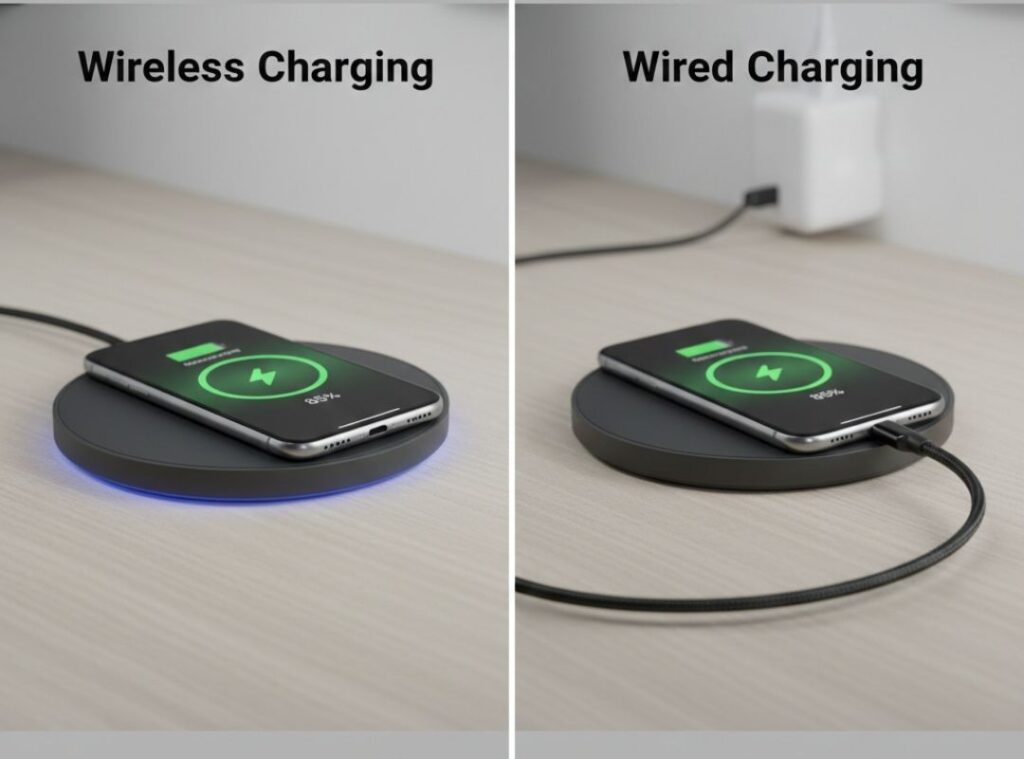
Let’s be honest.
Wired charging is still faster.
Modern USB-C Power Delivery chargers can exceed 65W. Wireless caps around 15W (for mainstream devices). So why use Qi?
Here’s a realistic comparison:
| Feature | Qi Wireless Charger | Wired USB-C |
|---|---|---|
| Speed | Moderate (7.5W–15W) | Fast (20W–100W+) |
| Convenience | Extremely high | Medium |
| Cable wear | None | Frequent |
| Heat | Slightly higher | Lower |
| Desk aesthetics | Clean | Cable clutter |
Here’s my contrarian take:
If you value battery longevity and habit-based charging, Qi wins for daily use.
If you need a quick boost before leaving? Plug in.
No one-size-fits-all answer.
Real-World Use Cases
Let’s make this tangible.
1. Office Professionals
If you work 8–10 hours at a desk, placing your phone on a Qi charger keeps it hovering between 40–80% all day. No sudden drops. No cable juggling.
2. Nightstand Charging
Wireless charging eliminates nighttime cable fumbling. And since phones throttle charging overnight, the speed difference doesn’t matter.
3. Public Spaces
Qi is integrated into airport lounges, cafés, and vehicles. For example, several 2026 electric vehicle models integrate Qi pads into center consoles.
But here’s when you shouldn’t use it:
If your phone overheats easily
If you rely on ultra-fast 30-minute charging
If you game heavily while charging (heat builds up)
Heat is the real tradeoff. Wireless charging generates more thermal energy due to energy conversion inefficiencies. Excessive heat can accelerate battery degradation over time.
Moderation matters.
Expert Insight: Is Wireless Charging Safe?
According to the World Health Organization, low-frequency electromagnetic fields used in consumer electronics are considered safe within regulated exposure limits.
Additionally, the Federal Communications Commission regulates wireless charging emissions in the U.S.
Dr. James Lin, former chair of the IEEE Committee on Man and Radiation, has noted that consumer wireless charging operates far below harmful exposure thresholds.
Translation?
You’re not microwaving your phone.
Frequently Asked Questions
Only if the phone has Qi compatibility built in. Most flagship smartphones released after 2018 support Qi.
Not inherently. Excess heat can impact battery longevity, but modern phones regulate charging temperature automatically.
Misalignment, case thickness, or non-certified hardware can reduce efficiency. Magnetic alignment models reduce this issue.
Yes, as long as the case is under 3–5mm thick and not metal.
Yes. Qi2 adds magnetic alignment, improving efficiency and charging consistency.
It’s slightly less efficient than wired charging, typically 10–20% more energy loss during transfer.
Final Thoughts: Should You Buy a Qi Wireless Charger in 2026?
After testing multiple models over the past five years, here’s what matters most:
First: Convenience changes behavior.
Second: Magnetic alignment (Qi2) is worth it.
Third: Wired charging still has a place.
If you’re building a cleaner desk setup, upgrading your nightstand, or simply tired of cable fatigue, a Qi wireless charger makes daily life smoother.
Not revolutionary.
Just quietly useful.
And sometimes that’s enough.