
Sony PlayStation Platform Business Model: Revenue Strategy & Future Growth
Understanding Sony's PlayStation Platform Business: The Gaming Giant's Strategic Evolution
If you’re a gamer, PlayStation owner, or someone tracking the gaming industry, you’ve probably noticed something shifting. Sony isn’t just about selling you the next console anymore. They’re building something bigger—a platform ecosystem that reaches beyond your living room.
You might be wondering: What does this mean for the future of PlayStation? Will my favorite exclusives still stay exclusive? Is Sony abandoning consoles?
The truth is more nuanced and, frankly, more interesting than the headlines suggest. Sony is pivoting its entire PlayStation business model from a hardware-first approach to a platform-centric strategy that prioritizes community engagement, subscription services, and multiplatform expansion. This isn’t the end of PlayStation consoles. It’s the beginning of PlayStation everywhere.
Let me walk you through exactly what’s happening, why it matters, and what it means for you.
Table of Contents
Toggle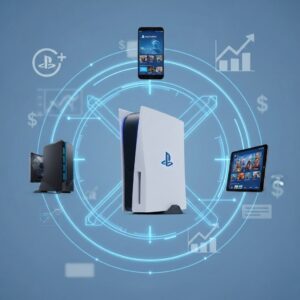
What Is Sony's PlayStation Platform Business?
Sony’s gaming business is moving away from a hardware-centric model toward a platform business that expands community and increases engagement, according to Senior Vice President Sadahiko Hayakawa during the company’s 2025 Q1 earnings briefing.
At its core, the PlayStation platform business encompasses:
- Hardware sales – PS5 consoles, accessories, and peripherals
- Software distribution – Physical and digital game sales
- Network services – PlayStation Plus and PlayStation Network
- Content creation and licensing – First-party exclusives and third-party partnerships
- Multiplatform expansion – PC ports and potential Xbox/Nintendo releases
Think of it this way: Sony used to make money primarily when you bought a PlayStation console. Now, they’re focused on keeping you engaged within the PlayStation ecosystem—whether that’s on a PS5, PC, or potentially other platforms—through subscriptions, digital purchases, and continuous content delivery.
The Numbers Tell the Story: PlayStation's Financial Performance
Let’s look at the hard data that reveals why Sony is making this shift.
Revenue Breakdown (Fiscal Year 2024)
| Revenue Source | Amount (Yen) | Amount (USD) | Growth |
|---|---|---|---|
| Total Gaming Revenue | 4.67 trillion | $31.7 billion | +9% |
| Game & Content Sales | 2.5 trillion | $17 billion | +13% |
| Console Hardware | 1.13 trillion | $7.7 billion | -6.5% |
| Network Services | 669.8 billion | $4.5 billion | +23% |
The pattern is unmistakable. Network services revenue jumped 23% while hardware sales declined 6.5%. This isn’t a crisis—it’s validation that Sony’s platform strategy is working.
More eye-opening statistics:
- Monthly active users reached 123 million accounts in June 2025, up 6% year-over-year
- PlayStation Plus revenue increased 18% due to higher average revenue per user and shifts to premium tiers
- PS5 generated $106 billion in net sales in its first four years—matching PS4’s entire seven-year lifecycle
- In-game purchases and add-on content spending surged 176% compared to the PS4 generation
Why Sony Is Making This Strategic Shift
1. The Console Business Model Is Reaching Its Limits
Consoles have always operated on a “razor and blades” model—sell hardware at a loss or minimal profit, make money on software. But that model has problems.
Hardware manufacturing is expensive and risky. Supply chain issues during the PS5 launch reminded everyone how vulnerable console-dependent businesses are. Component shortages, tariffs, and manufacturing costs can devastate margins.
Console generations are getting longer. Players are clinging to their PS5s longer, reducing urgency to upgrade to a PS6. Development costs have skyrocketed, making generational leaps less impactful and harder to justify.
2. Subscription Services Provide Predictable Revenue
PlayStation Plus saw revenues rise 20% year-over-year, primarily from increasing average revenue per user. The three-tier system allows Sony to capture different customer segments:
- Essential ($9.99/month) – Online multiplayer, monthly games, cloud saves
- Extra ($14.99/month) – Game catalog with hundreds of titles
- Premium ($17.99/month) – Classic games, cloud streaming, game trials
This recurring revenue is pure gold for business stability. Unlike hardware cycles that create feast-or-famine scenarios, subscription income provides consistent cash flow that investors love.
3. Digital Distribution Has Higher Margins
In fiscal 2023, 51% of PlayStation Store revenue came from major third-party franchises and live service titles like Fortnite, Call of Duty, and EA Sports FC. Every digital purchase means:
- No manufacturing costs
- No retail cuts
- No physical distribution
- Higher profit margins
Sony gets a 30% cut of every game sold through PlayStation Store, plus additional revenue from in-game purchases and add-ons.
4. Live Service Games Are Engagement Goldmines
PS5 users log 2.4 billion gameplay hours compared to 1.4 billion for PS4 users—and much of that engagement comes from live service games.
Titles like Helldivers 2, Destiny 2, and soon-to-launch Marathon keep players in the ecosystem for months or years, not just the 20-40 hours a traditional single-player game offers. More engagement means more opportunities for monetization through:
- Season passes
- Cosmetic microtransactions
- Battle passes
- Expansion content
Sony's Multiplatform Strategy: Breaking Down the Walls
Here’s where things get really interesting—and potentially controversial.
The PC Expansion
Sony has been methodically porting PlayStation exclusives to PC since 2020:
- God of War (2022)
- Horizon Zero Dawn (2020)
- Spider-Man (2022)
- The Last of Us Part 1 (2023)
- Returnal (2023)
- Stellar Blade (2024)
- Ghost of Tsushima (2024)
The strategy? Release single-player story games on PS5 first, then bring them to PC at least one year later to capture a wider audience.
Why this works: PC gamers who might never buy a console still contribute to Sony’s bottom line. The development cost is already sunk—porting to PC is relatively cheap and opens an entirely new revenue stream.
The Xbox & Nintendo Question
Sony is hiring a Senior Director of Multiplatform & Account Management to oversee commercial strategy for PlayStation titles across Steam, Epic Games Store, Xbox, Nintendo, and mobile.
Let me be clear: This doesn’t mean God of War is coming to Xbox tomorrow. But it does signal that Sony is open to bringing certain titles—especially live service games—to competing platforms.
Examples already happening:
- Helldivers 2 launched on Xbox in August 2025
- Lego Horizon Adventures released simultaneously on PS5, PC, and Nintendo Switch
- Bungie’s Marathon (upcoming) will be multiplatform from day one
Sony seems to understand there is no console war left to fight, with live service games being the initial focus for multiplatform releases.
What This Means for PlayStation's Future
The PS6 Question
Will there even be a PS6? Almost certainly yes—but it might look different than you expect. If you’re curious about when Sony might launch the next-generation console, check out our detailed analysis of the PS6 release date and specifications.
Sony Interactive Entertainment CEO Hideaki Nishino stated they’re exploring new and enhanced ways for players to engage with content and services while emphasizing that the company remains committed to console hardware.
The next PlayStation could be:
- A more iterative upgrade (think iPhone model)
- Part of a device ecosystem (console, handheld, streaming stick)
- Less about exclusive games, more about the best place to play
Single-Player Games Aren’t Dead
Don’t panic. Single-player games remain the backbone of PlayStation’s business. Sony is committed to:
- Expanding existing franchises (The Last of Us, God of War, Horizon)
- Creating new intellectual properties
- Maintaining at least one AAA single-player release per year
The difference? These games will eventually reach more platforms, maximizing their revenue potential.
The PlayStation Network Becomes the Platform
Monthly active users hit 129 million at the end of 2024. This is the real platform—not the console.
Sony’s goal is to make PlayStation Network the connective tissue that follows you across devices:
- Play on PS5 in your living room
- Continue on PC at your desk
- Pick up on a handheld during your commute (if Sony develops one)
- Cross-save, cross-progression, unified friends list
Your PSN account becomes your gaming identity, regardless of hardware.
Comparing PlayStation's Strategy to Competitors
PlayStation vs. Xbox
| Aspect | PlayStation | Xbox |
|---|---|---|
| Primary Focus | Console + selective multiplatform | Platform-agnostic (“play anywhere”) |
| Subscription Service | PlayStation Plus (3 tiers) | Game Pass (console, PC, Ultimate) |
| Exclusive Strategy | Timed exclusives, eventual PC ports | Day-one PC, expanding to PlayStation |
| Hardware Commitment | Strong (PS5, PS5 Pro) | Declining focus |
Forza Horizon 5 became PlayStation 5’s best-selling game of 2025, proving Xbox’s multiplatform strategy can work on Sony’s own turf.
PlayStation vs. Nintendo
Nintendo remains the holdout, keeping first-party games exclusive to its hardware. However, even Nintendo has dabbled with mobile partnerships like Mario Kart Tour and Pokémon GO.
The key difference: Nintendo’s business model relies heavily on hardware innovation (Switch’s hybrid design) paired with evergreen franchises. PlayStation doesn’t have that luxury—their power is in third-party relationships and service revenue.
Key Revenue Streams Driving PlayStation's Growth
Understanding how PlayStation makes money helps explain their strategic decisions:
1. Hardware Sales
PS5 consoles and accessories generate significant revenue, but margins are thin. Sony often sells consoles at or near cost, making profits on software and services instead.
2. Digital Game Sales
The PlayStation Store is a cash machine. With 74% of full games now purchased digitally, Sony cuts out retail middlemen and keeps more profit per sale.
3. PlayStation Plus Subscriptions
With three tiers ranging from $9.99 to $17.99 monthly, PS Plus generates billions in predictable recurring revenue. Users who upgrade to Extra or Premium spend significantly more per year.
4. Third-Party Software Commissions
Sony takes approximately 30% of every third-party game sold on their platform. With major titles like Call of Duty, FIFA, and Fortnite, this adds up to billions annually.
5. In-Game Purchases & Add-Ons
Microtransactions, DLC, and season passes represent the fastest-growing segment. Players spend more on add-on content than on full games, creating ongoing revenue streams from single titles.
6. First-Party Game Sales
Blockbuster exclusives like Spider-Man, God of War, and The Last of Us drive both hardware and software sales while establishing PlayStation’s premium brand identity.
The Impact of Live Service Games
Sony’s investment in live service titles represents a major strategic bet. Here’s why:
Continuous Engagement: Traditional single-player games might give you 20-40 hours of gameplay. Live service games keep players engaged for hundreds or thousands of hours.
Recurring Monetization: Once players are invested, they’re more likely to purchase battle passes, cosmetics, and expansions—creating revenue that extends years beyond the initial purchase.
Community Building: Games like Helldivers 2 foster communities that become self-sustaining marketing engines, with streamers and content creators driving organic growth.
Lower Customer Acquisition Costs: A single successful live service game can generate more lifetime value than multiple single-player titles combined.
However, this strategy carries risks. High-profile failures like Concord show that not every live service game succeeds, and development costs can be substantial.
Key Takeaways for Gamers and Investors
If you’re a gamer:
- Your favorite exclusives will eventually reach more platforms—but you’ll still get them first on PlayStation
- PlayStation consoles aren’t going anywhere in the next 5-7 years at minimum
- PlayStation Plus is becoming more valuable with better game catalogs and features
- Live service games are here to stay, but won’t replace single-player experiences
- Your PSN account is becoming more important than the hardware you play on
If you’re an investor:
- PlayStation represents 38.15% of Sony’s total revenue—the company’s largest division
- Recurring revenue from subscriptions provides stability in volatile gaming markets
- Platform expansion reduces hardware risk while maintaining software profitability
- Sony’s positioned for sustainable growth through diversified revenue streams
- The shift to services and digital distribution improves profit margins significantly
What You Should Do Next
Understanding Sony’s platform strategy helps you make smarter decisions—whether you’re choosing which console to buy, deciding if PlayStation Plus is worth the investment, or evaluating gaming trends.
Action steps:
- Consider PlayStation Plus Extra or Premium if you’re not already subscribed—the value proposition is only getting better with expanded game catalogs and classic titles
- Don’t wait for PS6 rumors to enjoy current-gen gaming—the PS5 has years of support ahead and an excellent library of games available now
- Build your digital library on PlayStation Network to take advantage of cross-platform features as they roll out in the coming years
- Follow official Sony channels for announcements about multiplatform releases and new service features
- Diversify your gaming across platforms if you want maximum flexibility—Sony’s multiplatform push means you’ll have more options in the future
The gaming industry is evolving rapidly, and PlayStation is evolving with it. Sony’s shift from hardware-centric to platform-centric isn’t a retreat—it’s an expansion. By meeting players where they are, whether on console, PC, or future devices, Sony is positioning PlayStation for long-term dominance.
The console wars as we knew them might be ending. But the platform wars? Those are just beginning. Sony’s strategy shows they’re not just adapting to change—they’re driving it, building an ecosystem that transcends hardware and focuses on what really matters: keeping gamers engaged, entertained, and connected.
Frequently Asked Questions About PlayStation’s Platform Business
No. Sony executives have repeatedly confirmed ongoing console development, but consoles will be one part of a larger platform strategy rather than the only focus.
Not all, and not anytime soon. Live service games and select titles may appear on other platforms, but flagship single-player games will likely remain PlayStation/PC exclusive for the foreseeable future.
If you play online multiplayer or want access to the game catalog, yes. The Extra and Premium tiers offer hundreds of games, making them excellent value for engaged gamers.
Game and content sales generate $17 billion annually, followed by network services ($4.5 billion) and hardware ($7.7 billion). Digital distribution and add-on content are the fastest-growing segments.
The PS5 Pro launched in late 2024 as a premium option for hardcore gamers, offering enhanced graphics and performance. It's part of Sony's strategy to serve different market segments at different price points.
No. Sony has committed to supporting PS5 for years to come, with major releases planned through at least 2027. The platform has several years of life left before any potential PS6 launch.
Some PlayStation exclusives eventually come to PC, typically 1-2 years after their PS5 release. However, you'll need to purchase the PC version separately—there's no cross-buy system currently.