
How to Delete Apps: Clear Steps for Every Device
If you are searching for how to delete apps, you usually want one of three things. You want to free space, remove clutter, or protect privacy. It focuses on the real difference between hiding an app, deleting it from a device, and closing the account behind it. Apple and Cash App treat those as separate actions, and that is where many users get stuck.
How to delete apps is the process of removing an app from a phone, tablet, or computer, or closing the service account tied to that app when needed. It works through built-in uninstall tools or account settings. Unlike simply hiding an icon, proper deletion can remove access, free storage, and reduce leftover clutter. Apple and Cash App both show that removal, deletion, and account closure are different actions.
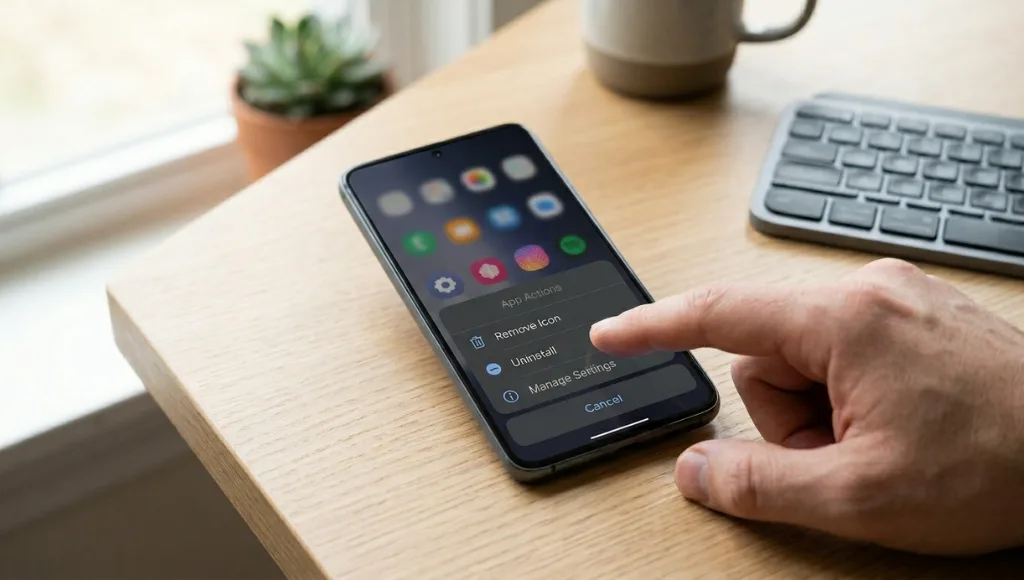
| Action | What it does | What it does not do |
|---|---|---|
| Remove from Home Screen | Hides the app icon from the main screen | Does not uninstall the app |
| Delete App | Removes the app from the device | Does not always cancel subscriptions or close accounts |
| Close Cash App account | Ends account access through Cash App’s support flow | Does not mean every record disappears instantly |
That split comes directly from Apple’s iPhone and iPad guidance, Apple’s Mac uninstall guidance, and Cash App’s account-help pages.
Why Deleting Unused Apps Matters in 2026
Deleting apps matters more in 2026 because app cleanup is no longer a one-tap job. On Apple devices, you can remove an icon without uninstalling the app. On services like Cash App, deleting the app itself is not the same as closing the account. The wrong step leaves storage, subscriptions, or account access behind.
Apple refreshed its iPhone delete-app support in December 2025, its Mac uninstall guidance in January 2026, and its family controls guidance in March 2026. Those updates reflect how modern devices now mix App Library behavior, Screen Time restrictions, and service-level data controls. Cash App’s current help pages also separate viewing activity, getting statements, closing an account, and deleting personal information.
In my experience, this is where most “simple” uninstall guides fail. They explain the tap sequence, but they do not explain the result. Think of Remove from Home Screen like moving a book off your desk. The book is still in the room. Real deletion is different. For broader platform context, this page should point readers back to your software and apps guide as the main hub.
How to Delete Apps on iPhone
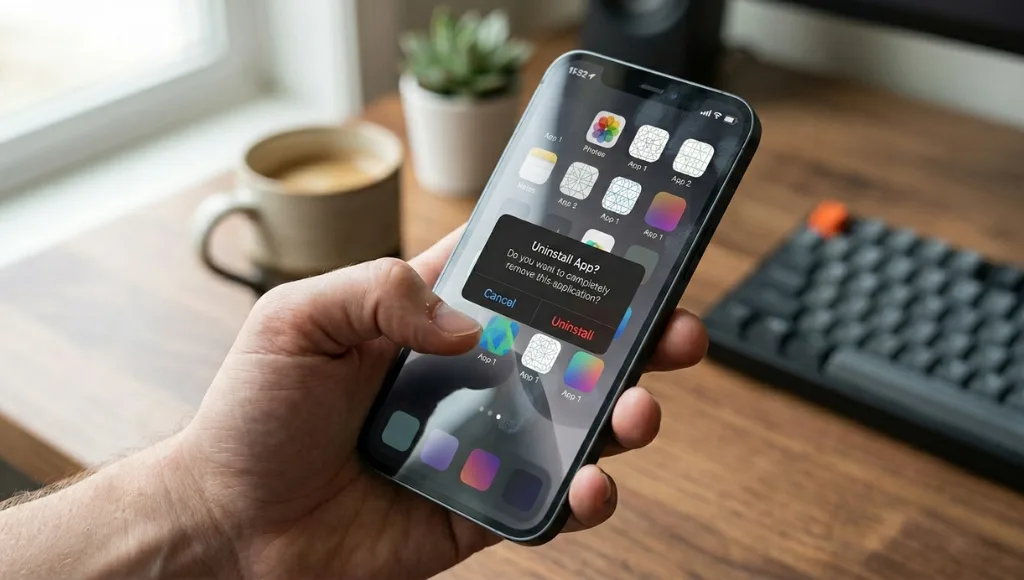
To delete apps on iPhone, touch and hold the app, tap Remove App, then choose Delete App and confirm. If you only choose Remove from Home Screen, the app stays installed in App Library. If the delete option is missing, check Screen Time restrictions or whether the app is a built-in Apple app.
Apple lets you remove an app from the Home Screen without fully deleting it. That means the app may still be available in App Library even though the icon is gone. If you removed the app icon by mistake and the app is still installed, follow our guide on how to unhide apps on iPhone.
Delete an app from the Home Screen
Start on the Home Screen. Press and hold the app you want to remove. Tap Remove App, then tap Delete App, then confirm. Apple’s support flow is still the fastest path for most users.
This is the step many people rush. They see Remove App and assume the next tap always deletes the app. It does not. Apple makes a clear split between removing the icon from the Home Screen and deleting the app from the device.
Delete an app from App Library
If the icon is no longer on the Home Screen, go to App Library and search for the app there. Touch and hold the app in App Library, then tap Delete App. This is helpful when your Home Screen is already clean, but the app is still installed.
One thing most guides miss is that iPhone cleanup often happens in two stages. First, users hide the icon. Later, they realize the app still shows up in storage, search, or App Library. That is why App Library deletion matters.
Apple separates removing an app from the Home Screen and fully uninstalling it, so check Apple’s guide to delete apps on iPhone before assuming the app is gone.
Fix the missing delete option
If you do not see a delete option for a non-Apple app, Apple says to check parental controls and make sure Deleting Apps is set to Allow. Go into Screen Time and review your content and privacy settings.
Some built-in Apple apps can be deleted, but not all of them. So if the button is missing, the issue may be restrictions, or it may be that the app is part of the system and cannot be removed in the normal way.
How to Delete Apps from iPad
To delete apps from iPad, use the same core method as iPhone: touch and hold the app, tap Remove App, then choose Delete App. You can also delete from App Library. If the option is blocked, Screen Time restrictions may be preventing app deletion.
Remove the icon or delete the app
On iPad, Apple gives you the same two choices. Remove from Home Screen keeps the app in App Library. Delete App removes it from the iPad. That sounds simple, but the wording still trips people up.
In my experience, iPad users run into this more often because they work with larger layouts, widgets, and split-screen habits. They clean the visible workspace and assume the uninstall is done. It is not done until Delete App is confirmed.
Delete from App Library on iPad
You can also go straight to App Library, find the app, touch and hold it, and tap Delete App. That is useful when the icon has already been removed from the Home Screen or buried in a folder.
Check Screen Time on managed devices
If this is a family iPad or a school-managed device, look at Screen Time settings. Apple’s iPad guidance says you can restrict installing or deleting apps through Content & Privacy Restrictions and iTunes & App Store Purchases.
That matters for parents too. A child’s iPad may look broken when the real issue is a restriction setting. This section is a good place to point readers back to your software and apps guide for a wider view of app control and device settings.
How to Delete an App on Mac
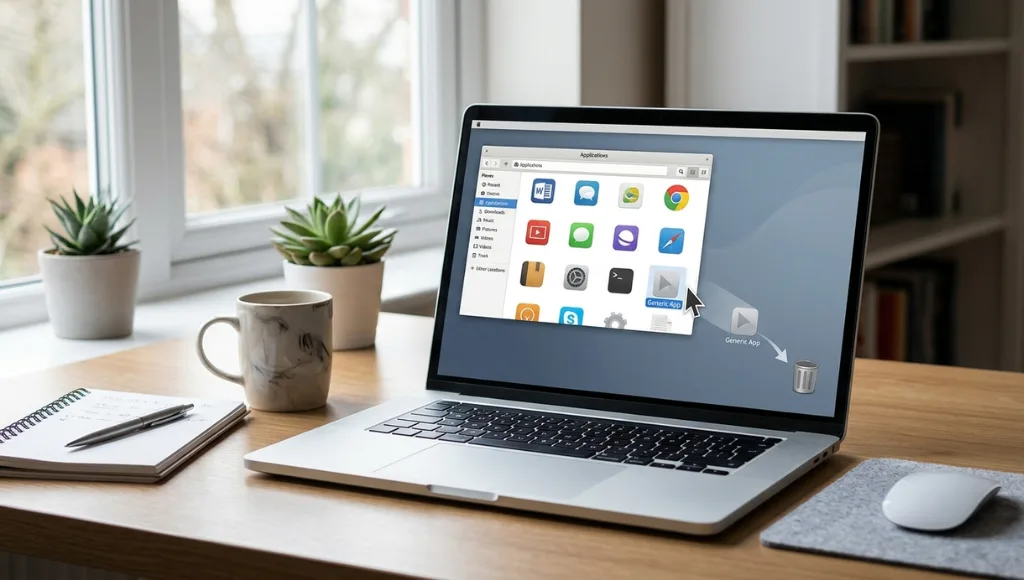
To delete an app on Mac, first check whether the app includes its own uninstaller. If it does, Apple says that is the best option. If not, open Applications, move the app to Trash, and then empty the Trash. Deleting a Mac app also does not cancel any subscription bought through that app.
Check for an uninstaller first
Apple specifically says that if an app includes an Uninstall or Uninstaller tool, that is the best way to remove it. That is because the app may have stored login items, extensions, or other files in extra locations.
Before dragging anything to Trash, review Apple’s Mac uninstall instructions, since some apps include their own remover and clean up more fully that way.
What I’ve seen work best is this: never drag a large third-party app to Trash until you check its folder or settings first. Security tools, creative apps, and VPNs often leave extras behind when users skip the official uninstaller.
Move the app to Trash
If there is no uninstaller, open Finder, go to Applications, find the app, and move it to Trash. Apple also notes you may need an administrator name and password for this step. After that, empty the Trash to permanently free the space.
Know what stays behind
Deleting a Mac app does not remove documents you created with that app. It also does not cancel subscriptions purchased with the app. Apple says subscriptions must be managed separately through subscription settings.
How to Delete Cash App Account Safely Before You Remove the App
To delete a Cash App account, do not start by uninstalling the app. Cash App has separate help for closing an account and deleting an account, and both routes go through support or account settings. The safe order is to review your activity, save needed records, close the account, and only then remove the app.
Use the in-app close account path
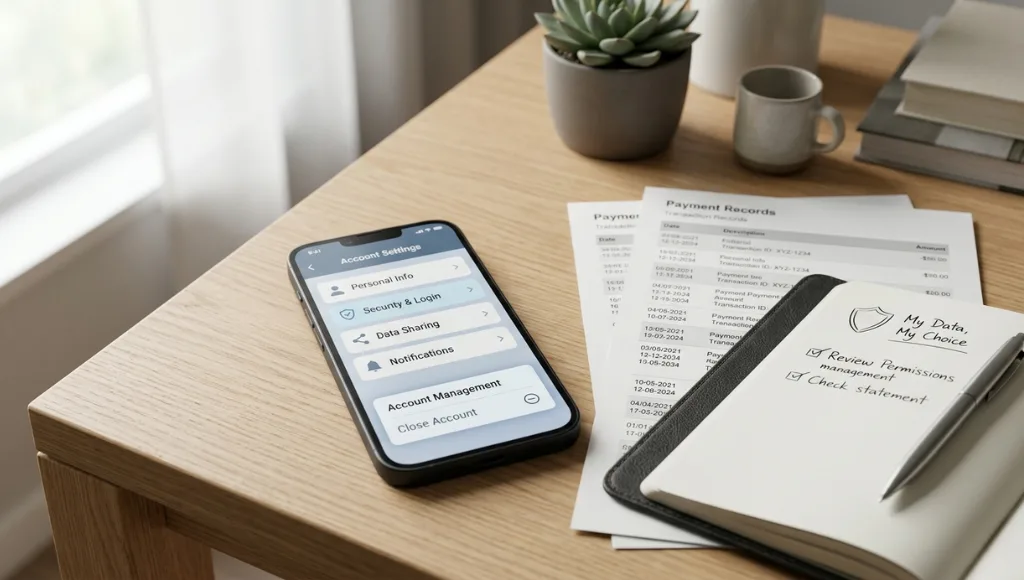
Cash App’s official Close Account help says to tap the profile icon, go to Support, open Account & Settings, and choose Close Your Cash App Account. That is the main in-app route shown in its help center.
Contact support if needed
Cash App also has a separate Delete Your Cash App Account page that says you can contact support by phone or by chat to cancel the account. So if the in-app path is not available, the official fallback is support.
Save what you need first
Before closing the account, review your Activity and your Account Statements. Cash App’s help center explains how to see transaction history in Activity and how to access statements through Documents. That is the smart time to save anything you may need for taxes, records, or disputes.
One thing most guides miss is the order of operations. Users delete the app first, then remember they still need a payment record. Close cleanly first. Remove second.
How to Delete Cash History: What You Can and Cannot Remove
Based on Cash App’s public help pages, there is no normal self-service button for deleting a single payment from your Activity history. Cash App shows users how to view activity, download statements, close accounts, and request personal-information deletion, but not how to erase one transaction line by line. Legal exceptions can also limit what data is removed.
What you can do right now
You can open the Activity tab to review transaction history. You can also access account statements through the web account area. Those are the two clear user-facing record tools Cash App documents today.
What to do for privacy
Cash App says it extends the option to delete personal information to customers, except where the law provides exceptions. That means privacy requests exist, but they are not the same thing as tapping a button to delete one payment from history.
What not to assume
Do not assume uninstalling Cash App deletes your transaction record. Cash App’s help separates account closure, account activity, statements, and personal-information deletion into different support paths. That strongly suggests these are different layers of account data and account access.
This is the part that frustrates users most. They want a trash icon next to each payment. As of the official help pages available now, that is not the normal flow.
Common Mistakes to Avoid When Deleting Apps
The most common mistake is confusing hide, delete, and close account. That one mix-up causes most cleanup failures. People think the app is gone, but it is still sitting in App Library, still active on the account side, or still attached to a subscription.
Using Remove from Home Screen instead of Delete App
Apple clearly separates those options on iPhone and iPad. Remove from Home Screen keeps the app in App Library. Delete App removes it from the device.
Ignoring Screen Time restrictions
When the delete option is missing, users often think the device is glitching. Apple says parental controls or Screen Time settings may be blocking deletion.
Skipping the Mac uninstaller
Apple recommends using an app’s own uninstaller when it exists because it may remove extensions, login items, and other leftovers.
Deleting Cash App before closing the account
Cash App separates account closure from app removal. If you uninstall first, you may still need to return later for records or support.
Assuming app deletion cancels subscriptions
Apple says deleting or uninstalling an app does not cancel the subscription you bought with it. Subscription management is separate.
Deleting the app alone does not stop billing, so users should also review how to cancel a subscription from Apple.
Frequently Asked Questions
No. Apple says Remove from Home Screen keeps the app in App Library, while Delete App removes it from the device. That is why an app can disappear from the main screen but still show up in search or storage.
No. Apple says deleting or uninstalling an app does not cancel a subscription purchased with that app. You need to cancel the subscription separately in Subscriptions on iPhone, iPad, or Mac.
The most common reasons are Screen Time restrictions or the fact that the app is a built-in Apple app that cannot be removed in the usual way. Apple says to check whether Deleting Apps is set to Allow.
Cash App’s public help pages explain how to view Activity, download statements, close an account, and request personal-information deletion. They do not show a standard self-service button for deleting one individual payment from Activity. Based on that documentation, the normal answer is no.
Usually, yes. Apple says deleted apps can be downloaded again later if they are still available in the App Store. That makes deletion low risk for apps you only want to remove for now.
Conclusion
If you remember only three things, remember these:
- Remove from Home Screen is not the same as Delete App on iPhone or iPad.
- On Mac, check for an official uninstaller first, then move the app to Trash and empty it.
- Cash App account closure is different from app removal, and transaction-history deletion is more limited than many users expect.