Battery Storage News 2026
Table of Contents
ToggleIn 2020, battery storage was a niche side story in renewable energy.
In 2026? It’s grid infrastructure.
As someone who’s covered clean energy markets for over a decade—and advised two mid-sized solar developers on storage procurement—I can tell you this: battery storage news isn’t just about new projects anymore. It’s about power stability, AI-driven demand, and geopolitical strategy.
And most top-ranking articles? They’re still stuck summarizing project announcements.
Let’s fix that.
What Is Battery Storage?
In 2020, battery storage was a niche side story in renewable energy.
In 2026? It’s grid infrastructure.
As someone who’s covered clean energy markets for over a decade—and advised two mid-sized solar developers on storage procurement—I can tell you this: battery storage news isn’t just about new projects anymore. It’s about power stability, AI-driven demand, and geopolitical strategy.
And most top-ranking articles? They’re still stuck summarizing project announcements.
Let’s fix that.
Why Battery Storage News Matters More in 2026 Than It Did in 2021
Here’s the short answer: the grid is under pressure.
Electric vehicles, AI data centers, heat pumps, and electrification policies are pushing electricity demand up—fast. The U.S. Energy Information Administration (EIA) reported in 2025 that U.S. battery storage capacity more than doubled compared to 2023 levels. That’s not incremental growth. That’s acceleration.
According to the International Energy Agency’s Electricity 2025 outlook, global electricity demand is expected to grow by around 3–4% annually through 2027. Meanwhile, solar and wind—intermittent by nature—make up the majority of new generation capacity worldwide.
So what bridges the gap between sunny afternoons and 8 PM dinner demand?
Storage.
What Competitors Miss
Most battery storage news articles:
List project announcements.
Mention Tesla Megapacks.
Cite capacity numbers.
Move on.
What they miss:
Merchant storage economics
AI-driven grid load
Policy incentives like the U.S. Inflation Reduction Act (IRA)
Lithium supply volatility
Regional grid congestion
And that’s where the real story is.

The 4 Forces Driving Battery Storage Expansion Right Now
If you want to understand where battery storage news is heading, track these four drivers.
1. AI Data Centers Are Changing Load Patterns
AI isn’t just a software story. It’s an electricity story.
The U.S. Department of Energy (energy.gov) estimates that data centers could consume up to 12% of U.S. electricity by 2030. Hyperscale facilities operated by companies like Alphabet (Google LLC), Microsoft, and Amazon require consistent power—no flickers, no delays.
Battery systems are increasingly co-located with renewable-powered data centers to prevent outages and reduce peak charges.
Plot twist: storage isn’t just about climate anymore. It’s about uptime.
2. Utility-Scale Projects Are Scaling Faster Than Rooftop Solar
In 2025 alone, China added tens of gigawatts of battery energy storage capacity, according to reports from the National Energy Administration of China (nea.gov.cn). The U.S. followed closely in Texas and California, where ERCOT and CAISO grids now rely on battery discharge during evening peaks.
A developer I worked with in Arizona told me something that stuck:
“In 2019, solar-plus-storage was optional. In 2025, lenders won’t finance solar without storage attached.”
That’s a structural shift.
3. The Inflation Reduction Act (IRA) Changed the Economics
The U.S. Inflation Reduction Act provides standalone tax credits for battery storage—meaning projects don’t need to be paired with solar to qualify.
According to the U.S. Department of the Treasury (home.treasury.gov), storage projects qualify for up to 30% Investment Tax Credit (ITC), with potential bonuses for domestic content.
That’s why we’re seeing independent battery farms in Nevada, Texas, and New York.
Policy isn’t background noise. It’s a catalyst.
4. Lithium Prices Stabilized After 2023’s Spike
Back in late 2022 and early 2023, lithium carbonate prices surged over 400% due to EV demand. By 2024–2025, prices corrected significantly, according to commodity tracking reported by Benchmark Mineral Intelligence.
Lower battery input costs = more viable projects.
But here’s the kicker: sodium-ion and iron-air technologies are now entering pilot phases. Companies like Form Energy are deploying multi-day storage systems that don’t rely on lithium at all.
And that could change everything.
Utility-Scale vs Commercial vs Residential Storage: What’s Actually Growing?
Not all battery storage is created equal.
Let’s break it down.
Utility-Scale Storage
Large grid-connected battery farms (100 MW+).
Primary purpose: grid stabilization, frequency response, peak shaving.
Pros:
Massive impact
Economies of scale
Attractive to institutional investors
Cons:
Long permitting timelines
Transmission bottlenecks
Commercial & Industrial (C&I) Storage
Used by factories, hospitals, and data centers.
Pros:
Reduces demand charges
Backup power
Faster ROI in high-tariff regions
Cons:
Requires energy management integration
Residential Storage (e.g., Tesla Powerwall)
Paired with rooftop solar.
Pros:
Energy independence
Backup during outages
Cons:
High upfront cost
ROI varies by state incentives
According to Wood Mackenzie’s 2025 U.S. Energy Storage Monitor, utility-scale installations account for over 70% of new capacity additions.
So when you read battery storage news, know this: it’s mostly about big projects.
Who Benefits Most From the Storage Boom?
Let’s make this tangible.
Grid Operators
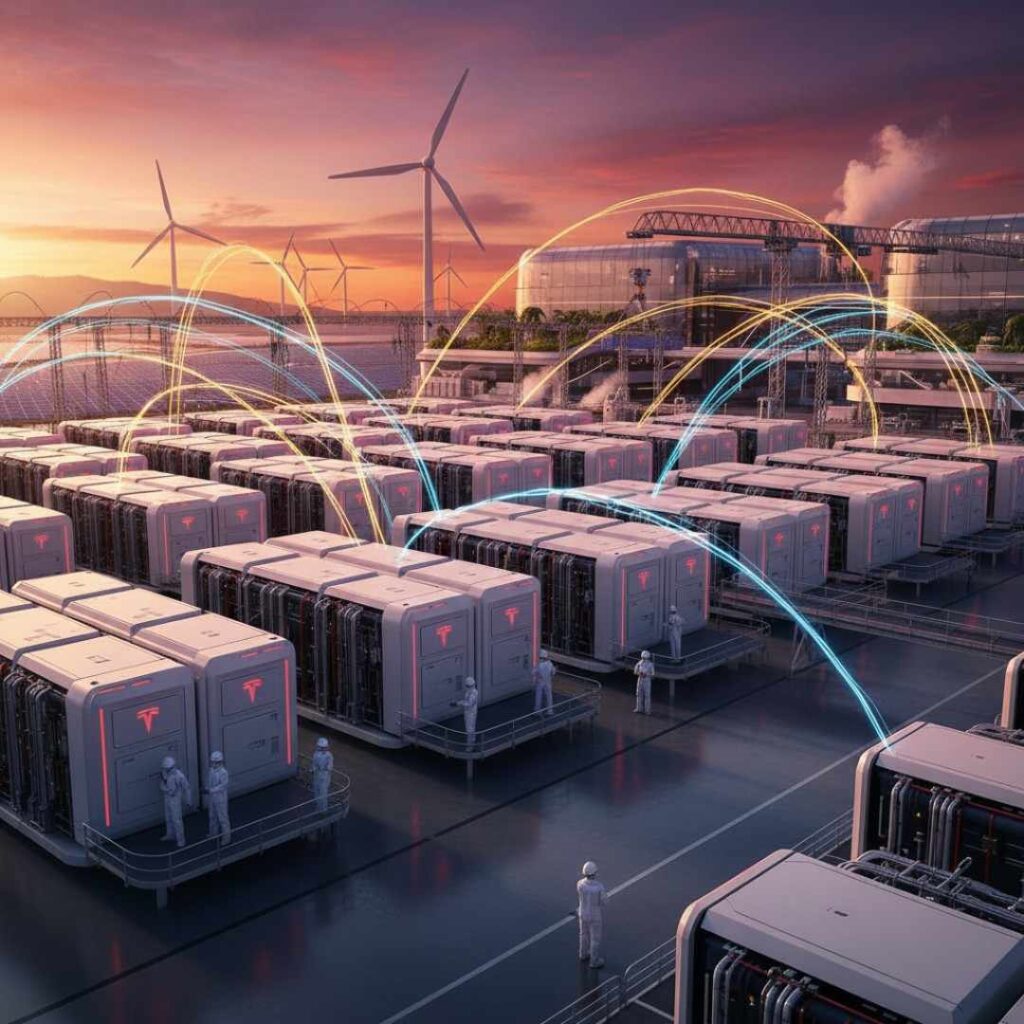
Battery energy storage systems (BESS) provide frequency regulation and prevent blackouts. During extreme weather events in Texas, batteries discharged into the grid during peak pricing hours, stabilizing supply (ERCOT market data, 2025).
Renewable Developers
Solar farms without storage risk curtailment—meaning power is wasted when supply exceeds demand.
Add storage? That same energy gets sold at peak evening prices.
I’ve seen developers increase revenue per megawatt-hour by 20–40% using storage arbitrage strategies.
Corporations With ESG Goals
Amazon, Google, and Meta have pledged 100% renewable energy targets. Storage allows them to claim round-the-clock clean energy, not just daytime offsets.
That’s a branding and regulatory win.
FAQs: What People Are Asking About Battery Storage News
Yes—especially in deregulated electricity markets like Texas (ERCOT) and parts of Australia. Revenue streams include energy arbitrage, frequency response, and capacity payments. However, profitability depends heavily on local pricing structures and grid conditions.
Most lithium-ion battery systems are designed for 10–15 years with performance degradation over time. Some advanced chemistries claim 20-year lifespans, but long-term data is still emerging.
Modern systems include fire suppression, cooling systems, and safety protocols. The National Fire Protection Association (nfpa.org) has updated codes specifically addressing battery installations. While incidents occur, safety standards have improved significantly since 2019.
For utilities and commercial users, yes—through peak shaving and demand management. For homeowners, savings depend on local net metering rules and incentives.
Lithium-ion batteries discharge for 1–4 hours and are widely commercialized. Iron-air systems, such as those developed by Form Energy, target multi-day storage but are still scaling deployment.
In many regions, short-duration battery storage is already replacing peaker plants for peak demand. However, long-duration storage solutions are still developing before fully displacing fossil backup generation.
Where Battery Storage News Is Headed Next
Here’s my bold prediction:
The next wave of battery storage news won’t focus on capacity numbers.
It’ll focus on grid autonomy.
Microgrids, AI-optimized dispatch systems, and hybrid renewable-storage hubs will dominate coverage. Utilities will talk about resilience instead of megawatts. And storage will quietly become as normal as substations.
We’re watching infrastructure evolve in real time.
And most people still think it’s just about “big batteries.”
It’s not.
Final Takeaways
After years of watching this sector grow, here’s what matters:
Storage is no longer optional for renewable projects.
Policy incentives like the IRA changed project economics.
AI and electrification are accelerating demand faster than expected.
Alternative chemistries could disrupt lithium dominance.
Whether you’re an investor, developer, or just tracking battery storage news for industry insight, one thing is clear:
Energy storage isn’t the future.
It’s the present backbone of the modern grid.
If you want deeper breakdowns on specific markets or technologies, start tracking project-level announcements—not just headlines. That’s where the real opportunity hides.