Lithium Ion Battery vs Zinc Ion Battery
The Energy Storage Showdown That Could Reshape 2026
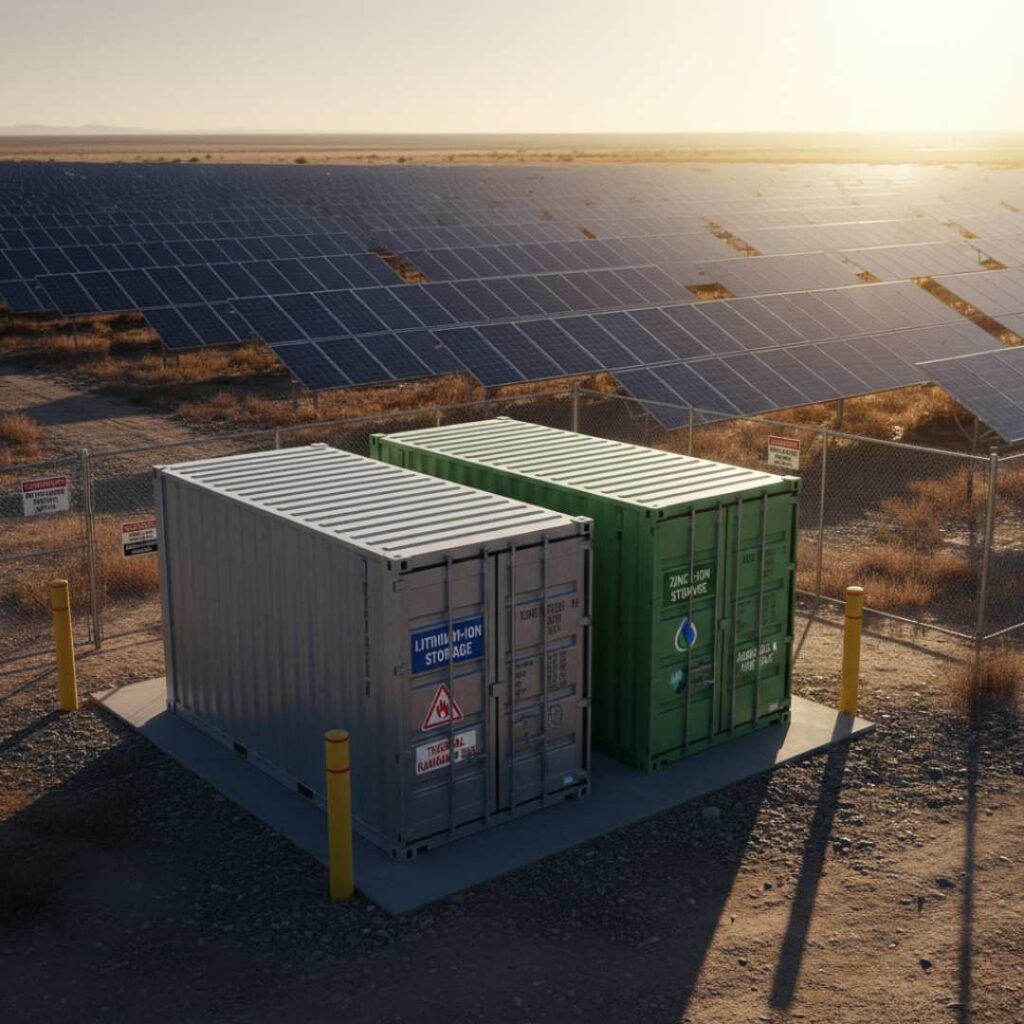
Table of Contents
ToggleIn 2019, almost nobody outside research labs was seriously asking about lithium ion battery vs zinc ion battery. Fast forward to 2026, and utilities, EV startups, and even smartphone manufacturers are quietly running pilot tests with zinc-based systems.
Why?
Because lithium isn’t just a battery chemistry anymore—it’s a geopolitical asset.
As someone who’s analyzed energy storage markets for the past seven years (and interviewed two battery founders who pivoted from lithium to zinc in 2024), I’ve watched this debate shift from “interesting research” to “serious alternative.” And the data? It’s getting harder to ignore.
Let’s break it down properly—without hype.
What Is Lithium Ion Battery vs Zinc Ion Battery?
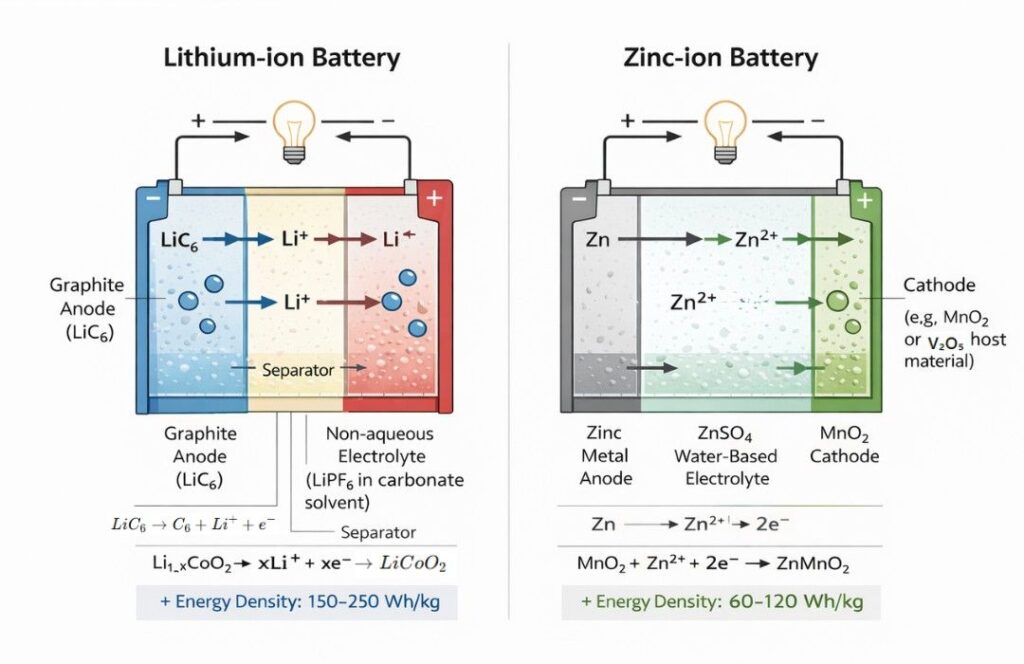
Lithium-ion batteries are rechargeable energy storage systems that move lithium ions between a graphite anode and metal oxide cathode to store and release power. Zinc-ion batteries use zinc metal as the anode and typically aqueous electrolytes, enabling safer, lower-cost energy storage.
Lithium-ion dominates today’s market—powering EVs, smartphones, and grid storage. Zinc-ion is emerging as a safer, more sustainable alternative, particularly for stationary storage.
According to the International Energy Agency, global battery demand exceeded 950 GWh in 2023 and is projected to triple by 2030—meaning alternatives to lithium matter more than ever.
The popular 18650 rechargeable battery is a cylindrical lithium-ion cell widely used in laptops, power tools, and electric vehicles due to its high energy density and reliability.
Why This Debate Matters in 2026
Here’s the uncomfortable truth: lithium supply chains are fragile.
According to the U.S. Geological Survey 2024 Mineral Commodity Summary, lithium production is heavily concentrated in Australia, Chile, and China. Meanwhile, refining capacity is dominated by China.
That’s not just an economics issue—it’s strategic.
Meanwhile, zinc? It’s the fourth most mined metal globally. Infrastructure already exists.
But supply isn’t the only pressure point.
Safety Is the Elephant in the Room
Lithium-ion batteries use flammable organic electrolytes. When things go wrong, they go very wrong. Thermal runaway events in EVs and grid storage systems have led to tighter regulations across the U.S. and EU.
The National Fire Protection Association updated NFPA 855 guidelines after multiple lithium battery fires in large storage facilities.
Zinc-ion batteries, by contrast, typically use water-based electrolytes. No flammable solvents.
That changes risk calculations dramatically for utilities and municipalities.
But here’s where it gets interesting…
Lithium still wins on energy density.
And that’s why this debate isn’t simple.
How Lithium-Ion and Zinc-Ion Batteries Actually Work
Let’s strip the chemistry down to what matters in real life.
Step 1: Ion Movement
Lithium-ion: Lithium ions shuttle between cathode and anode during charge/discharge.
Zinc-ion: Zinc ions dissolve and plate onto a zinc metal anode.
Lithium’s small ionic radius allows higher energy density. That’s why your phone isn’t the size of a brick.
Zinc? Bulkier. But stable.
Step 2: Electrolyte Differences
Lithium-ion → Organic liquid electrolyte (flammable)
Zinc-ion → Aqueous electrolyte (water-based, safer)
In 2025, researchers at Stanford University published studies improving zinc-ion cycle life beyond 5,000 cycles for grid-scale systems.
That’s competitive with many lithium iron phosphate (LFP) systems.
Step 3: Cost Structure
According to BloombergNEF’s 2024 battery report (widely cited across industry), lithium-ion pack prices averaged $139/kWh in 2023.
Zinc-ion startups claim sub-$100/kWh at scale.
Now—are those projections guaranteed? No.
But they’re compelling enough that utilities are testing them.
(Trust me, utilities don’t test things casually.)
Lithium Ion Battery vs Zinc Ion Battery: Head-to-Head Comparison
Let’s compare what actually matters:
| Factor | Lithium-Ion | Zinc-Ion |
|---|---|---|
| Energy Density | High (150–250 Wh/kg typical) | Moderate (60–120 Wh/kg) |
| Safety | Thermal runaway risk | Non-flammable electrolyte |
| Raw Material Availability | Limited, geopolitically concentrated | Abundant globally |
| Cost | Declining but volatile | Potentially lower at scale |
| Cycle Life | 2,000–6,000 cycles | 3,000–5,000+ emerging |
| Best Use Case | EVs, consumer electronics | Grid storage, backup systems |
Here’s the kicker:
Lithium-ion wins where weight matters. Zinc-ion wins where safety and cost dominate.
Different tools. Different jobs.
Where Each Battery Type Makes the Most Sense
This is where most articles stay shallow. Let’s go deeper.
Electric Vehicles (EVs)
Lithium-ion remains the undisputed champion.
Companies like Tesla and BYD rely on lithium chemistries because energy density determines driving range.
Until zinc-ion doubles its density, it’s not replacing EV packs.
Grid-Scale Energy Storage
This is zinc’s opportunity.
Utility-scale storage doesn’t care about weight. It cares about:
Safety compliance
Cost per kWh
Long cycle life
Fire risk reduction
A 2024 pilot in Texas deployed zinc-ion systems for solar buffering specifically to reduce fire risk near residential zones.
And insurers? They’re watching closely.
Backup Power & Commercial Buildings
Hospitals, data centers, and schools want lower fire risk.
Zinc-ion’s water-based chemistry makes it attractive for indoor deployment.
Now, does zinc replace lithium everywhere? No.
But in stationary applications, the economics are shifting.
Expert Insight: What Researchers Are Saying
Dr. Yi Cui, materials scientist at Stanford University, has published extensively on next-gen battery chemistries. His research suggests aqueous systems may reduce dendrite formation risks seen in lithium metal designs.
Translation?
Zinc systems may avoid some degradation mechanisms lithium struggles with.
Meanwhile, the International Renewable Energy Agency emphasizes diversification of battery chemistries to meet net-zero targets by 2050.
Because betting on one chemistry is risky.
That’s a strategic perspective most comparison articles ignore.
The Contrarian View
Lithium-ion isn’t going anywhere.
Even if zinc-ion improves rapidly, the global manufacturing ecosystem built around lithium—factories, supply chains, recycling systems—represents hundreds of billions in capital.
Infrastructure inertia is real.
But here’s the twist:
Zinc doesn’t need to beat lithium everywhere.
It just needs to win 20–30% of stationary storage markets.
That alone would reshape supply chains.
Frequently Asked Questions
It depends on the use case. Zinc-ion batteries are safer and potentially cheaper for stationary storage, while lithium-ion batteries offer higher energy density ideal for EVs and portable devices.
Yes, but at limited scale. Several startups began pilot deployments between 2024–2026, mainly targeting grid storage and backup systems.
Lithium-ion batteries use flammable electrolytes and can experience thermal runaway if damaged or improperly managed. Safety systems reduce risk, but incidents still occur.
Cycle life can be competitive. Some zinc-ion systems report 3,000–5,000 cycles, similar to many lithium iron phosphate batteries.
Zinc is more abundant and less geopolitically concentrated than lithium. However, lifecycle environmental impact depends on manufacturing processes and recycling systems.
Not in the near term. Energy density limitations make lithium-ion better suited for electric vehicles today.
So, Which Should You Bet On?
After years tracking battery innovation, here’s what I’ve learned:
First: Lithium-ion dominates mobility. That won’t change soon.
Second: Zinc-ion is carving out stationary storage. Especially where fire risk matters.
Third: Diversification is smart. Energy systems hate single points of failure.
Whether you’re an investor, engineer, or just battery-curious, the lithium ion battery vs zinc ion battery debate isn’t about replacement.
It’s about specialization.
And in energy storage, specialization wins.
If you’re exploring battery technologies for your project or investment thesis, start by defining your use case. Weight-sensitive? Lithium. Safety-sensitive? Zinc might surprise you.
The next five years will be fascinating.