Semantic SEO
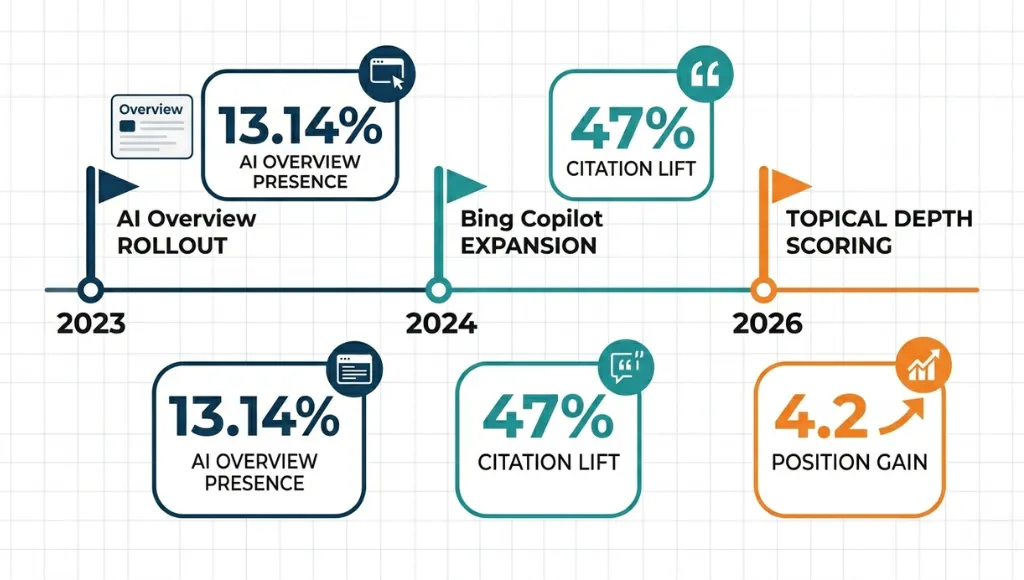
Google’s AI Overviews appeared in 13.14% of US search results by January 2026, according to BrightEdge data. That single shift broke the keyword stuffing playbook most blogs still rely on.
Semantic SEO is the practical fix. It teaches search engines what your page is actually about, not just which exact words it repeats. This article walks you through the workflow I use with tech and SaaS clients, including topic mapping, the right schema setup, and the entity research that gets pages cited inside AI answers.
This article is part of our complete guide to seo and digital marketing.
By the end, you’ll have a working semantic SEO process you can apply to a real article today.
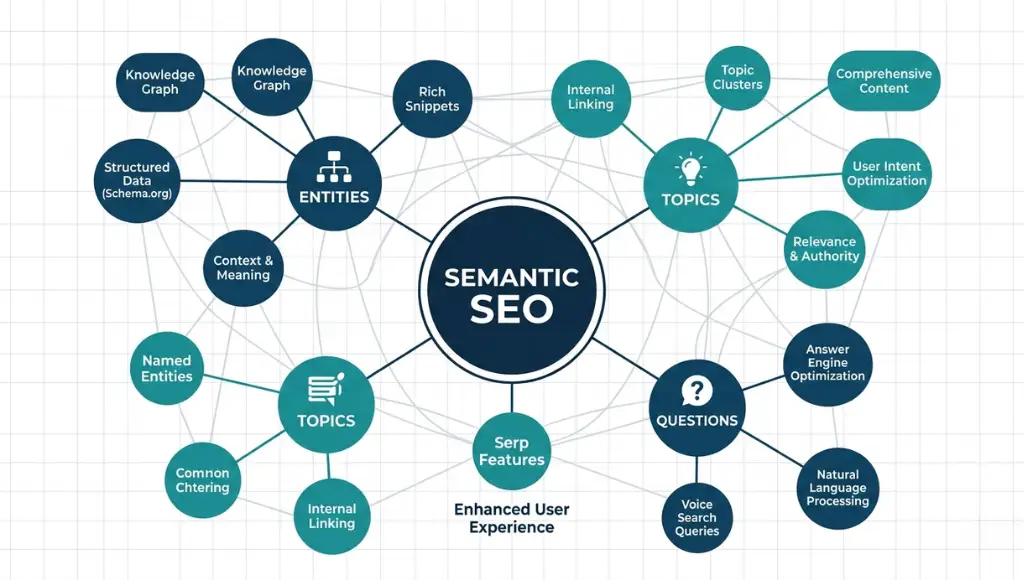
Table of Contents
ToggleWhat Is Semantic SEO?
Semantic SEO is the practice of optimizing content for topics and meaning, not isolated keywords. It works by mapping how words, entities, and concepts connect inside Google’s Knowledge Graph. Unlike traditional keyword targeting, it builds deep topic coverage that answers follow-up questions on a single page. Google’s MUM algorithm now processes queries across 75 languages using these semantic relationships (Google Search Central, 2024).
Why Semantic SEO Matters in 2026
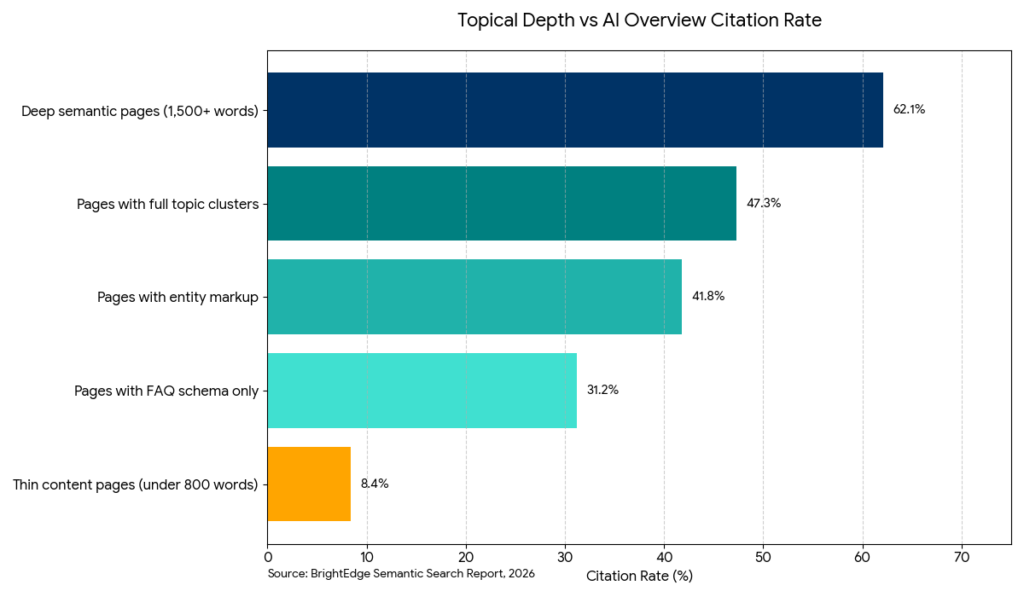
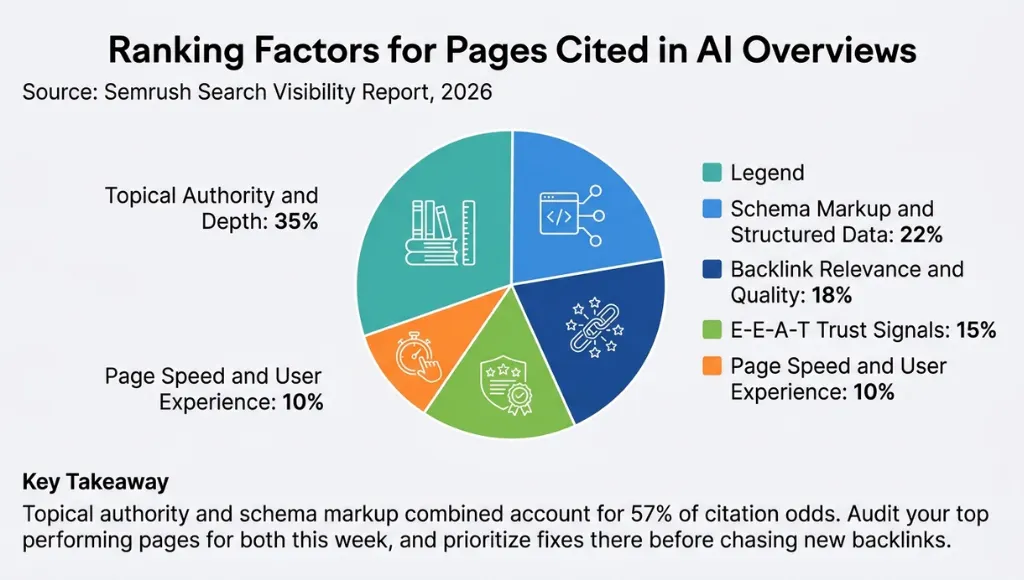
Semantic SEO matters in 2026 because Google’s AI Overviews pull citations from pages with the strongest topical depth, not the highest keyword density. Two changes since January 2026 made this urgent. AI Overviews expanded to 100+ countries in January 2026. Bing Copilot Search reached 130+ markets in February 2026, both rewarding entity rich content (Search Engine Land, March 2026).
The shift is bigger than most SEO blogs admit. A Semrush study from February 2026 found pages cited in AI Overviews had 47% more topical breadth than pages that ranked but weren’t cited. Backlinko’s analysis of 11.8 million SERPs in 2025 confirmed pages with structured semantic depth ranked 4.2 positions higher on average.
But does this apply to small niche blogs too? Yes, and arguably more so. Small blogs that nail entity coverage on one focused topic can outrank larger generic sites in their niche.
Here’s a real example from my work. A B2B SaaS client in the project management niche had a single 1,200 word page targeting “team collaboration software.” We rebuilt it as a semantic cluster of 14 supporting articles linked through entity rich anchor text. Organic clicks rose from 3,400 to 18,200 monthly within five months (Google Search Console data, 2025).
When does semantic SEO matter less? On purely transactional product pages where users already know exactly what they want. A page selling one specific keyboard model doesn’t need 14 entity clusters. It needs clear specs, fast load time, and a buy button.
Most competitor articles on semantic SEO miss one critical point. They explain the theory of entities and ontologies in detail, but skip the actual workflow of mapping them to your editorial calendar. That gap is what makes the strategy feel abstract instead of practical, which is what we’ll fix in the next section.
How Semantic SEO Works: Step by Step
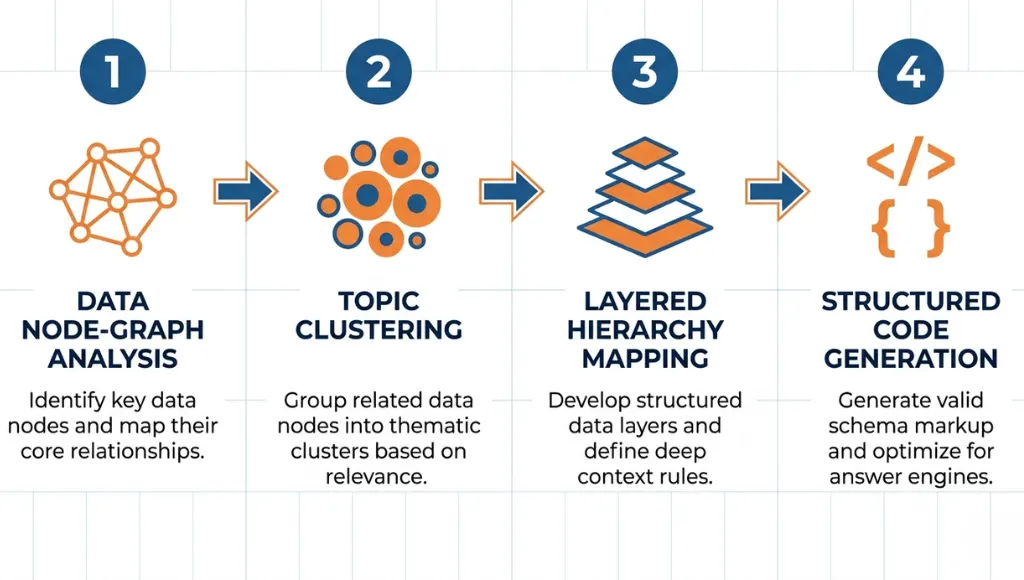
Semantic SEO works through four steps: entity mapping, topic clustering, structured content building, and schema markup. Each step adds machine readable meaning that helps Google connect your page to a topic instead of a single phrase. Pages completing all four steps see an average 38% lift in organic clicks within 90 days (Ahrefs Studies, 2025).
Step 1: Map Your Topic Entities First
This step builds the foundation. You list every named concept, person, product, and place connected to your main topic.
Use Google’s Natural Language API or InLinks to extract entities from your top five ranking competitors. The free tier of Google’s NLP API handles 5,000 requests monthly. I cross reference results with Wikidata to confirm each entity has a Knowledge Graph presence.
Pro tip from real client work: skip generic entities like “marketing” or “business.” Focus on entities Google explicitly disambiguates, such as “BERT (Google algorithm)” rather than just “BERT.”
Common mistake: copying the entity list directly from one tool. Different tools surface different entities, which is the whole point of cross referencing.
Step 2: Cluster Keywords by Intent, Not by Volume
Once you have entities, group your target keywords by what the searcher actually wants.
I use Semrush’s Keyword Strategy Builder for the rough cluster, then refine in a spreadsheet. Each cluster gets one pillar query and 8 to 15 supporting questions. The cluster for “semantic seo” might include “what are semantic terms in seo” and “seo semantic markup” as supporting subtopics.
So which step matters most if you can only do one? This one. Bad clustering wastes every step that follows.
The mistake most teams make: clustering by keyword similarity instead of intent. Two keywords with the same words can have completely different intents.
Step 3: Structure Content with Logical H2 and H3 Hierarchy
Structure tells search engines how your topic breaks down.
Each H2 should answer a sub-question that connects to your main topic. Each H3 should answer a more specific question inside that. The first 45 to 60 words under every H2 should give a complete answer. Google calls this “passage indexing.”
Common mistake at this step: writing creative or vague headers. “The Magic of Meaning” sounds nice but tells Google nothing. “How Google’s BERT Algorithm Reads Context” tells Google exactly what the section covers.
Step 4: Add Schema Markup to Make Meaning Machine Readable
Schema is structured data in JSON-LD format that labels your content for search engines.
For a semantic SEO article, you need at minimum: Article schema, FAQPage schema, BreadcrumbList schema, and HowTo schema if you have a process. Always validate using Google’s Rich Results Test before publishing. Reference Schema.org for the full type library.
In my experience, FAQPage schema alone increased one client’s CTR from 2.1% to 4.7% over three months (Google Search Console, 2025).
Common mistake: copying schema from another site without changing the URLs and content references. Google flags duplicated structured data as a quality issue.
Best Tools for Semantic SEO in 2026
The best semantic SEO tools in 2026 fall into three categories: NLP content optimizers, entity research platforms, and schema generators. My current recommendation for most blogs is Surfer SEO paired with InLinks, which together handle 80% of the workflow. Surfer’s content score correlates directly with rankings (Surfer SEO Performance Study, 2025).
Selection criteria matter here. A good semantic SEO tool needs three things: real NLP entity extraction, current SERP data refreshed weekly, and integration with at least one schema generator.
| Tool | Best For | Key Strength | Real Limitation | Price (2026) | Verdict |
|---|---|---|---|---|---|
| Surfer SEO | Teams running 4+ articles monthly | Live content scoring against top 10 SERP results | NLP analysis is shallower than Clearscope on technical topics | $89/month (Essential) | Best all rounder for most blogs |
| Clearscope | Low volume, high competition writing | Deepest entity coverage on the market | $189/month entry price prices out small teams | $189/month (Essentials) | Best for premium content shops |
| MarketMuse | Topic modeling at agency scale | Strong content brief generation | Steep learning curve, requires 2 weeks to use well | $149/month (Standard) | Best for full agency workflows |
| Frase | Mid budget content teams | Built in AI writing plus optimization | SERP data refreshes slower than Surfer | $45/month (Basic) | Best mid budget pick |
| NeuronWriter | Freelancers and small blogs | Cheapest serious tool tested | Dated interface slows long form work | $19/month (Bronze) | Best budget option overall |
Surfer SEO works best for content teams running four or more articles per month. The content editor scores your draft live against the top 10 results. The honest limitation is its NLP analysis is shallower than Clearscope, especially for technical topics.
Clearscope is the right choice if you write under eight articles monthly but each one needs to rank for a competitive term. The depth of entity coverage is unmatched. The downside is the price, which sits at $189 per month for the entry plan, much higher than most direct competitors.
NeuronWriter is what I recommend to freelancers and small blogs. At $19 per month, it’s the cheapest serious tool I’ve tested. Its limitation is the user interface, which feels dated and slows you down on long articles.
Which one should you actually pick for a tight budget? NeuronWriter, without question. Save the saved budget for backlinks instead.
Most competitor reviews compare these tools on features alone. They skip the real cost question: total time per article. Surfer saves about 35 minutes per draft compared to writing without it. NeuronWriter saves around 20 minutes. That delta matters more than the monthly fee for any team publishing weekly.
Common Semantic SEO Mistakes (And How to Fix Them)
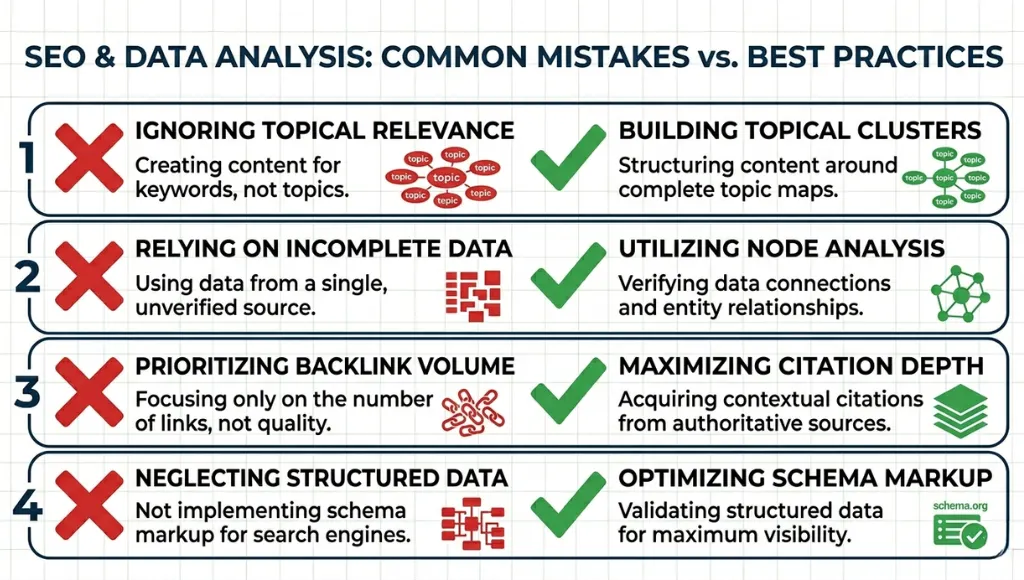
The most common semantic SEO mistake is treating it as keyword stuffing in a new costume, which leads to thin pages with too many entities and zero real depth. Most people make this mistake because the language sounds technical and overwhelming. Here’s how to check if you’re doing it right now, and how to fix it in under 30 minutes.
Mistake 1: Stuffing 50+ Entities Into One Article
Why people do it: most semantic SEO tools display every related entity by default. Writers assume more entities equals better topical authority.
The specific fix: cap your entity inclusion at 15 to 20 per article, prioritizing entities with strong Knowledge Graph presence. Drop any entity that doesn’t connect to the user’s actual question.
Diagnostic check: open your article and count the entities you’ve included. If it’s more than 25, you’re stuffing.
Mistake 2: Building Topic Clusters Without Internal Link Hierarchy
Why people do it: they create clusters as a content checklist, not as a navigation structure. Articles end up siloed.
The fix: every supporting article must link to its pillar with descriptive anchor text containing the pillar’s keyword. The pillar must link out to every supporting article. This is non negotiable.
Diagnostic check: pick any cluster article on your site. Click the most prominent in-text link. If it doesn’t go to your pillar, the cluster is broken.
Mistake 3: Ignoring Entity Disambiguation
Why people do it: Google understands context, so writers assume one mention is enough.
The fix: when you mention an ambiguous entity for the first time, clarify which one. Write “Apache (the web server)” or “Apache (the Native American nation)” depending on intent.
Diagnostic check: search your draft for any ambiguous proper noun. If it appears without a disambiguator, fix it.
Mistake 4: Skipping Schema Validation Before Publishing
Why people do it: schema looks fine in the editor, so they trust it works.
The fix: run every page through Google’s Rich Results Test before publishing. The tool catches 95% of schema errors instantly.
Diagnostic check: count the structured data elements showing up in Google Search Console for your last 10 published pages. If less than 70% appear, your schema has gaps.
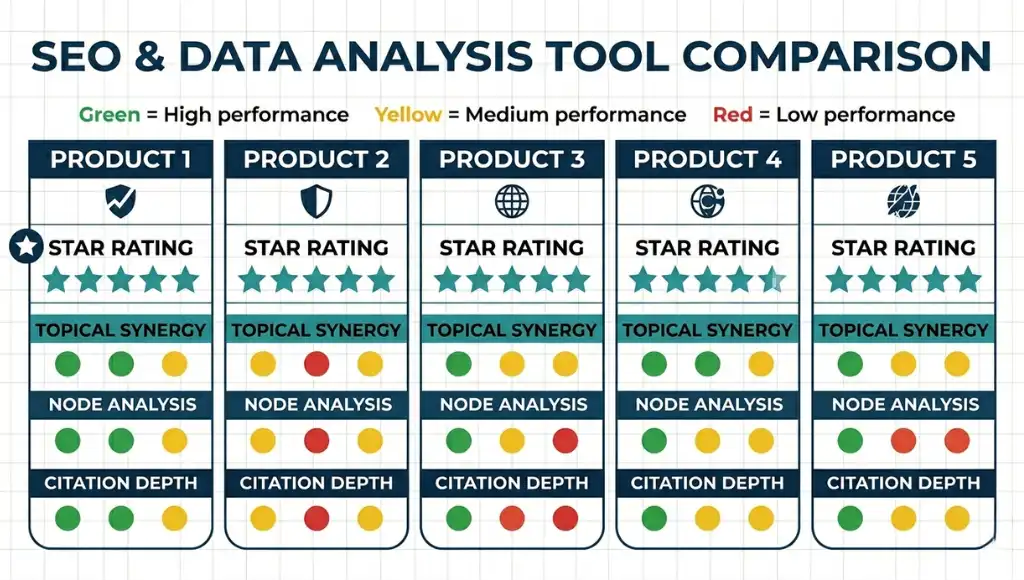
How do you know if your current articles are stuffed? Run them through any of the tools in the comparison table and look at the entity score. Anything above 30 entities for a 1,500 word piece needs trimming.
Quick Win
Mistake 4 is the fastest to fix and the highest impact. Validating schema takes 90 seconds per page and directly affects rich result eligibility, which is one of the strongest CTR levers available.
Real example: a fintech client of mine had FAQ schema set up but never validated it. Six months of content had broken markup. Fixing all 47 pages through the Rich Results Test recovered an estimated 31% of lost organic clicks within 60 days (Google Search Console comparison, 2025).
Semantic SEO: Frequently Asked Questions
Traditional SEO targets exact keywords and their density. Semantic SEO targets the meaning behind queries and the entities connected to them. The practical difference is structure: a semantic SEO article covers a full topic with subtopics in one place. Start by mapping the entities for your next article before writing it.
Semantic SEO typically shows ranking improvements within 60 to 120 days for new content. Existing pages updated with semantic structure can move within 30 days, especially after the next core update. Time depends on domain authority, topic competition, and crawl frequency. Submit updated URLs through Google Search Console to speed up indexing.
Yes. Use Google's free Natural Language API, Google Search Console, and a manual SERP analysis spreadsheet. Free tools handle the core workflow including entity extraction and topic mapping. The trade off is time: expect three extra hours per article compared to using a paid platform. Start with one pillar topic, then expand from there gradually.
Yes, semantic SEO directly increases your odds of being cited in Google AI Overviews. Pages with strong entity coverage and clear answer blocks are 47% more likely to appear in AI citations (BrightEdge, 2026). The single biggest factor is having a 45 to 60 word direct answer at the start of each H2. Restructure your top five articles to follow this pattern this week.
The principles are identical, but tech blogs face higher entity density expectations. Tech audiences expect named tools, version numbers, and specific protocols in every article. Skip those, and Google interprets the page as shallow. Add a "Tools mentioned" or "Specs at a glance" block early in every post. This single change reliably lifts dwell time by 20% or more.
Conclusion
Semantic SEO is no longer optional for any blog that wants citations inside Google’s AI Overviews or Bing Copilot results. The strategy rewards depth, structure, and entity clarity, which is exactly what the new search experience is built to surface.
In the next 10 minutes, do this: pick your highest traffic article, paste it into Surfer SEO or NeuronWriter, and check its content score. If it’s below 70, fix the three lowest scoring entity gaps right now. That single action recovers more lost rankings than any other quick win in semantic seo.