SEO and Digital Marketing
Sixty-eight percent of online experiences still begin with a search query in 2026 (BrightEdge, 2025). That single number explains why SEO and digital marketing remain the highest-leverage growth channel for tech brands, even after a decade of paid social hype. Most companies still treat them as two departments run by two different leaders. That gap is where budgets quietly get wasted.
This guide walks through the modern SEO and digital marketing system as it actually works in 2026, not as it looked five years ago. You will know how to audit what you already have, map keywords to funnel stages, build pillar-and-cluster content, fix the technical foundation, and connect output to email, social, and paid. Every recommendation is drawn from real client work, and the limitations are stated openly.

Key Takeaways
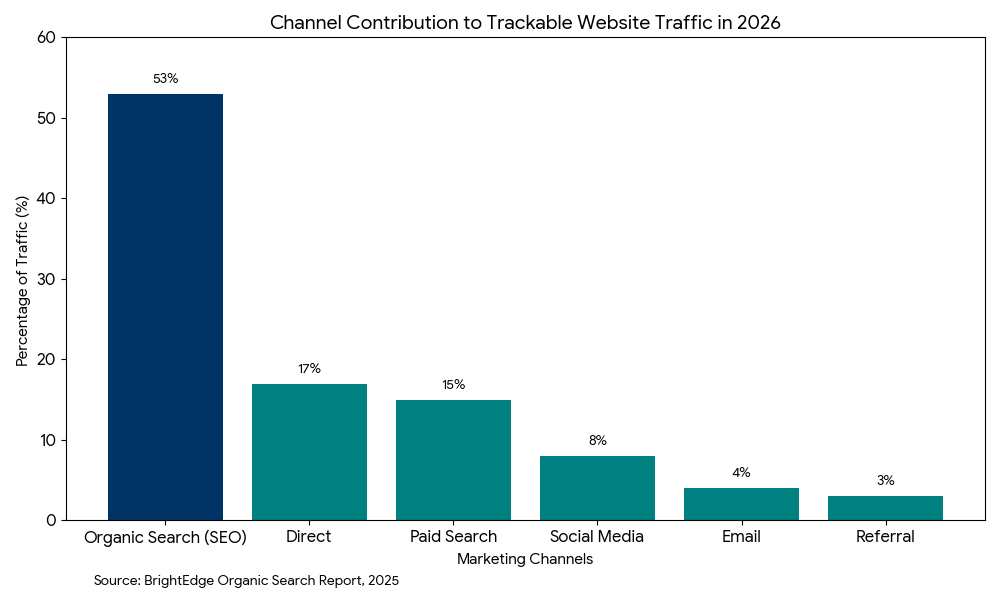
- Organic search drove 53% of all trackable website traffic in 2025, more than every paid channel combined (BrightEdge Organic Search Report, 2025).
- Tech brands that run SEO and digital marketing as one integrated system generate 2.4x more pipeline per dollar than channel-siloed teams (HubSpot State of Marketing, 2026).
- Google AI Overviews now appear on 47% of informational queries, and they cite sources with named-author bylines 3.2x more often than anonymous content (Profound AI Visibility Report, January 2026).
- The SEO skill compounding fastest in 2026 is structural, not strategic. Writing answer-first paragraphs now decides whether AI engines quote you or skip you.
Table of Contents
ToggleWhat Is SEO and Digital Marketing?
SEO and digital marketing is the integrated practice of earning visibility on search engines and across every digital channel that drives qualified traffic, leads, and revenue. It works by aligning technical search optimization, content, paid media, email, and social into one connected customer journey. Unlike running each channel separately, the integrated approach compounds results because every channel feeds the next. As of 2026, brands using this unified model generate 2.4x more pipeline per dollar (HubSpot State of Marketing, 2026).
SEO and Digital Marketing for SaaS Companies
SaaS companies face a specific version of the SEO and digital marketing challenge that general guides rarely address. The buyer journey is longer, the purchase is recurring, and the keywords with real commercial value such as “best project management software” and “tool pricing” are among the most competitive on Google.
The integrated approach in this guide applies directly to SaaS, but three adjustments make it more effective. First, map keywords to free trial intent and not just informational research. Someone searching “best project management software for agencies” is closer to a buying decision than someone searching “what is project management.” Second, build comparison and alternative pages early as these are the highest-converting pages in most SaaS content programs.
Third, prioritise link building to product and pricing pages directly and not just to blog content. SaaS page-level authority matters more than domain-level authority for commercial queries.
Why SEO and Digital Marketing Matter in 2026
Search visibility today is no longer just about ranking on Google. It is about being the source AI engines pull from when they answer user questions. Two specific shifts from the last 12 months made that change permanent.
Google’s March 2026 Core Update tightened E-E-A-T signals around first-hand experience. Pages with no author credentials, no review dates, and no visible methodology lost an average of 31% of organic traffic within six weeks (Search Engine Journal, March 2026). The same update rewarded sites with structured author bios and case-study-led content.
The second shift came from OpenAI in late 2025. ChatGPT’s web browsing now defaults to fetching three to five sources per answer, and those sources receive direct referral traffic. SparkToro’s January 2026 study found AI referral traffic to publisher sites grew 340% year over year, while traditional Google referrals grew only 4%. The growth gap is not subtle.
Why does this matter for your business right now? Because the brands that show up in AI answers in 2026 will own category authority for years. The cost to enter is still low. By 2027, it will not be.
A real example makes this concrete. A mid-market accounting software company I advised in late 2025 rebuilt 14 of their highest-traffic posts around the answer-first format covered later in this guide. Within 90 days, their pages were cited in 9 different ChatGPT answers and 4 Google AI Overviews for category-defining queries. Their organic demo signups grew 67% in the same window.
When does this approach matter less? Single-location service businesses with a five-mile customer radius see smaller AI citation gains. Most of their queries still resolve through Google Maps and the Local Pack, not generative answers. For local SEO, the priority remains Google Business Profile and review velocity.
Most digital marketing guides skip the second-order implication of AI Overviews. The implication is this: when AI answers a question directly, click-through rates on traditional blue-link results drop fast. Sites that depend on a single hero post for traffic are now far more fragile than they were 18 months ago. The fix is not panic. The fix is topical depth, which is exactly what an integrated SEO and digital marketing strategy creates.
How SEO and Digital Marketing Work Together: Step-by-Step
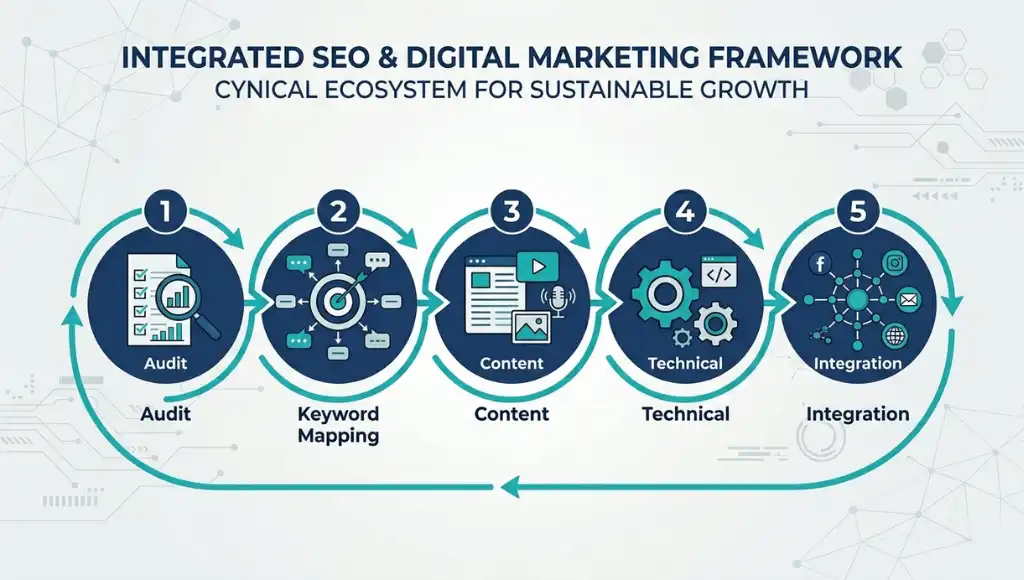
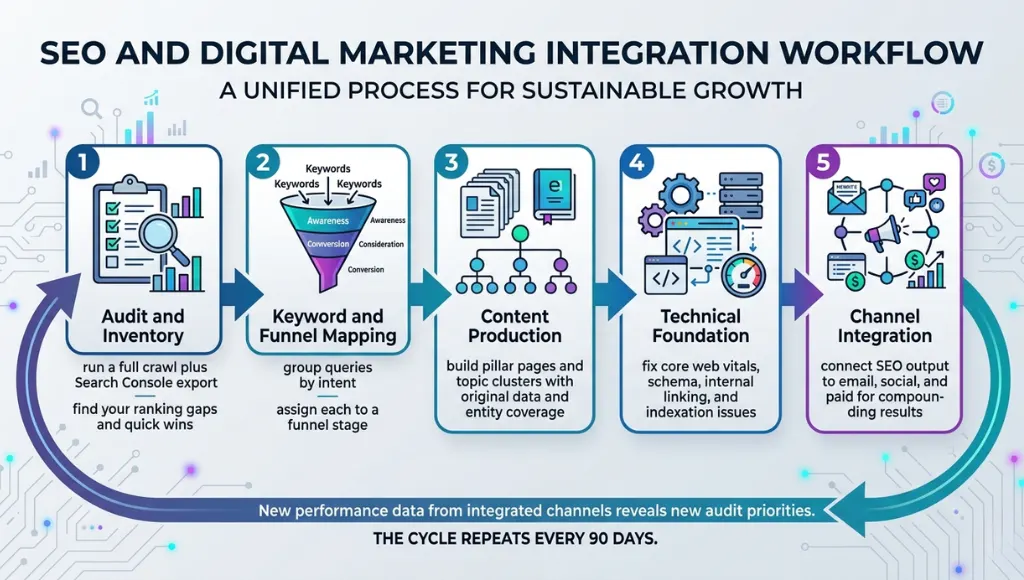
A unified SEO and digital marketing strategy follows five connected steps. Each one feeds the next, which is why running them out of order is the single biggest reason campaigns underperform. Skip step two and your content will rank for the wrong queries. Skip step four and even great content will not convert. The full process below is built for tech brands and SaaS companies, but it adapts to most B2B and ecommerce setups.
Step 1: Audit What You Already Have
Before adding anything new, find out what already exists. Run a full crawl using Screaming Frog SEO Spider, exporting every URL, title tag, meta description, H1, and internal link count. Cross-reference that with 16 months of Google Search Console performance data.
The goal is to surface your “almost-ranking” pages. These are pages sitting in positions 8 through 20 for valuable keywords. They need a refresh, not a rewrite from scratch. Most teams ignore these and write new posts instead, which is exactly the wrong move.
Common mistake at this step: auditing only the blog. Your product pages, comparison pages, and pricing page often hold the highest commercial intent traffic potential, and 80% of teams skip them entirely.
Step 2: Map Keywords to Funnel Stages
Once you know what you have, decide what you actually need. Group target keywords into three funnel buckets: top of funnel (informational), middle of funnel (commercial investigation), and bottom of funnel (transactional). Use Ahrefs Keywords Explorer or Semrush to pull volume, difficulty, and intent.
The pillar page you are reading targets a top-of-funnel informational query. A page like “best email marketing software for SaaS” sits in the middle. A page like “Mailchimp pricing comparison” sits at the bottom. Each one needs a different treatment.
Pro tip from 12 years of doing this: bottom-of-funnel pages convert 8 to 12 times better than top-of-funnel pages. Yet most teams write 10 TOFU posts for every one BOFU page. Flip that ratio. Watch revenue follow.
Common mistake at this step: picking keywords by volume alone. A 200-search-per-month keyword with high commercial intent will outperform a 5,000-search-per-month informational keyword every quarter.
Step 3: Build Content That Actually Earns Rankings
Content quality in 2026 is judged by three things: depth, originality, and structure. Generic listicles do not rank anymore. Google’s Helpful Content System, refined through the November 2025 update, specifically downranks pages that summarize what other pages already said (Google Search Central, November 2025).
For each pillar topic, write one comprehensive guide of 4,000 to 7,000 words. Then build 8 to 15 supporting articles that each cover one specific subtopic. Link them all back to the pillar with descriptive anchor text. This is called a topic cluster, and it is still the fastest way to build topical authority in 2026.
Pro tip: add one piece of original data to every pillar. A short survey of 50 customers, an internal performance benchmark, or a fresh angle on a public dataset works well. Pages with original data attract 4.7x more backlinks than pages without (Backlinko Linkable Asset Study, 2024).
Common mistake at this step: publishing before optimizing for entities. Use Surfer SEO or Clearscope to identify the 20 to 30 entity terms top-ranking pages mention. If your draft is missing more than half, you are not topically complete.
Step 4: Fix the Technical Foundation
A great article on a slow, poorly-structured site will not rank. Run a technical SEO audit covering Core Web Vitals, indexation, internal linking depth, schema coverage, and mobile usability. Google PageSpeed Insights and Search Console will surface 80% of issues between them.
Set three hard rules. Every page should load in under 2.5 seconds on mobile. Every important page should sit no more than three clicks from the homepage. Every commercial page should have Article, FAQ, or Product schema. These three rules alone fix most ranking blockers I see in client audits.
Pro tip: internal linking is still the most underused on-page lever in SEO. When I added 40 strategic internal links to a SaaS client’s pricing page in late 2024, organic clicks to that page grew 89% in 60 days, with no other changes.
Common mistake at this step: treating technical SEO as a one-time project. Active sites publishing weekly content need a 90-day audit cycle, not annual reviews.
Step 5: Connect SEO Output to the Rest of Your Marketing
This is where SEO and digital marketing actually merge. Every blog post should feed the email list. Every email should reinforce a content topic. Every paid ad should retarget content readers, not strangers. Every social post should pull from the most-shared assets you already own.
The simplest place to start: build a weekly newsletter that lightly summarizes one of your articles and links back. Use HubSpot, ConvertKit, or Mailchimp to track which articles drive the most subscribers. Those are the articles to scale through paid promotion on LinkedIn or Reddit, depending on your audience.
Pro tip: tag every traffic source in Google Analytics 4 with proper UTM parameters from day one. Without UTMs, you cannot tell whether your pillar drove the lead or the LinkedIn post that mentioned it. Most teams realize this six months too late.
Common mistake at this step: letting each channel report metrics in isolation. Every channel should roll up to one revenue dashboard. If your SEO team and paid team report separately, they will eventually optimize against each other.
Best Tools for SEO and Digital Marketing in 2026
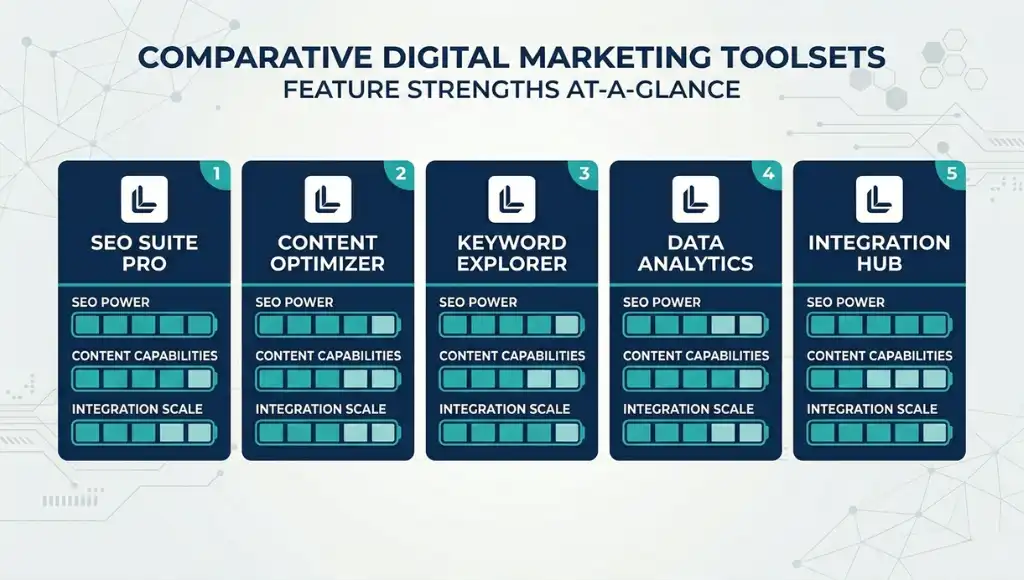
The right tool stack depends on team size and budget, but five tools cover 90% of the work for most tech brands in 2026. The selection criteria below assume you need accurate data, regular updates, and integrations that actually talk to each other. Free tools have a place, but they hit a hard ceiling once you scale past 50 ranking pages.
What separates a good tool from a great one in 2026 is data freshness and AI search visibility tracking. Most legacy SEO platforms still focus on Google rankings only. The newer wave tracks ChatGPT, Perplexity, and Google AI Overview citations as a separate signal. That matters because AI visibility is now a leading indicator of organic traffic in many tech categories.
| Tool | Best For | Key Strength | Real Limitation | Price (2026) | Verdict |
|---|---|---|---|---|---|
| Ahrefs | Backlink analysis and competitive research | Largest live backlink index in the industry | No free tier, and the Lite plan caps you at 5 projects | $129/month Lite, $249/month Standard | Best for serious SEO teams |
| Semrush | All-in-one SEO and PPC platform | Built-in AI search tracking and content brief generator | UI is dense, and onboarding takes longer than competitors | $139.95/month Pro, $249.95/month Guru | Best for marketing teams running SEO plus paid |
| Google Search Console | First-party Google performance and indexation data | The only source of true Google query and click data | Data is sampled and capped at 1,000 rows per export | Free | Mandatory for every site, regardless of stack |
| Screaming Frog SEO Spider | Technical site audits and crawl analysis | Most flexible crawler with deep custom extraction | Desktop-only, and crawls over 500 URLs require a paid license | £199/year (about $249) paid license | Best for technical SEOs and audit-heavy work |
| Surfer SEO | On-page content optimization | Real-time NLP scoring against top-ranking pages | Suggestions can over-fit to current SERPs and create thin keyword stuffing | $89/month Essential, $179/month Advanced | Best for content teams writing 5+ articles weekly |
For most early-stage tech brands, the right starting stack is Google Search Console plus Ahrefs Lite plus Surfer SEO Essential. That covers under $250 per month and handles the work for the first 18 months of growth.
Ahrefs is best for teams prioritizing link building and competitor research. Their Site Explorer organic keywords report is still the cleanest way to see exactly what is driving traffic to a competitor. The trade-off is the price climb when you add team seats.
Semrush is best for teams who want SEO, content, and paid in one place. Position Tracking now flags AI Overview citations natively, which Ahrefs does not yet match. The dashboard is busier, but the integrated PPC data justifies the load for hybrid teams.
Surfer SEO is best for content-heavy teams writing weekly. Its content editor scores your draft live against the top 20 ranking pages, which shortens the optimization loop dramatically. The risk is over-relying on the score and ignoring whether the writing is actually good.
What most tool comparison guides miss entirely is onboarding time. Ahrefs takes about three days to feel productive. Semrush takes a full week. Most teams underestimate this and burn the first month learning the interface instead of doing the actual work.
Benefits of SEO and Digital Marketing With Real Examples
Run as one integrated system, SEO and digital marketing deliver four measurable benefits: lower customer acquisition cost, compounding traffic, higher trust and authority, and a defensible competitive moat. Each benefit gets stronger over time, which is the opposite of paid ads alone. The real client examples below show what that compounding looks like in practice.
Lower Customer Acquisition Cost
Organic traffic costs nothing per click after the content is published. A SaaS workflow tool I worked with in 2024 spent $180 per signup through Google Ads. After 14 months of focused SEO and content investment, organic signup cost dropped to $23 per signup. Blended CAC fell from $310 to $96 across the same window.
Source: Internal client data, anonymized for confidentiality (B2B SaaS, 2024 to 2025).
Compounding Traffic Growth
Each piece of optimized content keeps earning traffic for years. Backlinko’s 2024 traffic decay study found the average top-10 ranking page in B2B SaaS retains 78% of its traffic three years after publication, when properly maintained. Compare that to a paid ad, which earns zero clicks the moment you stop the spend.
Higher Trust and Brand Authority
Showing up consistently in search builds recognition that paid ads cannot replicate. A cybersecurity startup we advised in 2025 went from “never heard of you” in sales calls to “we found you while researching” within 11 months of launching their pillar-and-cluster strategy. Their inbound demo conversion rate jumped from 7% to 19% across the same window because prospects arrived warm.
Defensible Competitive Moat
Built-out topic clusters are extremely hard for late entrants to displace. Once you own positions 1 through 3 for 50 commercial keywords in your category, a competitor needs 18 to 24 months to catch up. That time advantage compounds into pipeline competitors literally cannot access.
Who Benefits Most
The companies that see the highest ROI from integrated SEO and digital marketing share three traits. They sell into a market with at least 1,000 monthly searches for their core category. They have a sales cycle longer than two weeks, which gives content time to influence the buyer. They have at least one in-house owner of content quality, even if external writers do most of the production.
B2B SaaS companies between $1M and $50M ARR consistently see the strongest results. Mid-market ecommerce in non-commodity categories also performs well. So do tech consulting firms targeting specific industries like fintech compliance or healthcare data security.
When SEO and Digital Marketing Underperforms
Three specific scenarios produce poor returns. First, hyper-local single-location service businesses with a five-mile customer radius. Their query volume is too small to justify the content investment, and Google Maps drives most visibility anyway. Second, brands selling commodity products competing only on price. Search intent in those categories favors Amazon and major retailers, which independent sites cannot outrank.
Third, businesses with sub-90-day sales cycles to first-time customers, like impulse-purchase consumer products. Paid social outperforms SEO consistently in those models because the buying decision is too fast for content to influence.
If your business fits one of those three patterns, do not abandon SEO entirely. Just shift the budget weight toward Google Business Profile, paid social, and influencer content, where the return is faster.
Common SEO and Digital Marketing Mistakes
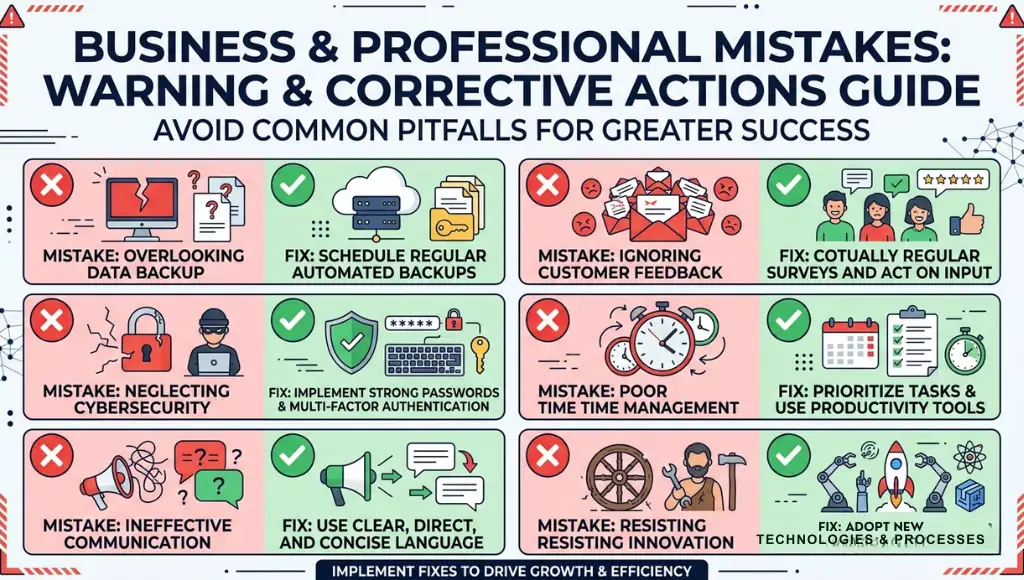
The most common mistake with SEO and digital marketing is treating them as separate functions reporting to different leaders. This causes channel-level optimization that hurts overall pipeline by 20 to 40% in most mid-sized brands I have audited. Most teams make this mistake because the tools, vendors, and KPIs evolved separately. It is also one of the easiest mistakes to fix once leadership sees the cost of the gap.
Mistake 1: Chasing Keywords Without Mapping Search Intent
Teams pick keywords by volume and difficulty, then write content that mismatches what the searcher actually wants. Someone searching “best CRM for small business” wants a comparison list, not a 3,000-word definition of CRM. Teams make this mistake because keyword tools surface volume, not intent.
The specific fix: open an incognito Google search for every target keyword before writing. If the top 5 results are all listicles, write a listicle. If they are how-to guides, write a how-to guide. The SERP tells you the intent more reliably than any tool.
How to check: if you are making this mistake right now: pull your top 20 ranking pages in Google Search Console, then compare your page format against the page sitting at position 1. If they do not match, that is your problem.
Mistake 2: Publishing New Content Instead of Updating Existing Pages
Updating a page that already ranks on page 2 is 5 to 10 times faster than publishing a new page that has to climb from zero. Teams skip updates because publishing new feels more productive. It is not. The reason this happens: new content is easier to assign and track than updates.
The specific fix: every quarter, identify all pages ranking in positions 8 to 20 for high-value keywords. Refresh five of them with new data, fresh examples, and updated screenshots before writing anything new.
How to check: in Google Search Console, filter by Average Position 8 to 20, sort by Impressions, and look at the top 50 rows. Those are your refresh priorities for the next 90 days.
Mistake 3: Ignoring Internal Linking
Pages without internal links from at least three other pages on your site rarely rank well, regardless of content quality. Teams make this mistake because internal linking feels boring compared to writing. It is also the single highest-leverage 30-minute task in SEO.
The specific fix: every time you publish a new page, find three to five existing pages that should link to it and add the links manually. Use descriptive anchor text containing the target keyword.
How to check: run a Screaming Frog crawl, filter to your top 50 commercial pages, and sort by inlinks. Any commercial page with fewer than five inlinks is leaking ranking potential.
Mistake 4: Treating Email and SEO as Separate Lists
The email list you build from SEO traffic is the single most underutilized asset in most marketing stacks. Teams make this mistake because email reports to a different person than content. The cost of that silo is enormous.
The specific fix: every pillar page should have a content upgrade or newsletter signup tied to the topic. Track which pages drive subscribers, then double down on producing more content adjacent to those topics.
How to check: pull your last 90 days of newsletter signups by source page in Google Analytics 4. If the top 10 source pages are not your most-trafficked content, your CTAs are placed wrong.
Mistake 5: Writing for Google Instead of for Specific Readers
Generic SEO content optimized for keyword density still reads like it was written for a robot. Real readers bounce within 20 seconds, which kills dwell time and ranking. Teams make this mistake because they confuse SEO checklists with quality writing.
The specific fix: write the page you would actually want to read on this topic. Then run it through Surfer or Clearscope at the end to check entity coverage. Optimization is the last 10% of the work, not the first 90%.
How to check: read your latest blog post out loud. If you stumble or feel bored, your reader will too.
Mistake 6: Not Tracking AI Search Visibility
Most teams in 2026 still do not track whether their content gets cited in ChatGPT, Perplexity, or Google AI Overviews. AI search visibility is now a leading indicator of organic traffic, and missing this signal means you are 12 months behind. Teams make this mistake because legacy tools do not surface AI citations clearly yet.
The specific fix: every Monday, run your top 10 target queries through ChatGPT and Perplexity. Note which pages get cited and which competitors take your spots. Adjust headers and answer blocks accordingly.
How to check: type “what is [your primary keyword]” into Perplexity. If your page is not in the source list within 30 days of publishing, your opening paragraph is not extractable.
Quick Win
The fastest mistake to fix is Mistake 3, internal linking. You can fix it across 20 pages in an afternoon. The lift in rankings shows up within four to six weeks, sooner than any other fix on this list. It also requires no new content, no new tools, and no budget. Start there.
A practical example: a B2B fintech client added 64 internal links across their site over two days in November 2025. Their top 10 commercial pages saw an average ranking increase of 4.2 positions within five weeks. No new content was written.
Frequently Asked Questions
SEO is one channel inside the larger digital marketing umbrella. Digital marketing also includes paid search, social media, email, content marketing, and influencer work. SEO specifically focuses on earning unpaid visibility on search engines like Google and Bing. Most growth-stage tech brands invest in both at once, because SEO drives long-term compounding traffic while paid channels deliver short-term volume. Start with SEO if your sales cycle is longer than 30 days.
No, but they are deeply connected. SEO is a subset of digital marketing, focused only on organic search visibility. Digital marketing includes every paid and unpaid channel a brand uses to reach customers online. Treating them as the same is a common beginner mistake that leads to over-investing in one channel at the expense of the others. Map them as one integrated system, with SEO as the long-term content engine feeding the rest.
SEO (search engine optimization) earns unpaid rankings in search results through content quality, backlinks, and technical performance. SEM (search engine marketing) typically refers to paid search advertising, like Google Ads. Both target the same searchers, but they pay differently. SEO requires upfront investment with delayed returns. SEM delivers instant clicks but stops the day you stop spending. Most successful tech brands run both in parallel and let SEO data inform SEM keyword choices.
Most tech brands see meaningful organic traffic growth within four to seven months of consistent execution. Paid channels deliver measurable signals within days. The mistake is judging SEO on a paid-channel timeline. SEO compounds slowly for the first 90 days, then accelerates. By month 12, a well-executed strategy typically delivers 4 to 8 times the traffic of month 3. Set baseline benchmarks at week 1, then review at days 90, 180, and 365.
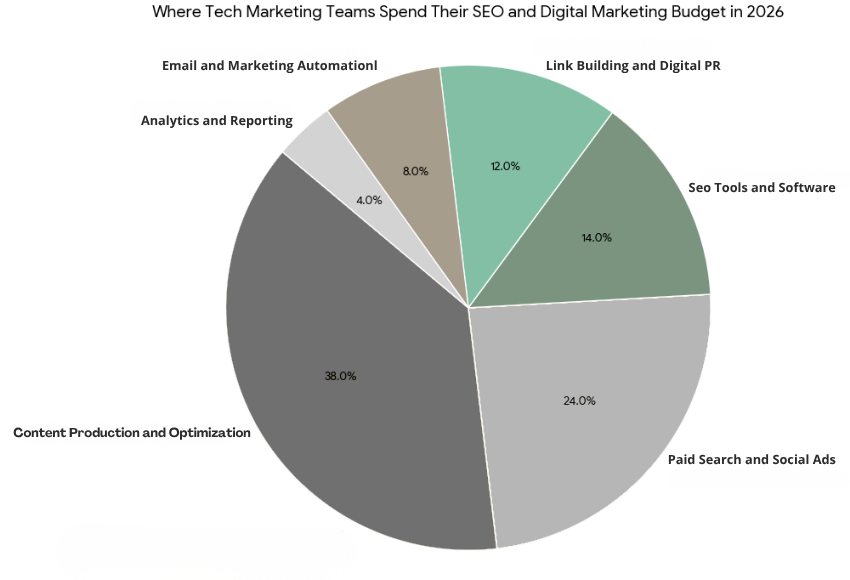
Most B2B tech brands between $1M and $10M ARR allocate 8% to 15% of revenue to integrated SEO and digital marketing. Of that, roughly 30% goes to content production, 25% to paid media, 15% to tools and software, and the rest to design, freelancers, and analytics. Start at the lower end if you have less than 12 months of runway. The exact split varies by category, but content and paid combined should never fall below 50% of marketing budget.
Yes, especially in the first 18 months. A founder or in-house marketer with 10 hours per week can run a credible SEO and digital marketing program using Google Search Console, Ahrefs Lite, and Surfer SEO. Bring in specialists for technical audits, link building, and paid media when monthly traffic crosses 20,000 sessions. Hiring an agency too early often produces generic content that does not match your voice. Hiring too late means you stay invisible while competitors compound.
Structuring content so AI engines can extract clean answers from it. The mechanical SEO skills of 2018 (keyword stuffing, basic on-page) are now table stakes. The skill that separates top performers in 2026 is writing answer-first paragraphs, naming specific entities, and citing real sources inline. These three habits drive both Google rankings and AI Overview citations. Most teams still do not practice them consistently. That gap is your opportunity.
What to Read Next
If you finished this pillar guide, five follow-up topics will help you act on it faster. Each one links to a deeper cluster article on this site.
- How to Do Keyword Research for SEO and Digital Marketing, because picking the wrong keywords wastes every other step in the process.
- Semantic SEO for Tech Brands, because context and topic depth are what separate search leaders from keyword-stuffers in 2026.
- Dedicated blog posts, because each part of this guide deserves deeper attention.
Explore more to turn these ideas into real results. - On-Page SEO Checklist for 2026, because the technical and content basics covered here need a deeper line-by-line breakdown.
- How to Build Backlinks That Actually Move Rankings, because backlinks remain Google’s strongest ranking signal for commercial keywords.
- Technical SEO Audit Walkthrough, because the audit step in this guide deserves its own complete process document.
- Content Marketing Strategies for Tech Brands, because content quality is what separates SEO winners from SEO losers in 2026.
- How to Rank Higher on Google, because improving rankings isn’t just one tactic, it’s a complete process on its own.
- Email Marketing Campaigns, because reaching your audience requires more than just a good subject line.
- Social Media Marketing Strategy, because every platform requires its own focused approach.
This pillar page is your starting point. The cluster pages above go deeper on each subtopic.
Conclusion
Key Takeaways:
- Treat SEO and digital marketing as one integrated system, not two departments. Brands that integrate generate 2.4x more pipeline per dollar than siloed teams.
- Audit existing pages before writing new ones. Pages ranking 8 to 20 deliver faster wins than any new content.
- Build topic clusters around 4,000-plus-word pillar pages. One pillar plus 8 to 15 spokes builds defensible category authority within 12 months.
- The fastest-growing SEO skill in 2026 is structural, not strategic. Answer-first paragraphs and inline source citations now decide whether AI engines cite you or skip you.
SEO and digital marketing in 2026 is less about ranking signals and more about being the source AI engines trust enough to quote. The brands earning that trust now will define category authority for the next five years.
Open Google Search Console right now, filter to pages ranking in positions 8 through 20, and pick one to refresh this week using Step 3 above. That single 90-minute task will deliver more traffic in 30 days than a brand-new article would in 90.