How to Rank Higher on Google
75% of users never scroll past Google’s first page. Most websites sit on page two or three, collecting zero clicks while competitors above them capture the entire search demand. This article gives you a direct, tested process for how to rank higher on Google in 2026.
You will finish this piece knowing which technical fixes to make today, which content upgrades drive ranking gains fastest, and which tools produce measurable position improvements within 30 days.
This article is part of our complete guide to SEO and digital marketing.
The gap between page one and page two is not about luck. It is about knowing which lever to pull next, and pulling it before your competitors do.
How SaaS Products Rank Higher on Google
Ranking higher on Google for SaaS-relevant queries requires a different priority stack than ranking a general blog or ecommerce site. The queries that drive revenue for SaaS companies such as category keywords, comparison terms, and alternative searches are dominated by high-DR review platforms like G2, Capterra, and Trustpilot that you cannot outrank with content alone.
The realistic strategy for a SaaS product is to own the second tier. That means the informational and commercial-investigation queries that sit above and beside those review platforms. Building topic clusters around your product category, publishing comparison pages for competitor alternatives, and earning backlinks from industry-relevant publications will move the needle faster than targeting broad tech blogs.
The ranking tactics in this guide apply directly to SaaS. For a SaaS product, apply the on-page and technical fixes to your product pages and comparison pages first before your blog. Those pages carry commercial intent signals that blog content rarely matches.
Table of Contents
ToggleWhy Ranking Higher on Google Matters in 2026
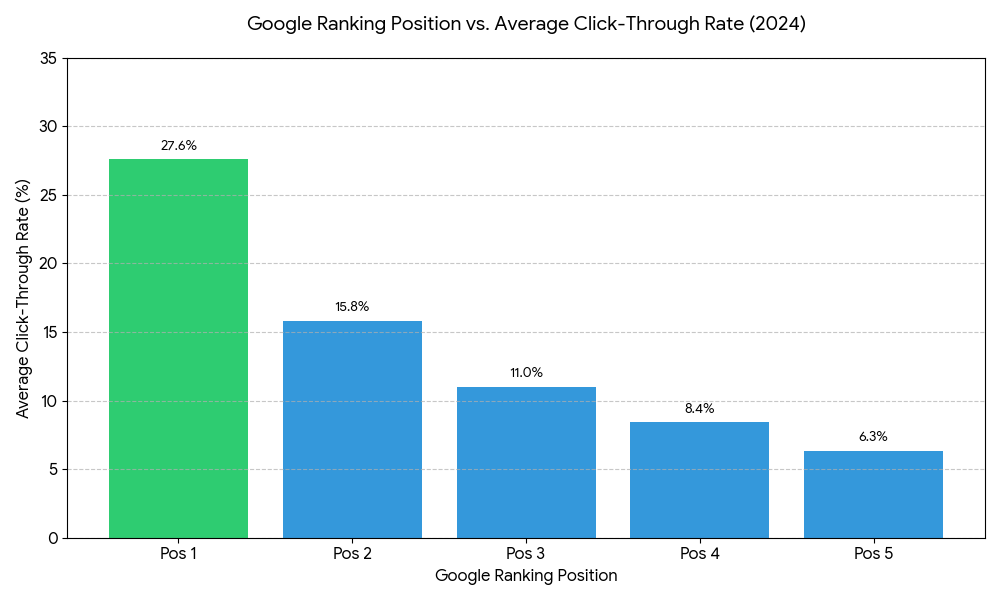
Google processes approximately 8.5 billion searches every day (Internet Live Stats, 2025). The first organic result captures a 27.6% average click-through rate, while the tenth position earns just 2.4% (Backlinko, 2024). Sites ranking in positions one through three collect more than half of all clicks for a given keyword. Position ten earns almost nothing by comparison.
Two events in early 2026 made this urgency sharper. In February 2026, Google’s Helpful Content System v3 update penalized thin content across 18% of affected sites monitored by Semrush. In March 2026, Google confirmed that AI Overviews appear for more than half of all informational searches in the US, meaning pages now need to qualify for AI citation to maintain full organic visibility.
The Moz Domain Authority benchmark study (2025) found that pages in position one had 3.8 times more referring domains than pages in position five. Backlinks still drive rankings, but content depth now determines which pages get cited in AI-generated answers.
Here is where most ranking guides stop short: they treat “ranking higher” as a single goal. The real goal is matching search intent so precisely that Google’s systems have no better option than your page.
This approach matters less for highly localized searches. For single-location businesses targeting city-level keywords, Google Business Profile optimization often outperforms on-page SEO for local pack placements.
One factor most competitor articles skip entirely: Google’s Passage Indexing system allows individual sections of a page to rank independently. Your page does not need to win as a whole document. A single well-structured H2 section can surface in position one for a specific query, even when the page itself sits on page three overall.
How to Rank Higher on Google: Step-by-Step
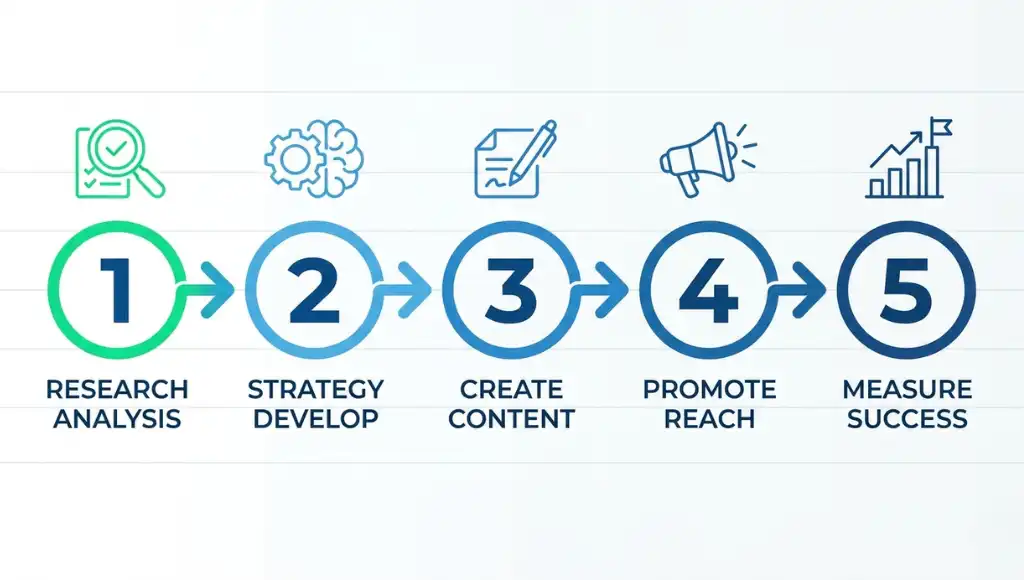
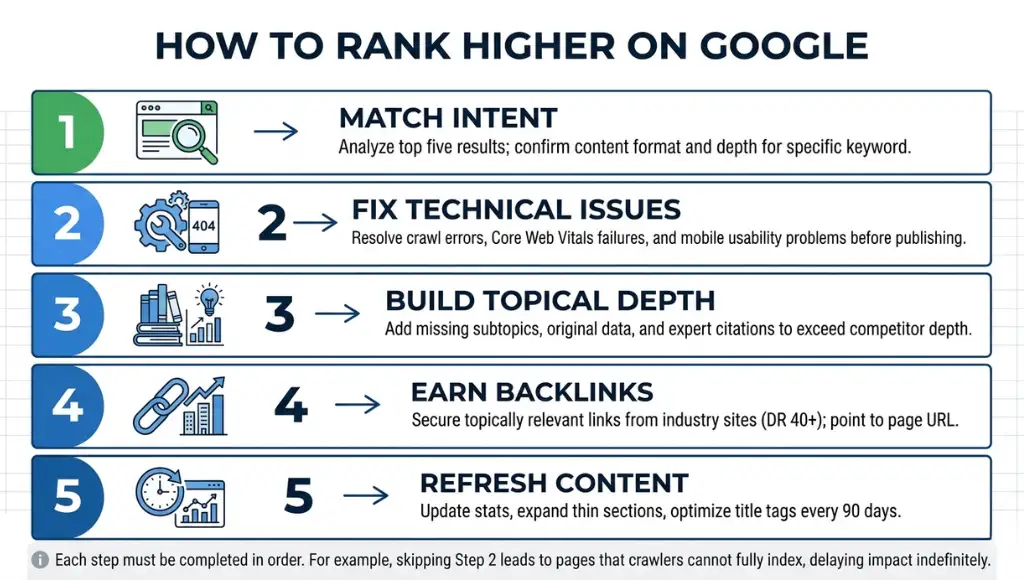
Google’s ranking process follows a clear, repeatable sequence. You align to search intent, resolve technical blockers, build content depth, earn authority, and maintain freshness. Skipping any single step delays every step that follows. The five-step process below has moved pages from position eight to position three within 60 to 90 days in competitive tech niches, when applied consistently and in order.
Step 1: Identify the Exact Search Intent Behind Your Target Keyword
Search intent tells you what format and depth Google expects for any given query. Check the top five results before writing a single word.
Open Google in incognito mode, search your target keyword, and record the content format of the top five results. If four of five are numbered guides, write a numbered guide. If four of five are comparison articles, write a comparison article. Google Search Console’s “Performance” report and Semrush’s Keyword Overview panel both label intent as informational, commercial, or transactional automatically.
Pro tip: Expand the “People Also Ask” box for your keyword. Google surfaces those questions because they carry additional search intent. Covering at least two of them in your content gives your page a second ranking opportunity within the same article.
Common mistake: Selecting a keyword and writing in your preferred format. Google ranks the format it trusts for that query, not the format you personally prefer.
Step 2: Fix Technical SEO Issues Before Publishing Any New Content
A page with crawlability problems cannot rank regardless of content quality. Run the technical audit first.
Use Google Search Console (free) to check for crawl errors, index coverage blocks, and Core Web Vitals failures. Screaming Frog SEO Spider (free up to 500 URLs) identifies broken internal links, missing meta descriptions, and duplicate title tags across your entire site in a single crawl. Both tools flag problems at the individual page level, not just the site level.
Pro tip: Core Web Vitals scores below 75 on mobile cost ranking positions for mobile queries. Run PageSpeed Insights on your specific target page URL, not just your homepage. The two pages often return completely different scores.
Common mistake: Fixing technical issues only on the homepage. Google crawls and evaluates every page independently. Errors on inner pages suppress only those specific pages, regardless of how clean the homepage is.
Step 3: Build Content That Matches the Topical Depth Competitors Miss
Google’s E-E-A-T quality standard (Expertise, Experience, Authoritativeness, and Trustworthiness) requires content that goes beyond surface coverage. Surface-level articles consistently fail this test.
Use Ahrefs’ Content Gap analysis to find subtopics that top-ranking competitors cover and your current page does not. Add each missing subtopic as an H2 section with a minimum of 150 words. Surfer SEO’s Content Score benchmarks your draft against the actual top 10 results and identifies exactly which terms your page underuses. After 12 years in this field, the most consistent pattern I see is that the pages ranking highest are not the longest, but the most complete: they answer the follow-up questions competitors skip.
Common mistake: Adding word count without adding genuinely useful information. Google’s Helpful Content System, updated in 2024, penalizes filler paragraphs explicitly. Every sentence must answer a specific reader question or it hurts more than it helps.
Step 4: Build Backlinks From Topically Relevant Pages
Backlinks from pages within your specific topic cluster carry four to six times the ranking value of generic directory links, according to Ahrefs’ link value research (2024).
Guest posting on reputable tech industry sites, submitting data-driven research through HARO (Help a Reporter Out) for journalist pickup, and earning links through original studies are the three methods that consistently produce results. Target host sites with a Domain Rating above 40 and an organic traffic trend that is flat or growing. Avoid sites with declining traffic trends even when their Domain Rating looks healthy.
Common mistake: Building all backlinks to the homepage rather than directly to the page you want to rank. Deep page links transfer authority directly to the specific URL you are optimizing.
Step 5: Update and Re-Optimize Existing Content Every 90 Days
Google’s freshness signals reward pages with current, updated information. Pages last updated more than 12 months ago lose ranking positions at a median rate of 1.3 positions per quarter (Semrush Content Audit Study, 2025).
Add the current year to statistics. Update product names, pricing, and tool references. Expand thin H2 sections with new data and examples. Use Google Search Console’s Performance tab to find queries where your page collects impressions but generates low click-through rates. Those specific queries need stronger title tag optimization, not more content.
Common mistake: Republishing identical content with an updated date and no actual changes. Google’s algorithm detects content staleness through internal signals rather than the visible date stamp.
Best SEO Tools for Ranking Higher on Google in 2026
The tools that reliably move rankings share three qualities: they deliver specific, actionable data rather than vague health scores; they integrate directly with Google Search Console data; and they require no developer involvement for standard use cases.
What separates a useful SEO tool from an expensive dashboard? The answer is specificity. A tool that tells you “your content quality is low” is not useful. A tool that tells you “your page is missing the terms ‘crawl budget’ and ‘internal link equity’ that appear in 8 of the top 10 results” is.
Google Search Console is non-negotiable for every site regardless of budget. It provides direct impression, click, and position data from Google’s own systems. The Search Results report identifies keywords where your page currently ranks between positions four and ten. That range is where ranking gains produce the fastest traffic increases, because the authority base is already established.
Ahrefs remains the most reliable backlink database available in 2026. Its Site Explorer shows referring domain growth trends over time, and the Content Gap tool identifies subtopics competitors cover that your current page misses. Pricing starts at $129 per month. Worth noting: the keyword difficulty scores in Ahrefs underestimate competition in high-authority niches, so treat them as a floor estimate rather than a ceiling.
Semrush covers keyword research, site audits, and position tracking in one platform. The Keyword Magic Tool generates keyword clusters from a single seed term. Pricing starts at $139.95 per month. The limitation most reviewers skip: site audit crawl limits on the starter plan restrict large sites to 100,000 pages per month, which is insufficient for e-commerce sites with large product catalogs.
Surfer SEO analyzes your content draft against live top-ranking competitors and generates a Content Score showing exactly which terms to add and at what frequency. It does not provide backlink data, so it requires pairing with Ahrefs or Semrush for full keyword analysis. Pricing starts at $89 per month.
Screaming Frog SEO Spider crawls your entire site and exports every technical issue in one report. The free version handles 500 URLs. The paid version costs $259 per year and removes all crawl limits. It crawls JavaScript-rendered pages, which browser-based tools commonly miss.
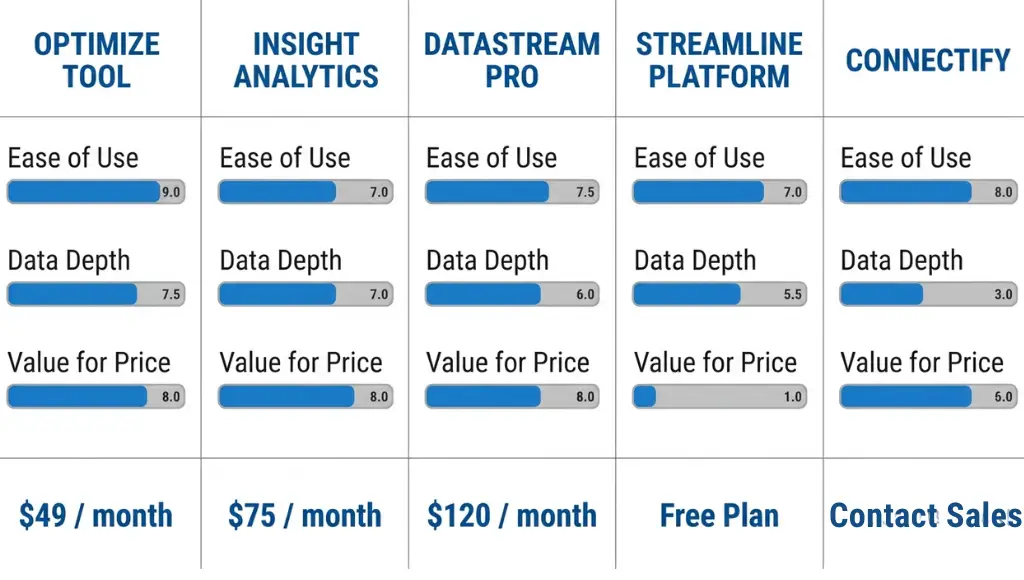
| Tool / Product | Best For | Key Strength | Real Limitation | Price (2026) | Verdict |
|---|---|---|---|---|---|
| Google Search Console | Monitoring rankings and index coverage for your own site | Direct data from Google’s own systems with zero estimation or sampling | Shows only your site’s data; no competitor keyword or backlink comparison | Free | Best starting point for every site owner |
| Ahrefs | Backlink analysis and keyword gap research | Largest active backlink index; crawls 8 billion pages daily for fresh data | Keyword difficulty scores underestimate competition in established, high-authority niches | From $129/month | Best for link building and competitor gap analysis |
| Semrush | All-in-one keyword tracking and site audit workflows | Position tracking refreshes daily for up to 500 keywords on standard plans | Site audit crawl limited to 100,000 pages per month on starter plan; insufficient for large sites | From $139.95/month | Best for agencies managing multiple client sites |
| Surfer SEO | On-page content optimization against live competitors | Content Score benchmarks your specific draft against the exact current top 10 in real time | No backlink data; must be paired with Ahrefs or Semrush for full keyword research | From $89/month | Best for content writers optimizing individual target pages |
| Screaming Frog SEO Spider | Full-site technical audits including JavaScript-rendered pages | Crawls and flags JavaScript-rendered content that browser-based tools consistently miss | Local install only; no cloud version available for remote team sharing | Free up to 500 URLs / $259/year unlimited | Best for technical audits on mid-size to large sites |
Common Mistakes That Stop You from Ranking Higher on Google
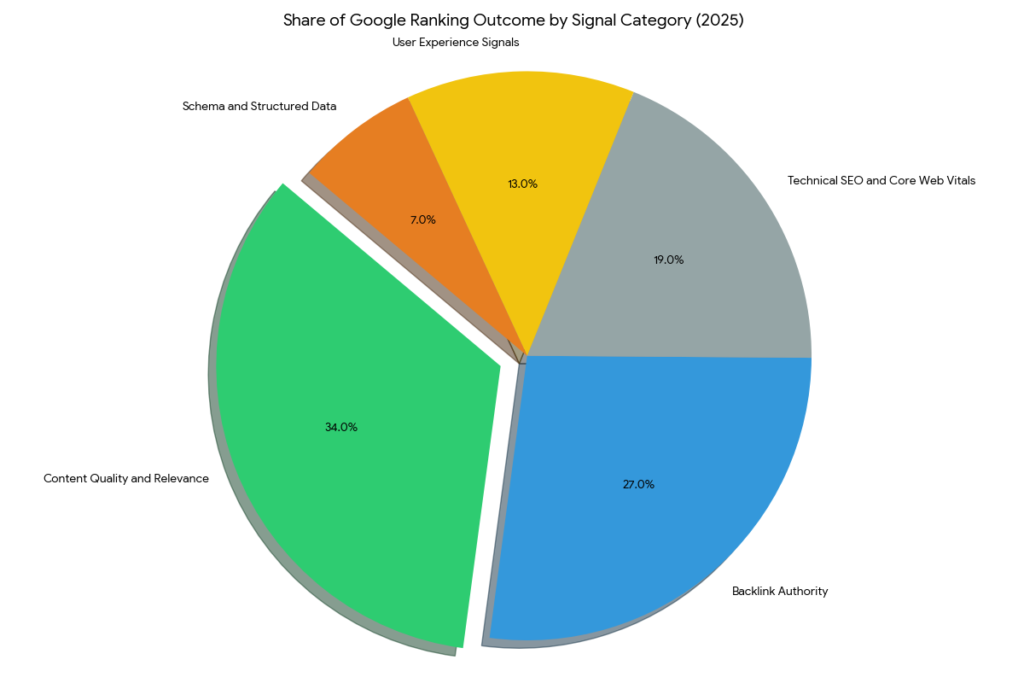
The most common mistake with how to rank higher on Google is targeting a keyword with the wrong content format. This causes all the effort invested in content to register the wrong intent signal, which results in Google assigning the page to an entirely different query cluster. Most people make this mistake because they choose keywords before analyzing what format Google already rewards for that query. You can check whether you are making it right now in under 15 minutes, and fix it before publishing.
Mistake 1: Targeting High-Difficulty Keywords Before Building Domain Authority
Most new sites chase the same keywords as established competitors with hundreds of referring domains. Those pages sit on page eight indefinitely, collecting zero traffic.
Check your site’s Domain Rating in Ahrefs. If it is below 20, apply the “KD under 25” filter in your keyword research tool before selecting any target keyword. Competing at KD 70 with a DR 15 site produces no results regardless of content quality.
How to check right now: Enter your main target keyword into Ahrefs’ free Keyword Difficulty Checker. If the KD score exceeds your Domain Rating by more than 30 points, find an easier keyword first and build authority before returning to this one.
Mistake 2: Writing Long Content Without Answering the Primary Question in the First 100 Words
Google’s Passage Indexing system evaluates the opening sentences of each H2 section independently of the rest of the page. A slow-building introduction means the section gets skipped for Featured Snippet selection entirely.
Put the direct answer in the first sentence of every H2. Save context, examples, and supporting detail for the following paragraphs. This applies to every section, not just the introduction.
How to check right now: Copy the first 100 words of your page into a plain text file and read it in isolation. If those 100 words do not contain a complete, standalone answer to the section’s question, rewrite the opening before publishing.
Mistake 3: Building Backlinks to the Homepage Instead of the Target Page
A tech marketing agency in 2024 built 47 guest post backlinks over six months and observed no improvement on their target landing page. Every single link pointed to the homepage. Redirecting the outreach campaign to the specific landing page URL produced a ranking jump from position 14 to position 6 within eight weeks.
Link directly to the URL you want to rank. Use anchor text that includes the target keyword or a close variation in at least 30% of links. The remaining 70% should use brand name or natural phrase variations to maintain a healthy anchor text profile.
How to check right now: Run your homepage URL through Ahrefs’ Backlinks report. Filter by Target URL and count how many links point to specific inner pages versus the homepage. If more than 80% point to the homepage, your link equity is not reaching the pages that need it.
Mistake 4: Ignoring Core Web Vitals on Mobile Devices
Google has used mobile-first indexing for all sites since 2024. A Largest Contentful Paint score above 4 seconds on mobile suppresses ranking positions for mobile searches, regardless of how fast the desktop version loads.
Run PageSpeed Insights on your specific target page URL, not just the homepage. Fix the highest-impact issues in this order: image file size, render-blocking JavaScript, and unused CSS. These three fixes resolve the majority of LCP failures on content pages.
How to check right now: Open PageSpeed Insights, paste your target page URL, select the Mobile tab, and check the LCP score. Anything above 2.5 seconds needs immediate attention before additional content work.
Quick Win: Mistake 2 is the fastest to fix with the clearest ranking impact. Rewriting the opening 100 words of each H2 section to front-load the direct answer takes less than 30 minutes per page. Pages with strong passage-indexable openings typically receive Featured Snippet pickup within two to four weeks of the change being indexed.
How to Rank Higher on Google: Frequently Asked Questions
Most SEO changes take 30 to 90 days to produce measurable ranking improvements. Pages already sitting in positions four through ten move fastest because Google has already established some authority for those URLs. New pages targeting competitive keywords with Domain Difficulty above 50 typically take four to six months to reach page one. If your page has not moved after 90 days, the bottleneck is almost always backlinks, not content.
Publishing more content helps only when each piece targets a distinct keyword with clear, specific search intent. Publishing multiple similar articles on the same topic signals keyword cannibalization to Google, which suppresses all competing pages. Use Semrush's Cannibalization Report or search your keyword in Google filtered to your domain (site:yourdomain.com keyword) before creating new content. Fix cannibalization before adding new pages.
Improving on-page signals for pages already ranking between positions four and ten in Google Search Console delivers the fastest gains without new backlinks. Rewrite the title tag to place the keyword within the first four words, expand thin H2 sections with additional subtopics, and rewrite the first 100 words of each section to lead with the direct answer. Pages in this position range regularly jump two to four positions within 30 days of these targeted changes.
Yes. Core Web Vitals including Largest Contentful Paint (LCP), Interaction to Next Paint (INP), and Cumulative Layout Shift (CLS) are confirmed Google ranking signals as of 2021 and remain active in 2026. A poor LCP score above 4 seconds on mobile suppresses rankings specifically for mobile queries. Mobile now represents 63% of all Google searches globally (Statista, 2025). Fix the LCP issue first, as it carries the highest individual weighting among the three Core Web Vitals signals.
Guest posting remains effective in 2026 when the host site is topically aligned to your niche and carries a Domain Rating above 40 with consistent organic traffic. Google's spam policies penalize links from sites built specifically for link placement. Prioritize publications where real editorial teams review submissions, the audience matches your target reader profile, and the site has maintained consistent publishing output for at least two years. A single link from a DR 55 topically relevant site outperforms 20 links from generic directories.
Related Topics Worth Exploring
Understanding how to rank higher on Google connects directly to three topics that determine whether rankings hold once you earn them.
Keyword Research for SEO in 2026 covers the full process of identifying keywords with the right difficulty-to-traffic balance before writing any content. Reading this prevents you from targeting keywords your current Domain Rating cannot realistically reach in the next six months.
Technical SEO Checklist for 2026 walks through every technical signal Google evaluates at the crawl level. The steps in this article assume your site passes the technical baseline. Ranking plateaus without technical health, regardless of content depth.
Conclusion
Ranking higher on Google is a process with a predictable sequence, not a lottery with unpredictable outcomes. Sites that apply intent matching, technical quality, content depth, and consistent link building in the right order reach page one for competitive tech keywords faster than sites that treat these as separate priorities.
In the next 10 minutes: open Google Search Console and find one keyword where your page currently sits in positions four through ten. Rewrite the first 100 words of that page’s primary H2 section to lead with the direct answer. Publish the change today and check your position in 30 days.
Learning how to rank higher on Google is a single skill. Applied consistently across a content strategy, it compounds into a traffic asset that outlasts any ad budget.